Elisabeth of Bohemia
October 5, 2025
First Aired: October 22, 2023
Listen


Princess Elisabeth of Bohemia is best known for her correspondence with René Descartes. In her letters, she articulated a devastating critique of his dualist theory of mind, in particular on the impossibility of mind-body interaction. So what was Elisabeth’s own position on the nature of mind? What can we ascertain about her moral and political concerns based on her various correspondences? And how are her ideas still relevant to current debates in philosophy? Josh and Ray explore Elisabeth’s life and thought with Lisa Shapiro from McGill University, editor of The Routledge Handbook of Women and Early Modern European Philosophy.
Part of our series Wise Women, supported by a grant from the National Endowment for the Humanities.
- Body
- |
- Dualism
- |
- Epistemology
- |
- Government
- |
- Leadership
- |
- Mind
- |
- Women
Josh and Ray begin discussing Elisabeth’s famous objection to Descartes’ idea that mind and body are two different substances. Josh asks how do these two things interact? Ray brings out Elisabeth’s criticisms regarding to opacity of explanations about how the mind moves the body. Josh reminds Ray how dualism is still wildly debated today, and that a lot people believe that we have souls that are somewhat separate from our bodies.
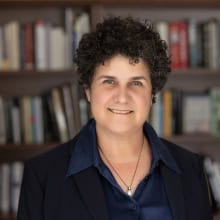
The hosts are joined by Lisa Shapiro, Professor of philosophy at McGill University and editor of Elisabeth’s correspondence with Descartes. Josh and Ray begin discussing the intimacy and intellectual respect showed in those epistolary exchanges. Lisa offers some examples that show the trust the grew between them, but also the criticisms that Elisabeth raises against Descartes not only on his dualism, but also against his ethical views. Lisa also discusses aspects of Elisabeth’s public life and public philosophy, by considering what she called the lack of an infinite science and the responsibility of taking decisions that affect other people. And the hosts conclude this aspect of her thought by talking about her interest as a political leader in reading Machiavelli.
In the last segment of the show, Josh, Ray and Lisa take the discussion to how regret, or more generally the notion of sentiments shaped and captured Elisabeth’s curiosity. Lisa mentions how Elisabeth and Descartes were very aligned on the theme of the passions, even if each saw things differently. Moreover, Lisa explains to Ray that Elisabeth is interested in the philosophical questions themselves, even if she didn’t write a tract, and could only continue her philosophical explorations by understanding these challenges about human experience in conversations with other philosopher, with a spirit that was less interested in scoring points and more invested in a common search, with Descartes and other women of her life.
Roving Philosophical Report (seek to 5:35) → Holly J. McDede interviews, Sarah Hutton a visiting professor at the University of York, about the life and times of the Princess of Elisabeth of Bohemia, and her formidable upbringing. And Erik-Jan Bos, editor-in-chief of the new edition of Descartes’ correspondence, about the 30 Years War, and how this shaped her character as a political leader. And Sabrina Ebbersmeyer, a professor of philosophy at the University of Copenhagen, about her last days in Herford, as an abbess in a massive convent.
Sixty-Second Philosopher (seek to 46:40) → Ian Shoales discusses how Elisabeth was smart enough to hold her own with Rene Descartes (the secular pope of day, of sorts), and highlights how she holds her own throughout without sacrificing her identity and her dependence on her body.
Josh Landy
Who was Elisabeth of Bohemia?
Ray Briggs
What did she have to say about the mind-body problem?
Josh Landy
And how is she still relevant today?
Ray Briggs
Welcome to Philosophy Talk, the program that questions everything…
Josh Landy
…except your intelligence. I’m Josh Landy.
Ray Briggs
And I’m Ray Briggs. We’re coming to you from the studios of KALW San Francisco Bay Area.
Josh Landy
Continuing conversations that begin at Philosophers Corner on the Stanford campus, where Ray teaches philosophy, and I direct the philosophy and literature initiative.
Ray Briggs
Today, it’s the latest episode in our series “Wise Women,” supported by a grant from the National Endowment for the Humanities. We’re talking about the life and thought of 17th century philosopher Elisabeth of Bohemia.
Josh Landy
Yeah, Elisabeth of Bohemia had that famous objection to Descartes, Descartes said mind and body are totally different substances. But she wrote him a letter where she took that apart.
Ray Briggs
Exactly. For him, the body is material and extended in space, but it can’t think or feel, and the mind, that thinks and feels. But it’s purely spiritual and it doesn’t occupy space. That’s the famous Cartesian Dualism.
Josh Landy
Right, so that brings up a pretty big question: how do these two things interact? So, I woke up in the morning, decided to drink a nice hot cup of tea, that thought causes my body to move. Then, after I’ve had that nice hot cup of tea, I’m a whole lot more clear-headed. So now my body is influencing my mind.
Ray Briggs
Well yeah, that’s exactly what Princess Elisabeth was getting at. She asked how the soul of a person, it being only a thinking substance, can determine the bodily spirits in order to bring about bodily actions
Josh Landy
And Descartes had an answer—of sorts…
Ray Briggs
Right, he said it’s not just the body and the mind. There’s also the union of these two things. The union can want tea and drink the tea and feel clear headed. Problem solved, right?
Josh Landy
Yeah, I doubt she found that very convincing.
Ray Briggs
I know, right? She basically accused him of hand-waving, in a very diplomatic and princessy way, of course. She said, I know that the soul moves the body—but you have to show me how.
Josh Landy
Well Descartes kind of had an answer for that, too. But unfortunately, it’s even worse. He says look, when you drop a rock, it moves downwards down towards the Earth. So that means that the Earth is moving the rock without touching it. And if the Earth can do stuff like that, why can’t the soul? Why can’t the soul move the body without touching it?
Ray Briggs
I love Elisabeth’s response to this. She said, You’re just explaining one thing you don’t understand with another thing you don’t understand. Nobody knows how the Earth pulls all those rocks toward it.
Josh Landy
Right, Newton hadn’t been hit on the head by that apocryphal apple yet.
Ray Briggs
Exactly. And nobody knows how the mind moves the body either.
Josh Landy
Even to this day, people are still arguing about it. I mean, a lot of us believe that we have souls that are somewhat separate from our bodies.
Ray Briggs
That’s why a movie like “Freaky Friday” makes such intuitive sense to us. Something weird happens and two characters swapped bodies—and that can only happen if minds and bodies are in some ways separate thing.
Josh Landy
Yeah, same thing for a lot of religious beliefs: reincarnation, immortality, a guardian angels. This idea that our minds could continue to exist without our body, that’s very Cartesian.
Ray Briggs
Yeah, anybody who believes in that stuff should go read Elisabeth’s letters.
Josh Landy
Including screenwriters.
Ray Briggs
But it’s not just her ideas about the mind and the body that have left a lasting impact. She was also interested in mathematics, governance, the emotions and a whole lot else. Besides, she corresponded with all kinds of intellectual figures about all kinds of topics, and always had interesting things to say.
Josh Landy
I’m sure our guest will fill us in on all of that. It’s Lisa Shapiro, professor of philosophy at McGill and editor of Elisabeth’s correspondence with Descartes.
Ray Briggs
But first, we sent our Roving Philosophical Reporter, Holly J. McDede, to find out more about the life and times of this philosophical princess. She files this report.
Holly McDede
Elisabeth of Bohemia was a princess—that sounds great! Except she was born in 1618 in Heidelberg, Germany. This was at the start of the 30 Years War, one of the most devastating and brutal wars in history.
Sarah Hutton
She was a granddaughter of the King of England and Scotland. And one of her forebears was king of Denmark.
Holly McDede
That’s Sarah Hutton, a visiting professor at the University of York.
Sarah Hutton
And I have a great interest in women philosophers, especially those in the 17th century.
Holly McDede
So we’re in the right time period and on the right show.
Sarah Hutton
Elisabeth was educated more or less the same as her brothers. But she, from a very early age was obviously very intelligent, very studious. They spoke many languages and she spoke to them best of all and she was known among her siblings as “La Grècque,” which means “the Greek,” because she studied classical languages.
Holly McDede
As a woman, Elisabeth grappled with personal sorrow and the struggle to pursue philosophy.
Sarah Hutton
The title, Elisabeth of Bohemia, arises from the fact that her father rather unwisely accepted to be elected king of what is now Czech Republic (Bohemia). But this led to wars, and he was overthrown very quickly, and his own lands in Germany were overrun. And he had to flee with his family, and they lived in exile in the Netherlands for all of Elisabeth’s upbringing.
Erik-Jan Bos
The Thirty Years War—that was on everybody’s mind.
Holly McDede
That’s Erik-Jan Bos, a postdoc at the Erasmus school of Philosophy in Rotterdam, the Netherlands.
Erik-Jan Bos
The whole of western Europe suffered from this terrible war, which waged primarily in the German countries and Austria, Hungary, Poland. That was a terrible war.
Holly McDede
Of course, most people know Elisabeth from the letter she exchanged with Rene Descartes, beginning in 1643.
Erik-Jan Bos
She was very important for Descartes own philosophical developments, in a way. She enticed answers from Descartes which he didn’t give anyone. To put it another way, he wrote her letters he didn’t write to anyone else, on topics he didn’t discuss in that detail with anyone else.
Holly McDede
In 1667, Elisabeth became an abbess, the head of a convent where Quakers and other Protestant sects could find refuge.
Sabrina Ebbersmeyer
Her final days were spent in Herford, as Herford abbess.
Holly McDede
Sabrina Ebbersmeyer is a professor of philosophy at the University of Copenhagen. She says that as Elisabeth was facing death, religion became more important to her. She became sick, people tried to cure her, and she became engaged in a letter exchange on religious matters.
Sabrina Ebbersmeyer
Unfortunately, she decided also to burn all her papers before she died, thinking that all this worldly fame and glory that was based on her earlier exchanges with famous philosophers, that that was just not worthwhile. Stay in front of God.
Holly McDede
But luckily, we do have her correspondence with Descartes. And for people like Ebbersmeyer, reading those letters is uplifting
Sabrina Ebbersmeyer
With all this hostility towards intellectual woman and all these problems she was facing, she still managed, you know, to express her thought and come up with very original and very interesting arguments that still will inspire today people to think more about.
Holly McDede
Ebbersmeyer says that in Germany, where she’s from, Elisabeth has always been kind of famous—as a historical figure. But in the last few decades, she’s come to be known as a philosopher, a princess living and thinking in tough times. For Philosophy Talk, I’m Holly J. McDede.
Josh Landy
Thanks for that fascinating report, Holly. I’m Josh Landy, with me is my Stanford colleague Ray Briggs, and today we’re thinking about Elisabeth of Bohemia.
Ray Briggs
We’re joined now by Lisa Shapiro. She’s professor of philosophy at McGill University. She’s also editor and translator of The Correspondence between Princess Elisabeth of Bohemia and René Descartes, and most recently, co-editor of The Routledge Handbook of Women and Early Modern European Philosophy. Lisa, welcome to Philosophy Talk.
Lisa Shapiro
Thanks for having me.
Ray Briggs
So Lisa, Elisabeth was one of Descartes’ most distinctive correspondents, and he didn’t always respond well to criticism. But her letters are the among the ones he took really seriously. So what was special about her?
Lisa Shapiro
So one thing that’s special about her is that she was a princess, and Descartes was nothing if not trying to hedge his bets to find a wealthy patron And to help him with his scientific experiments. However, Elisabeth’s family was they were in exile, so didn’t have access to, to their full wealth. While the Thirty Years War was waging on. But Descartes dedicates his principles, the French tradition of the principles of philosophy, which is the work in which he develops his physics to Elisabeth and describes her as the only person who is able to both understand his metaphysics and his mathematics and his physics. She has a way of pressing Descartes persistently on the weak points of his argument, but in a way that is authentic and genuinely, philosophically curious, without being too aggressive and trying to score a point. She’s really wanting to understand the philosophical issue. But I think one of the things that’s really distinctive about their correspondence is that which continues for seven years until Descartes dies is, it’s really two things, first of all, the topics that they range over. And secondly, the fact that interspersed in their philosophical conversation are some really personal elements that Elisabeth trusting Descartes as a confidant, as well, as a philosophical friend.
Josh Landy
Can you give us an example of that? What was something personal that they talked about?
Lisa Shapiro
Um, so in a in a letter from 1645, Elisabeth is ailing and is being treated by the court physicians with bloodletting and, and Descartes, he or she’s here, she isn’t doing well and writes to her about how she’s feeling and diagnosis her illness as a form of sadness that’s been precipitated by the English Civil War. So, her uncle was Charles the First of England who was, of course beheaded. And you can imagine, we can all imagine perhaps how having someone in power and the purse that was supporting the lifestyle of the family, not just unseeded from the throne, but also in a particularly brutal way, would have had a huge impact. And she trusted Descartes to talk about the impact on her emotional life of current events. But they don’t really talk about that directly. It it’s what jumpstarts their discussion about Seneca. Descartes’ way of treating her melancholy is, well, let’s just read some philosophy and see if it makes you feel better.
Ray Briggs
So what help is philosophy with this kind of melancholy?
Lisa Shapiro
So that’s a really good question. For one, it’s a distraction. So instead of thinking about, you know, what’s going on in the world, just diving into a book and trying to figure out what’s going on in it is a real way of redirecting your thoughts and focusing your attention on something else. And, and so I think that was Descartes idea, except it’s kind of funny because both of them think Seneca. So the book they decided to read was Seneca’s De Vita Beata, or on the happy life or on the contented life. And both of them think Seneca is not very precise, shall we say? That that there’s a lot of hand waving going on. And so, then the correspondence turns to Descartes views on happiness and contentment. It’s where Descartes actually articulates most explicitly his views on ethics. But then Elisabeth starts criticizing him again, just like she did and his account of mind and body and he has been successful in distracting her from her troubles because she’s now in full on philosopher mode and trying to get clear on where Descartes wrong and what the right view is. So it’s a really charming exchange.
Josh Landy
I like that philosophical happy end to the story. You’re listening to Philosophy Talk. Today we’re thinking about Elisabeth of Bohemia with Lisa Shapiro from McGill University.
Ray Briggs
What does it take to be a good political leader? Should we listen to our emotions when we make decisions and how much luck do we need?
Josh Landy
Life advice from Elisabeth Bohemia—along with your comments and questions, when Philosophy Talk continues.
Queen
Anyway the wind blows, doesn’t really matter to me.
Josh Landy
From Queen’s Bohemian Rhapsody to Elisabeth, the princess of Bohemia. I’m Josh Landy. And this is Philosophy Talk, the program that questions everything…
Ray Briggs
…except your intelligence. I’m Ray Briggs, and we’re thinking about Elisabeth of Bohemia with Lisa Shapiro from McGill University. It’s the next episode of our Wise Women series, which is supported by a grant from the National Endowment for the Humanities.
Josh Landy
Got questions about Elisabeth and her challenge to Descartes? Email us at comments@philosophytalk.org, or comments on our website. And while you’re there, you can also become a subscriber and challenge yourself with our library of more than 500 episodes.
Ray Briggs
So Lisa, we were just talking about Elisabeth’s and Descartes’ correspondence about how to live a happy life. What theory did they come up with about how you’re supposed to do this when your relatives are part of a giant war?
Lisa Shapiro
So Descartes is got a lovely account of how to be happy, it’s kind of, don’t worry, be happy. For Descartes, you can be virtuous, and in being virtuous have contentment, if you just are resolved to do the best you can. And when we all love it to be the case that if all you needed to do was try to do what you judged to be the best, and then you’d be virtuous, and then you’d be happy.
Ray Briggs
What a beautiful dream.
Lisa Shapiro
I always like to think of Descartes as the song “Je Ne Rregrette Rien,” you know, have just do what you think is right, when you are having to make a decision. And you will have no regrets. Right. You should have no regrets. Elisabeth is unconvinced by this account. And pretty much calls Descartes out on it in the way I think most of us would, which is I might judge the best I can. But what if I’m wrong? And then I act on my bad judgment or my mistake and judgment and bad things happen? I think that’s what most people worry about when they’re trying to make a decision is how they thought of everything. What if I’m not right, and some the opposite of what I want to happen happens. And Elisabeth feels this in a really compelling way, in part again, because of her position as royalty and the duty that she really feels clearly about the responsibility of a ruler.
Josh Landy
Yeah, there’s something very humane about this, right? Because as you say she did for her. It’s practical. It’s real. It’s not just theoretical, philosophical, she’s making decisions not just for herself or for her family, but for a multitude of people. And if you don’t regret when the people around you are suffering because of something you did. It doesn’t seem like something’s gone wrong. Can you can you tell us least a little bit more about the kinds of factors that played in for Elisabeth into why we might make mistakes? What are some of the things that lead rulers to get it wrong?
Lisa Shapiro
Well, I think the most obvious factor is we don’t know everything. And in Elisabeth’s words is we don’t have an infinite science. So, it’s hard to know, what you should do when you cannot predict the future with any certainty. And, and really, one of the tasks of ruling right of forming public policy and making policy decision and foreign policy decisions is to be able to kind of anticipate what will happen tomorrow or a year from now, and then put in place the laws and the policy decision making to anticipate those consequences. But if you can’t predict the future, with enough of a degree of certainty, it becomes really hard to have any confidence in your policy decisions. And I think she recognizes that as a principal challenge of making decisions as a ruler. But I think there’s also another challenge that you know, when you make decisions, you have to decide what’s more important, right? You have to prioritize some things over other things and what you’re doing when you prioritize some things over other things is deciding what you value and what the value of the outcomes are the value of the people our value of things and well or how confident are you in your evaluation of things right.
Ray Briggs
So is this then another question where I can get the wrong answer, or do I just get to decide what’s valuable if I’m a ruler?
Lisa Shapiro
Well, so okay. So, this is I think what’s really interesting about the exchange about virtue. Descartes really focused on the individual decision making what’s right for me and in undertaking an action. If I’m wrong about what’s right for me, I’m on I’m going to be the one suffering the consequences. And you know, I can live with that and not regret it. I learned from my mistakes, I do better next time. But Elisabeth’s paradigm of a decision is not an individual decision. But it’s a decision that Josh, you are saying, right, that, that affects other people, right. And the idea that the paradigm case is a decision that impacts a multiplicity of people and a group of people, and that the responsibility is not just for yourself, but for the group really changes the whole calculus of decision making in a substantial way. Right? And then in that case, I do think to go back to your question Ray, can the roller just decide what’s valuable? Or is there a fact of the matter about that? I think that depends what kind of ruler you are right? If you’re a tyrant, you will actually just determine what’s valuable and force other people to go along with you. Elisabeth doesn’t seem to take that view, she really doesn’t favor the tyrannical form of government, but rather, she wants to understand, I think she thinks there’s genuine value in the world. But it’s not something that’s easily apprehended. And so, her responsibility as a ruler, I, you know, she doesn’t say this explicitly, but this is how I would read her is that she takes her responsibility as a ruler, to have a kind of bird’s eye view and to see what the different competing interests are in the community that she’s overseeing, and to try to find the values that serve the interest of the whole.
Josh Landy
That actually raises another question I, if I understand correctly, one of the problems that Elisabeth pointed to in decision making, especially for rulers, is that your citizenry does have those competing interests, not everyone’s the same. And in particular, people have these passions, we now call emotions, and they’re not everyone feels things the same way. Plus, of course, the ruler, has her own emotions, her own temperament, which might perhaps sort of cloud her judgment at certain moments. Can you say a little bit more about what Elisabeth had to say about the role of the passions or emotions in either hindering decision making or, or helping decision making?
Lisa Shapiro
So first of all, Elisabeth is very interested in the passions. Interestingly, one of the first records we have of her philosophical interests is a dedication of a treatise on the passions by Edward Reynolds to her. So, she was interested in the passions before she started corresponding with Descartes. And then in this correspondence, what the emotion she’s really focused on is regret. And from the ruler’s point of view, and the way in which the pot the prospect of regret can be paralyzing of decision making. If you’re too worried about making the wrong decision, you can fail to make any decision at all, and she wants to find a way forward.
Ray Briggs
You’re listening to Philosophy Talk. Today, we’re thinking about Elisabeth of Bohemia with Lisa Shapiro from McGill University. So, Lisa, I want to hear more about regret. So on the one hand, this is an emotion, a passion that rulers feel. On the other hand, you said it’s paralyzing. So how does Elisabeth think I should, especially if I’m in charge of something, how should I handle the fact that my emotions are they’re distracting me? Can they be a help? Are they always a hindrance?
Lisa Shapiro
No, I think they, I think they’re, they can be both a help and a hindrance. And in fact, it’s clear that she recognizes that emotions are inevitable. They’re not something that we should attempt to rid ourselves of. And I think here is a place where she and Descartes are really well aligned, even though they might disagree about what the proper framework for thinking about decision making is. I think both of them recognize that emotions are not something to that we’re supposed to divest ourselves of, that they’re an integral part of, of our life. It is important for a ruler From Elisabeth’s point of view, to have compassion for the citizenry, right, and to have concern and care for the welfare of the people they’re governing, the issue is to regulate the passions to feel emotions in proper proportion. And that’s an iterative process. I think.
Ray Briggs
You’ve said that Elisabeth and Descartes were very aligned on the passions. And I think it’s not a coincidence that Elisabeth was very involved with Descartes treatise on the passions. So, he commissioned it. So, yeah, so this kind of raises a question for me about sort of figuring out what somebody thought when they’ve got so much correspondence, and didn’t publish any treatises themself. But clearly have had a hand in a lot of the writing that other people have done. How do your kind of as a kind of matter of historical scholarship, figure out which parts of this are due to Elisabeth like, what did Elisabeth actually think?
Lisa Shapiro
That’s an excellent question. I think it’s also a really hard question to answer, you know, from my own practice, I guess is what I would describe it as, you really have to be a careful reader, and to have an open mind when you’re reading correspondence between two people and go in not expecting an answer, right, not expecting to find something, but to try to really figure out what’s going on. And correspondence is particularly challenging, because, and this correspondence is also particularly challenging, not only is it an exchange back and forth, and so you got to keep track of the conversation. But they’re clear, the two Descartes and Elisabeth are clearly sparking ideas in one another’s mind. And so, the, the letters are not sequential. So, before Elisabeth can write back Descartes got another letter in the mail to her. And so, keeping track of the fire of ideas going back and forth, it forces you to pay attention, really, and to try to figure out what their relationship is. And, and I love this correspondence, because it’s a real, it’s not stylized, it’s not for a public audience. It’s an actual written conversation between two people who really respect each other intellectually, and really trust one another with ideas and objections to those ideas and, and filling out answers to those objections.
Josh Landy
Can we get to a different conversation that they had? Because we’ve talked about their conversation about Seneca should we regret and the disagreement they had about that? I’m really interested in their conversation about Machiavelli, because this is something I found a little surprising that Descartes says, you want to be a good ruler, be nice. And if you’re, yeah, be virtuous, and then everyone’s gonna love you, it’s gonna go great. And Elisabeth says, it’s gonna go really badly for you. And even for your population, she seems to embrace the Machiavelli idea of basically round up all the rebels and execute them. Because in the long run, that’s going to be the best. I’m fascinated. I mean, a little terrified, but also kind of fascinated with. Can you explain what’s going on there in that and now?
Lisa Shapiro
I’m not sure I can, because I’m not sure. I mean, it’s really hard to understand what’s going on because I’m. So there’s an Italian Machiavelli scholar, Gianni Paganini, who actually thinks Elisabeth’s reading of Machiavelli is kind of in between two competing readings in the period. So Machiavelli what, this this correspondence is happening during a protracted 30 Years War. There’s a lot of interest in figures like Machiavelli, because there’s so much instability in Europe. And that Elisabeth seems to have read Machiavelli when she was 10 years old, is striking in and of itself. But yeah, they’re just trying to figure out Descartes is really clueless about the challenges of real politic. And Elisabeth is very attuned to the reality of real politic.
Ray Briggs
Yes, he’s never had to run a country before.
Lisa Shapiro
Never well, and he has the goods. She asked him to write a treatise on civil principles of civil life, which is a treatise on government, essentially. And he respectfully declines, understanding his limitations. So it’s sort of interesting that she’s interested to hear what he would have to say about governance, but Decartes doesn’t want to touch that with a 10 foot pole. So it’s kind of and she doesn’t press him too.
Ray Briggs
That sounds smart on both their parts. But I want to come back to a question about how to avoid regret and live well, when you’re a ruler. So, part of me thinks, like, it should just be possible to be a good person and do a good job if you try hard enough. Like if you try hard your hardest and you still fail, like you did everything you could, how can you still be to blame? It seems like that’s not how Elisabeth sees it. She at least in places seems to think you can try your hardest and do a bad job at being a good person. Is that right? Is there an element of luck, according to her to be a good person?
Lisa Shapiro
I think that is right, that there is an element of luck for her. And I think there’s, you know, the luck of circumstance, and having the requisite amount of information available to you to make not just the best judgment, you can, but you have enough information at your disposal, such that the best judgment you can make is actually a pretty good judgment, right. So you can just be unlucky and lacking information. But I think she also thinks that having the ability to make a good judgment in the first place, is also a matter of luck. And that’s, I think, a really interesting point, right that some people have handicaps that interfere with their ability to reason well. And if you can’t reason, well, you’re never going to be able to make a good enough judgment to get things right. She doesn’t really say much about what those handicaps might be. She She clearly has a history, a life history of health problems that she writes to Descartes about. There’s a lot of detail about the challenges she’s facing in her health, and she recognizes that being in ill health can impact our ability to make judgments. And Descartes sympathetic to that view, too, which is also interesting. I think that’s a really astute and interesting observation on her part. I think something that resonates with many of us today, when we talk about having a bad day, right? And, and if you have a bad day on the wrong day, you know, lots of things can really go haywire. And so Elisabeth recognizes that, that that’s also kind of a matter of luck.
Josh Landy
You’re listening to Philosophy Talk. Today we’re thinking about Elisabeth of Bohemia with Lisa Shapiro from McGill University, co-editor of The Routledge Handbook of Women and Early Modern European Philosophy.
Ray Briggs
What can today’s scientists learn from Elisabeth’s ideas about the mind body problem? Were her ideas about the emotions ahead of their time? And how can she help leaders make good decisions and bad situations?
Josh Landy
The continuing relevance of Elisabeth of Bohemia—plus commentary from Ian Shoales the Sixty-Second Philosopher, when Philosophy Talk continues.
Dorian Electra
Mind-body problem, now won’t you be mine.
Josh Landy
With the help of Princess Elisabeth, can we solve this mind body problem in time? I’m Josh Landy and this is Philosophy Talk the program that questions everything…
Ray Briggs
…except your intelligence. I’m Ray Briggs. Our guest is Lisa Shapiro from McGill University, and we’re thinking about Elisabeth of Bohemia as part of our series “Wise Women,” supported by a grant from the National Endowment for the Humanities. You can find all the episodes in the series at philosophytalk.org/wisewomen.
Josh Landy
Lisa, science and politics have changed quite a bit since the 17th century. So what can we still learn from Elisabeth today?
Lisa Shapiro
Well, I think what we’ve been talking about really, even though this was a conversation happening in the 17th century, I think a lot of the issues that Descartes and Elisabeth discuss are issues that are very much alive today. I do think that each of us individually are concerned about making the best decisions we can for ourselves and for our families. But I also think there’s no time like the president to really think about what we expect from our rulers, how we want the people governing us or participating in governing us to think about their role as rulers as governors of a body politic, right of a group of people who are living together and to really think about their responsibility in are in making decisions that should be in service for a common good. And that Elisabeth is really feeling the weight of that responsibility is, I think, in our times a very compelling concern and one that, you know, we’d all be advised to, to, I think, take seriously ourselves and to hold our, our rulers accountable to as well.
Ray Briggs
So a little part of me thinks, gosh, Elisabeth in some ways sets kind of a high bar for today’s rulers. She’s, she’s really concerned about getting it right. And figuring out what the consequences of her actions will be. She’s really concerned about balancing everybody’s interests, I would love for all of my rulers to do that. But I also worry that maybe that’s too high of an expectation. And what I actually want is just for like, as few world leaders as possible to be murderous despots. Is she setting the bar too high?
Lisa Shapiro
Well, yes and no, right. I think she might be, you know, having the perfect be the enemy of the good as it were. said she’s, she’s wanting a degree of certainty that no ruler is ever going to have because we just don’t know stuff. And the world is unpredictable. But at the same time, I don’t think she’s setting too high a bar, because what she’s prioritizing is that a rule or be concerned with the common good. And so the challenge, I think, and I think, you know, one of the interesting things about the exchanges, this is what emerges organically through the correspondence is that there’s got to be a way of having that concern with the common good, be the guiding principle for ruler, and yet finding a way to not be overly concerned with the challenges of governing so that you don’t make the decisions you need to make in a timely way. And that chat. I mean, I think the that’s the problem of governing, from Elisabeth’s point of view is how do you how do you strike the right balance, so that you have the good, the common good in mind, and that’s always front and center. But that you’re not so consumed with getting to the perfect good, that you actually end up harming your citizenry. Because you’ve waited too long, or you’ve been you vacillated too much over what the choices are. And that’s the that’s the craft of governing is, is to actually understand when decisions need to be taken, when information gathering has to stop. And when the best you can do is to communicate clearly what you thought you were doing, how you had the good of the citizenry in mind, and, and how you’re doing the best you can, even if the best that you can do doesn’t turn out the way it should.
Josh Landy
That’s very, I think that’s very good wisdom. Another thing that leapt out at me from the correspondence, especially with a card, which I think might still be relevant to our leaders today. Again, from the conversation about Machiavelli, the way I was thinking about it is Who are you setting your principles in laws? Or who do you have in mind? When you say principles? Do you have in mind the good law-abiding folk? Or do you have in mind the, you know, less trustworthy folk? And it seemed like, you know, again, in that exchange, the cart was much more chipper, and Amit, and he seemed like, yeah, it’s gonna go great, be be good, and everyone will. And she’s saying, actually, you know, you’re often dealing with folks who might not appreciate you when you’re a good and they might have, you know, underhanded schemes and intentions of their own. Are there things that we can learn today from Elisabeth small relatively, as you say, relatively Riyadh politique approach here relatively cynical approach. Do you think you think she’s giving sort of more weight to the people in the community who might not be necessarily completely law abiding and well-disposed to a good ruler?
Lisa Shapiro
I think she’s being realistic, right. I so I don’t know whether it’s the bigger the community, the more likely it is, there’ll be people who try to undermine the authority of the ruler, and you know, and the more power you have, the more likely it is that someone will be trying to undermine you. And, and so, you know, I don’t know that she’s giving too much weight To the people who, who tried to destabilize the government, but she’s recognizing that this is a real threat, and a ruler would be ill advised to ignore the threat. Because then they’re kind of pollyannish attitude like Descartes, that it’s all going to all work out in the end, we’ll come back to bite them, right, like people will take advantage of not so much weakness, but trust. And they don’t talk too much about this right. But I do think the question you’re asking really goes to the issue of in order to govern what kind of what’s the degree of trust that you have to have as a ruler to govern? Well, because you can’t just trust everyone, right? You’re not going to be a very effective ruler that way, but nor can it be the case that you can trust everyone. And finding that balance of trust is it’s very delicate, right? Because if you miscalculate, it can all go off the rails.
Ray Briggs
I like this objection of Elisabeth to Descartes political naivete. I do want to nerd out a little bit about her objection to Descartes view of Mind-Body interaction and ask about the relevance of that objection today. So, mind body dualism is less popular now than it was when they were corresponding. Do you think that her objection still has bite in today’s neuroscience, psychology, philosophy of mind?
Lisa Shapiro
Oh, that’s a good question. I think that depends on what circles you run in. But, you know, like, what I like to think about her as she actually and I think this is why Descartes actually does take her seriously, starting very early, is that she understands the gravity of the problem. So, on the one hand, she buys Descartes physics, she is actually a huge promoter of Descartes, physics in Germany, she distributes copies of his principle, she gets the like Cartesian science going in Germany. And so, she’s on board with a deterministic, non-Aristotelian physics that Descartes has. But she doesn’t see that that consistency, with his account of a mind as a separate substance. At the same time, she understands why Descartes might want to think about the mind as a separate substance, because there’s something about thinking that involves a degree of autonomy. And the question is, well, how can that autonomy somehow be explained within this physicalist context. So, she’s trying to force Descartes to really be true to his physics, but at the same time, respect, the idea that we are thinkers, human beings are thinkers and part of what it is to be a thinker is to, to have an independence of thought.
Josh Landy
And that seems very timely, because people are discussing freewill a lot these days. That’s something again, that leapt out at me because she’s a Calvinist you might expect her not to be a big proponent of freewill. But that’s something she seems to struggle with how do you reconcile this commitment to freewill and autonomy? On the one hand, and on the other hand, things like a Calvinism and of course, your physicalist. determinism, how does all that work out for Elisabeth?
Lisa Shapiro
Oh, I don’t think I mean, I, you know, that’s what we don’t know how it worked out. Because she didn’t write a treatise. But um, you know, but I think what’s gripping about hers is she’s interested in the philosophical question, right? She’s interested in, in actually understanding these challenges about human experience, right. On the one hand, we’re scientists, and we want to understand causes in the natural world and understand ourselves as part of the natural world. And at the same time, we also like to think of ourselves as not robots, right? Like, as having an ability to make decisions, right, and to, to choose one option over another, to be praised for those decisions. And those aren’t beliefs that are easy to reconcile. There are two parts of our self-conception that actually butt up against each other. And, you know, and she really feels the force of that conflict, right, and tries to find a way forward. So, you know, how does that work out for her she’s gripped by philosophy, and is always, you know, asking questions and doesn’t always get to the answers to those questions, but it’s really driven by inquiry itself.
Josh Landy
Sounds very much like what we do around here. And on that note, I want to thank you so much, Lisa, for joining us. This has been a fantastic conversation.
Lisa Shapiro
Thank you so much for having me. I’ve enjoyed it too.
Josh Landy
Our guest has been Lisa Shapiro, professor of philosophy at McGill University, and editor and translator of “The Correspondence between Princess Elisabeth of Bohemia, and René Descartes.” So Ray, what are you thinking now?
Ray Briggs
Well, I’m thinking it was really fun to read Elisabeth’s correspondence to prepare for this show. And I want to emulate her when I have philosophical conversations. The thing that Lisa said about not trying to score points and just trying to figure out what’s going on, that is the kind of conversationalist that I would like to be and there are lots of things to like about Elisabeth of Bohemia, but I think that’s my favorite.
Josh Landy
Yeah, infinitely fair, and infinitely humane. But but also, you know, not going to take anything from anybody, right get to get to get in there and try to figure out what’s really going on. We’ll put links to everything we’ve mentioned today on our website, philosophytalk.org, where you can also become a subscriber and fill your mind with our library of more than 500 episodes.
Ray Briggs
And if you have a question that wasn’t addressed in today’s show, we’d love to hear from you. Send it to us at comments@philosophytalk.org, and we may feature it on the blog
Josh Landy
Now, the prince of speed—it’s Ian Shoales the Sixty-Second Philosopher.
Ian Shoales
Ian Shoales… Elisabeth of Bohemia, eventually the Princess-Abbess of Herford Abbey, a Lutheran monastery, though she was a Calvinist, was the oldest daughter of Frederick V, briefly the king of Bohemia, and Elisabeth Stuart, his winter queen, who had 13 children altogether, one of whom, Sophia, almost became Queen of England, but died two months before Queen Anne. Elisabeth, with an S, is known today as a philosopher, largely because of what survives of her correspondence. She spent most of her life in exile, after her parents were deposed as King and Queen of Bohemia. In the Netherlands, she received a wide education, and was nicknamed “The Greek,” for her language skills. She also studied the fine arts, and even received a proposal of marriage from the King of Poland. Alas, he was a Catholic, and she, as we have learned, was a Calvinist. As a single gal and member of a large ambitious family, she was known to reach out to many world figures, including Leibniz, William Penn, and most famously, Rene Descartes. Their letters became the foundation for her reputation as a proto feminist proto philosopher prototype. She wrote no books. But she was smart enough to hold her own with Rene Descartes, for Pete’s sake, the secular Pope of the time. At her request, Descartes became her teacher in philosophy and morals, and in 1644 he dedicated to her his Principles of Philosophy. They were actually friends. And she was not hesitant in throwing questions at him. On his approach to the mind body problem, she wondered how the mind could move the body, not being physical itself. More than that she wondered about the body’s effect on the mind. Clearly it had one. If one was ill, or depressed, or angry. Her own thoughts were colored by the fact that she was of a line of potential princesses or queens, and in line maybe to be restored to queenitude. You had to present yourself a certain way. Did she have those ambitions? Her brothers certainly did. And she had an obligation to the family. Were any ambitions in that regard virtuous? Well, she would be part of a ruling body with more virtue that those trying to stop them. Perhaps. But also the conflict between Catholic and Protestant raged, in forms that had to be dealt with, also Hobbesian, Machiavellian forces. The intention to do good does not always result in good actions. Our lives are full of regret. Without a faculty of perfect reason, we will not achieve virtue, we will not rest content, but we can’t sit still. She was a potential ruler, not a philosopher. Her ivory tower was on fire so to speak. She believed in the autonomy of thought, but the free will to think is dependent on the body. She also expressed concern to Descartes that her ability to reason was defined by being a woman, and subject to vapors- the wide variety of so-called female ailments that include flushing, fainting, mood swings, pms, depression, hysteria…. Descartes to his credit didn’t think that female troubles, if such there were, posed any barrier to reason. But I don’t think that this was what Elisabeth was getting at. She utilized her exile court in The Hague to create a network of female scholars. Her network was a space where women could engage in philosophical inquiry through correspondence. While Descartes advised ruling the passions as a guide to philosophy, she was looking to rule the passions so she could make her way as a thinker in this world, without denying her nature. Reason is there to help us make our way in a wicked world, but it’s reason tainted by experience even as it is guided by it. Which is kind of an original sin way of looking at dualism, really. How very Calvinist. In 1660, the Stuarts were restored to the throne in the person of Elisabeth’s cousin Charles II. Perhaps in relief, Elisabeth then entered the convent, and became abbess in 1667. She presided over the convent, and also governed the surrounding community of 7,000 people. She died in 1680 and was buried in the Abbey Church of Herford. Funny that a Calvinist has found a spot on the feminist pantheon. They believe the only way to get to God is through scripture. Maybe the only way for a 17th Century Calvinist to get on the feminist pantheon is to become pen pals with Rene Descartes. That’s not anti-feminist. That’s just predestination. From a feminist perspective gotta go.
Josh Landy
Philosophy Talk is a presentation of KALW local public radio San Francisco Bay Area and the trustees of Leland Stanford Junior University, copyright 2023.
Ray Briggs
Our executive producer is Ben Trefny. The Senior Producer is Devon Strolovitch. Laura McGuire is our Director of Research.
Josh Landy
Thanks also to Merle Kessler and Angela Johnston.
Ray Briggs
Support for Philosophy Talk comes from various groups at Stanford University and from the subscribers to our online community of thinkers. Support for this episode and all the episodes in our “Wise Women” series comes from the National Endowment for the Humanities.
Josh Landy
The views expressed—
Ray Briggs
Or mis-expressed!
Josh Landy
…on this program do not necessarily represent the opinions of Stanford University or of our other funders.
Ray Briggs
Not even when they’re true and reasonable.
Josh Landy
The conversation continues on our website, philosophytalk.org, where you too can become a subscriber to our library of more than 500 episodes. I’m Josh Landy.
Ray Briggs
And I’m Ray Briggs. Thank you for listening.
Josh Landy
And thank you for thinking.
Guest
Related Blogs
-
October 20, 2023
Related Resources
Detlefsen, Karen and Lisa Shapiro, eds. (2025). The Routledge Handbook of Women and Early Modern European Philosophy.
Jeffrey, René (2020). Princess Elisabeth of Bohemia: The Philosopher Princess.
Lisa Shapiro (2007). The Correspondence Between Princess Elisabeth of Bohemia and René Descartes.
Get Philosophy Talk
