Mexican Philosophy
June 22, 2025
First Aired: July 9, 2023
Listen


From early feminist Sor Juana Inés de la Cruz to existentialist Emilio Uranga, from Indigenous thought to theorists of aesthetic utopia, Mexican philosophy is full of fascinating figures with brilliant insights. What can we learn from them today about belief, desire, freedom, morality, and education? And do Mexican philosophers speak with one voice or in a complicated harmony, stretching across the centuries? Josh and Ray travel through space and time with Manuel Vargas from UC San Diego, editor of The Latinx Philosophy Reader.
- Colonialism
- |
- indigenous
- |
- mexico
- |
- Nation
- |
- spain
Josh Landy
What’s distinctive about Mexican philosophy?
Ray Briggs
How can it help us live better lives?
Josh Landy
Does it speak with one voice or in a complicated harmony across the centuries?
Ray Briggs
Welcome to Philosophy Talk, the program that questions everything…
Josh Landy
…except your intelligence. I’m Josh Landy.
Ray Briggs
And I’m Ray Briggs. We’re coming to you from the studios of KALW San Francisco Bay Area.
Josh Landy
Continuing conversations that begin at Philosophers Corner on the Stanford campus where Ray teaches philosophy, and I direct the philosophy and literature initiative.
Ray Briggs
Today we’re thinking about Mexican philosophy.
Josh Landy
Oh, yeah. Mexican philosophy. There’s so many great ideas in there, Ray: Sor Juana’s feminism, Emilio Uranga’s existentialism, all that fascinating stuff from the Aztecs and Mayans.
Ray Briggs
Yeah, I like all that, too. But why are we lumping all those things together? Do they really have anything significant in common other than coming from the same part of the world?
Josh Landy
I don’t get what your problem is, Ray. I mean, it seems like you’re singling out Mexican philosophy, but we talk about Greek philosophy, German philosophy, and even God help us French philosophy. Why shouldn’t we talk about Mexican philosophy?
Ray Briggs
Yeah, but when people say Greek philosophy or German philosophy, they’re talking about one really specific set of conversations. They’re really thinking about certain discussions that took place in ancient Athens, or like one kind of idealism from 19th century Prussia. But you’re talking about a tradition that stretches over millennia, and ranges all the way from ancient theology to post modernism.
Josh Landy
Okay, but it’s still a tradition. Those voices are often in conversation with one another. And they’ve pretty much been neglected around here. It’s time to get them back in the conversation.
Ray Briggs
Well yeah, I agree with that. Thinkers from that part of the world have made some really important contributions. Like in the 1500s, how Bartolomé de las Casas used Aristotle to critique the colonial practice of enslaving indigenous people.
Josh Landy
Wait, didn’t Aristotle think that some people are natural slaves born to serve others? How could you possibly use that idea for liberation?
Ray Briggs
Well, Aristotle says that if people are rational, you can’t just force them to do things. You’ve got to reason with them. And las Casas argued that indigenous people in the Americas were rational. And las Casas actually won the day. He got his colonial contemporaries thinking about ethics and the rights of native people.
Josh Landy
Well, maybe, but he didn’t stop them from you know, killing them and stealing their land.
Ray Briggs
Well, yeah, he wrote about that too. His short “Account of the Destruction of the Indies” is this hard-hitting critique of the invasion and its brutality.
Josh Landy
That’s true, and that traditional philosophizing about freedom just kept on going. In the early 19th century, for example, Miguel Hidalgo, leader of the War of Independence, used Enlightenment ideas to argue for Mexican autonomy.
Ray Briggs
Yeah, but how successful were they really? And they didn’t get separation of church and state written into their constitution, did they.
Josh Landy
No, but the constitution did at least abolish the monarchy and protect the freedom of the press. And Mexico outlawed slavery shortly after that, in 1829.
Ray Briggs
Yeah, that’s true. And Mexican philosophers didn’t stop there. In the 20th century, you had these Mexican existentialists—uou know, people like Emilio Uranga, calling for an even more radical kind of freedom.
Josh Landy
That’s true. Urgana had that really cool theory about Mexicanness, right. He said, Europeans, they’re always criticizing Mexican thinkers for being full of resentment, melancholy angst.But these things help us understand our fundamental existential predicament, and so make us more human. Europeans should be more like Mexicans, not the other way around.
Ray Briggs
Mexico also had a bunch of advocates for women’s freedom, like the writer and poet Rosario Castellanos. One of her characters says,”It’s not good enough to imitate others, it isn’t even enough to discover who we are. We have to invent ourselves.”
Josh Landy
See what I mean, Ray? It really is one conversation, stretching all the way across the centuries. It’s a conversation about freedom.
Ray Briggs
Okay, but we just looked at a few examples. I bet Mexican philosophers have contributed a ton of other stuff to other philosophical conversations that we haven’t even touched on yet.
Josh Landy
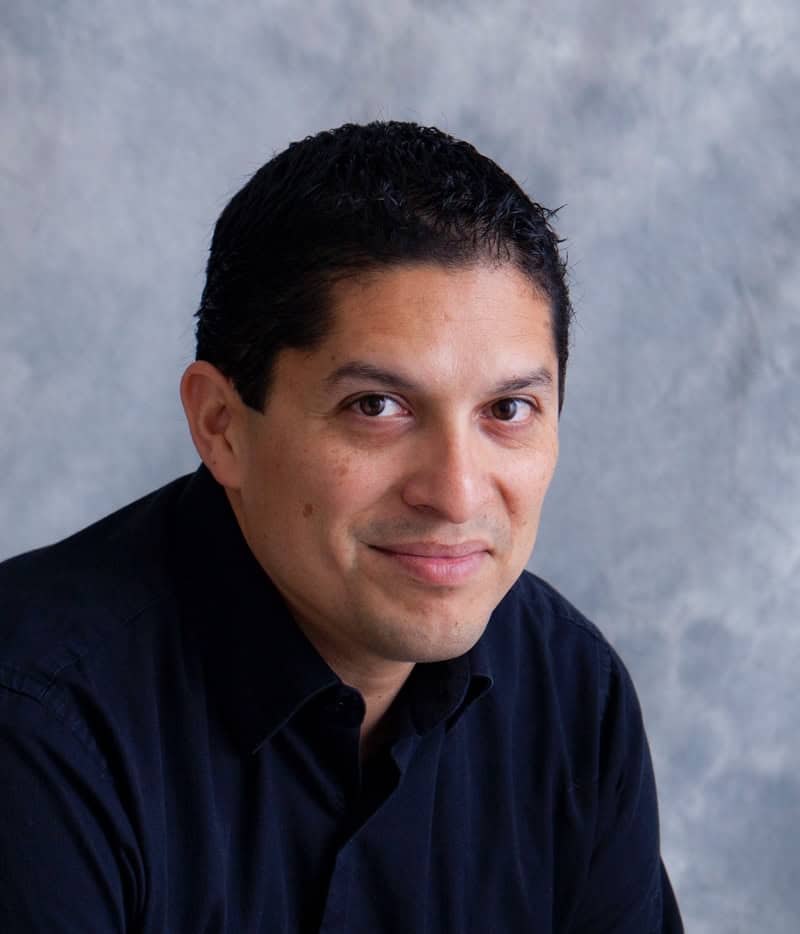
Yeah, and I’m sure our guest will tell us all about them. It’s Manuel Vargas, co-director of the Mexican Philosophy Lab at UC San Diego, and author of the forthcoming book, “Mexican Philosophy.”
Ray Briggs
Manuel has also been teaching a hugely popular class on Latin-American philosophy. It’s a subject an increasing number of students are getting interested in.
Josh Landy
So we sent our Roving Philosophical Reporter, Holly J. McDede, to find out what Mexican philosophy means to students at a community college near the US southern border. She files this report.
Holly McDede
In the United States ,philosophy is overwhelmingly white and male.
Manuela Gomez
When you think of philosophy, you always think of the white European men. You don’t really think of these brown kids from the border really having any sort of impact.
Holly McDede
Manuela Gomez is one of the few women in philosophy and one of even fewer Mexican American women in the field. She’s a professor at El Paso Community College and the founder of the El Paso Philosophy Xlub.
Manuela Gomez
I like to think that we create and participate in pragmatic projects that really have impact inside and outside of the classroom.
Holly McDede
Many students at the college cross a bridge from Mexico to the US, and the club aims to show how philosophy exists outside an elitist academic bubble.
Speaker 5
On one side, we have Ciudad Juarez being labeled one of the most dangerous cities in the world because of its drug war, because of its medical violence, femicides, etc. And then El Paso, Texas as one of the safest.
Holly McDede
The club is democratic, too. Members put ideas they want to talk about into a box, then choose at random. They researched the topic and come prepared to discuss it. One time they discuss the philosophy of traffic.
Speaker 5
Because somebody got to the meeting late, and to justify them being late they were just putting it as a joke. And then it ended up being selected.
Holly McDede
That turned into a discussion about the role of government in mobility and navigation, especially around the border.
Speaker 5
And to us, it was a fascinating discussion, because my students cross a physical bridge every day from Juarez to El Paso and vice versa. And sometimes it may take three hours to cross, sometimes it takes five minutes. And that’s a reality to us, like the philosophy of traffic is something we never thought would be relevant.
Holly McDede
At another meeting they were reading Plato, talking about platonic love, and someone made a joke about not having a date on Valentine’s Day.
Speaker 5
And then the conversation led to mean, but do you really need to date and is that really what Plato was talking about? And then we figured out no, in fact, we’re discovering that there’s this more elevated and multi-dimensional type of love. And then from there—and this was the students idea—why don’t we all on Valentine’s Day get together and have these random acts of kindness where we spread the love.
Holly McDede
They talk about the philosophy of race and racism, and moral responsibility. And in the last decade, they’ve raised over $40,000 in philanthropic projects. After the mass shooting at a Walmart in El Paso in 2019, members called an emergency meeting.
Speaker 5
Where we talked about what does that mean to us? Like, how do we recover from this?
Holly McDede
The club draws people outside the philosophy major too, like Jesús Guerrero, a former president of the club. He was finishing his Bachelor’s in biology with a chemistry minor when he joined.
Jesús Guerrero
Obviously was completely different from what I was used to from just hard sciences. And I just fell in love with the project and how much we were involved in the community. That’s motivating me to stay with the organization for so long.
Holly McDede
Daniel Avitia, another former president, says the club has helped him realize how relevant philosophy can be to understanding his community.
Daniel Avitia
Being a first generation student here in the United States, my parents migrated to the US. And now living at the border, I see how migration is a topic that I specifically have like a personal relationship with but also, you know, it’s present in my community.
Holly McDede
Borders are a big theme in the El Paso Philosophy Club—geopolitical borders, borders, in academia and in philosophy—and what it means to cross them. For Philosophy Talk, I’m Holly J. McDede.
Josh Landy
Thanks for that fascinating report. Holly. I’m Josh Landy, with me is my Stanford colleague Ray Briggs, and today we’re thinking about Mexican philosophy.
Ray Briggs
We’re joined now by Manuel Vargas. He’s professor of philosophy at the University of California San Diego, and the author of a forthcoming book entitled “Mexican Philosophy.” Manuel, welcome back to Philosophy Talk.
Manuel Vargas
It’s great to be here.
Josh Landy
So Manuel, you’ve written about free will and responsibility. How did you first get interested in Mexican philosophy?
Manuel Vargas
I don’t really know, but I think I might have been born to it. I got interested in in grad school and I like to tell myself that’s how I got interested in Mexican philosophy. I was interested in whether or not there was philosophy that was done in Spanish. But a few years ago, I learned that this might be the wrong story about how I got interested in it. I was visiting my parents. They both worked as social workers when I was growing up and saw they had some books on a bookshelf that were on Mexican philosophy and I pulled one off and I asked my father like why do you have these books? How are these here? And he said, Oh, Well, when you were really young, I taught a community college course on Mexican philosophy. And this blew me away, I had no reason to expect that he had ever taught philosophy classes, much less on Mexican philosophy. And he showed me a syllabus and it turned out, I was teaching half the same things that he had taught 4050 years before. So I don’t know how I got into Mexican philosophy. I might have just been born to it.
Ray Briggs
Wow, chalk it up to like early childhood experience. So Manuel, Josh and I were arguing earlier about whether there’s one thing that’s called Mexican philosophy that includes all the stuff we’re talking about, or whether we should think of it as multiple things. So who’s right?
Speaker 1
Well, on the one hand, you’re both right. And on the other hand, you’re both right. But by this, what I mean is, I do think there is an interesting way of thinking about Mexican philosophy, where it turns out that it’s just any philosophy produced in Mexico. And we can be open about how crazy and diverse and dis unified that is. I also think that there is a way of thinking about Mexican philosophy where a lot of it, maybe not all of it is tied together by an interest in articulating what it is to pursue or achieve freedom and what it is to pursue or achieve freedom under non ideal circumstances.
Josh Landy
That makes a lot of sense. I mean, that’s something that holds Mexican philosophy, at least much of it together, right as a sort of contributing to a to a single kind of questioning. But what about what sets it apart? I mean, it seems like there’s a division among Mexican philosophers as to whether it’s better to think of it as having a certain kind of distinctness we’re doing something different, we’re doing something special, or in the case, I take it if someone Ramos and other philosophers Well, no, we don’t want to think thought of as as distinct and special, and therefore kind of separate. We want to be contributing to this global conversation about philosophy. Where are you on that?
Manuel Vargas
So again, I think I like both of these views. That is, I think that there is something really valuable and important about particularity and philosophy, and about starting conversations from where you find yourselves the way the world looks. And trying to articulate and understand how a local picture of the world looks. And so for philosophers who’ve been interested in their location in Latin America, or interested in the the particular nature, construction of Mexican culture, I think that’s a super interesting question. And there’s lots of ideas to be mined from thinking about that particularity. It’s also true though, that as you begin to learn and articulate things about the nature of of experience in a particular place, and time, it turns out some of those ideas travel. And that’s the way in which you can get universality out of particularity.
Ray Briggs
So I’m curious about this local concept as well, because we’ve been talking about a philosophical tradition that stretches back for multiple centuries. But Mexico is as a country is only two centuries old. So what are we talking about when we talk about Mexico before there was this country called Mexico?
Speaker 1
Yeah, this is a really great question, in part because the idea of Mexico itself is a contested question. When do we mark up Mexico when? When does it come into existence? So formally, the country comes into existence in Independence in the early 19th century, but at that moment, they’re already describing themselves as a group of people that have existed for 300 years. So I’m inclined to a very capacious understanding of Mexicanness.
Josh Landy
You’re listening to Philosophy Talk. Today we’re thinking about Mexican philosophy with Manuel Vargas from UC San Diego.
Ray Briggs
What can we learn today from 16th century debates about slavery? What unique insights do Mexican philosophers bring to feminism? How can Mayan and Aztec thought changed the way we see the world?
Josh Landy
Liberalism, Catholicism, and existentialism—along with your comments and questions, when Philosophy Talk continues.
Lila Downs
In their home whispering to the dark eyes.
Josh Landy
If we listen to Mexican philosophy, can we make life better than it was before? I’m Josh Landy and this is Philosophy Talk, the program that questions everything…
Ray Briggs
…except your intelligence. I’m Ray Briggs and we’re thinking about Mexican philosophy with Manuel Vargas from UC San Diego.
Josh Landy
Got questions about philosophy beyond our southern border? Email us comments@philosophytalk.org, or comment on our website. And while you’re there, you can also become a subscriber and check out our library of more than 500 episodes.
Ray Briggs
So Manuel, we mentioned Mexican existentialism at the top of the show. Can you tell us what that was about?
Speaker 1
What it was about was a philosophical movement that was designed to give us the possibility of the English-language word “Mexistentialism.”
Ray Briggs
It’s a great word.
Speaker 1
It’s really the whole point of Mexican existentialism. But there was another point to Mexican existentialism as well, which was the idea that the by the time the 20th century rolls around, what Mexicans began to experience was a kind of puzzling or quite Shouldn’t about who were they what was Mexican this what at a consistent there had been a revolution in the early 20th century that was supposed to liberate Mexico from its history. But it couldn’t quite escape that history. At the same time, there was a sense of being torn between the Americas and Europe and the effects of colonization. And so a group of philosophers began to undertake this question about how is it that we should go forward.
Josh Landy
And Emilio Uranga writes a book called “Analysis of Mexican Being.” What is Mexican being according to Uranga?
Speaker 1
Well, it turns out Mexican being is accidental. Wait, what does that mean? Well, it means it’s an accident in two senses. One sense is just the idea that nobody intended to create Mexicans, there was never a an idea about let’s bring a new people into existence. So there’s the fact of colonization, that produced a new group of people who were not purely indigenous, but who were not purely European either, and who found themselves under conditions of of being culturally influenced by both groups, but no clear sense of identity, apart from the fact of being some kind of hybrid combination. So that’s one sense of accidentally, it’s a product of historical forces.
Ray Briggs
So it sounds like there’s another sense as well.
Speaker 1
Yeah, so the other idea of accident for Uranga is that idea that Mexicans couldn’t take for granted a package of norms, meanings and values about how to live they were torn between these different kinds of cultural values, the the Spanish and the indigenous. And so to be an accident for for odongo was partly to find oneself in a situation where you couldn’t take for granted what it was that that you ought to do with your life and how to live.
Josh Landy
So there’s a really interesting way in which the same set of ideas can sort of signify differently, land differently function differently in different environments. So here we have this thing called existentialism that we often think of, as, you know, being at home in Europe and in Scandinavia, and France, and Germany and so on. Is Mexican existentialism, basically the same thing as French essentialism, or do Mexican philosophers put a different twist on it? Does it do something in Mexico it can’t do in Europe?
Speaker 1
Yes, part of what Mexican existentialists were really interested in is they were borrowing from and drawing from French and German versions of existentialism. But they were interested in how those questions applied in the very specific historical circumstances of Mexico. And in particular, part of what they were interested in, is the idea that maybe it turns out that being unclear about what package of norms, meanings and values you should take for granted, revealed something deep and fundamental about the human condition that something about the historical specificity of Mexico made a deep truth about human condition more visible, more readily accessible than it otherwise would be.
Ray Briggs
Alright, so that’s super interesting. How did sort Mexicanness get to that point? What was going on before Mexistentialism?
Speaker 1
Well, the story really starts almost 500 years before. And and that’s at the moment of Spanish colonization. And I think the ur-moment for some of those discussions gets going in what we think of as the Las Casas-Sepulveda debate, where European colonization is for a brief moment in time brought to a stop so that a group of philosophers could figure out the moral permissibility of conquest and what the basis was of people having rights or not, underneath the possibility of colonial regimes.
Ray Briggs
Right. So it sounds like Las Casas was at least somewhat successful in getting Spain to reconsider what they were doing. Is that right?
Speaker 1
So Las Casas’ success was a mixed bag, but there were real tangible successes. So one, one feature of the success was that there was even a debate at all. I mean, one way to think about it is to think about the situation here in the United States right now imagine us power getting sent somewhere else, and then imagining the United States deciding to pause on a military action, because a group of philosophers are worried about whether or not it’s morally permissible.
Ray Briggs
Yeah, I think the last time that has happened was Vietnam. And it wasn’t really philosophers, and also the US was losing.
Speaker 1
Yeah. So this is one of the really striking things about this debate in 1550, and 1551, is that you have this moment where the Empire pauses, and they pause precisely because of the efforts of Las Casas and some other folks but primarily less gas has to raise the question about the morality of conduct and the status of the indigenous peoples. Were they rational? Did they have a right to self organization? What was the most effective way to bring them around to the Spanish conception of the proper way of life?
Josh Landy
And as I understand it, there were sort of two aspects to Bartolomé de la Casas’ argument against Juan Gines de Sepulveda. So suppose we basically said, Look, you know, these folks, they don’t really know what’s best for them, right? So kind of paternalist Aristotle type are Government, we’ve got to make their decisions for them. They don’t know what they’re doing. There’s all this human sacrifice. Clearly, they’re not up to snuff. And we’ve got a we got to go get in there and take charge. Unless Congress is saying that no, they’re fully rational beings. They’re perfectly capable of making their own decisions and so they have every right to make their own decisions. But also, even if you are right Sepulveda, even if you were right, and, you know, they, they weren’t really up to scratch in that regard. It’s not a good idea strategically, right? Make preach not war, right. So the the way to win people’s hearts and minds and convert them in this case to Christianity isn’t to force them to become Christian adopt these new practices and values. Set a good example. You know, show them how cool it is to be Christian. Is that about right?
Manuel Vargas
That’s exactly right. It was a choice point between a coercive and a non coercive way of trying to bring the indigenous peoples in the Americas over to the Spanish conception of what the good life was about.
Ray Briggs
You’re listening to Philosophy Talk. Today, we’re thinking about Mexican philosophy with Manuel Vargas from UC San Diego. And Manuel we have a question from Sarai in San Diego, which is, I think, relevant here. She asks, In what ways has Mexican philosophy influenced historical events in ways that we might take for granted today or be ignorant to and she gives us example, in the debate about whether enslavement of the indigenous was justifiable. Between Bartolome de las cosas and one Guinness Sepulveda and others, we are aware that their works and ideas have had an effect on how enslaved Africans would then be seen as the primary important labor force.
Speaker 1
Yeah, so the good and the bad of philosophy is the arc of our successes and mistakes tend to be large, at least when they hit these kinds of world historical moments. And so I think one of the important things to recognize about les gas is is that initially in his zeal for defending the indigenous peoples in their interests, or as less gas was understood their interests that he suggested that maybe one solution to the to the backbreaking labor that was being imposed on the indigenous peoples was to import African slaves—not his finest moment.
Josh Landy
Now Manuel, we’ve been talking the last few minutes about attitudes in what’s currently called Mexico towards indigenous populations. But we should also think about indigenous populations speaking for themselves. We have a question actually, from Tim in Portland. He asks if you can explain a little bit about the Aztec or Mixquica concept of ‘nepantla’ and the Mayan concept of ‘In Lak’ech’
Speaker 1
So the the notion of nepantla is a super interesting idea of both in itself and over its history. So the idea shows up initially, it’s a it’s a now what word for between this, but contemporary interpreters disagree about exactly how to understand that between this. So some people read it as a term that has to do with a kind of weaving in and out of some people think it’s just being in an intermediate position.
Ray Briggs
So is there an example of where I might use this concept of nepantla or between-ness?
Speaker 1
So a number of people have thought that nepantla was precisely the characterization of Mexicans or Mexican Americans in the United States, a group of people that find themselves between cultural frameworks who are torn between finding a European pneus or finding indigeneity appealing or finding us culture appealing and finding Mexican culture appealing.
Josh Landy
And so this is sort of an upon club. This is a term borrowed from Mixquica culture, what’s sometimes called Aztec culture. What else is cool in there? What else essentially I mean, I you know, if I understand correctly, this a supreme creator god who combines masculine and feminine principles, that seems pretty interesting. Sounds a little like some of the Gnostic Gospels. There’s a kind of philosopher-king, that’s kind of interesting, philosopher-king and poet, ruler of the city-state of Texcoco, interested in the impermanence of things.
Manuel Vargas
Test question: can you pronounce his name?
Josh Landy
I’m going to try. Nezahualcoyotl?
Manuel Vargas
Nezahualcoyotl.
Josh Landy
Pretty close. So tell us about those. What are the things that you find most interesting in Mixquican culture?
Speaker 1
So one of the things I think is super interesting in the Michigan worldview, is the idea that that as some scholars have put it, doing the right things got to hurt. The idea that you’ve got to sacrifice in order to contribute to the greater good and not just contributed to the greater good, but in some sense, to keep the structures of reality going. It’s a costly effortful endeavor, and it’s highly reciprocal, that we’re all engaged in a process of having to forfeit time energy, suffering on behalf of trying to keep the structures of the world intact.
Ray Briggs
That speaks to me, certainly.Manuel, I want to ask another question from Sarai in San Diego, because I think this this ties back to our earlier conversation about in a potluck, which is what counts or identifies as Mexican philosophy. So considering the malleability of Mexican identity, how does Mexican philosophy follow suit with this challenge?
Manuel Vargas
So Mexican philosophers have have fought at various times vigorously about whether there is a Mexican philosophy what the boundaries of it turned out to be. And there was a particular movement, we talked very briefly about the the Mexican existentialist movement that was precisely concerned with Mexican Ness. But a different way of thinking about Mexican philosophy is to lean on the idea of any philosophy produced in Mexico. And then we can have fights about how to understand the the borders of Mexico and which, which places and times.
Josh Landy
But we can see some cases in which later philosophers are being it later Mexican philosophers are being inspired by earlier Mexican philosophers. So as you said earlier, the kind of the legacy of the good part of less cost us hopefully the bad part, and also the legacy of indigenous thought. So people like Emil Ranga, again and Gloria Ansel dua, picking up on the peninsula, and, and bring it into their philosophy. Do you see other cases like that of, of later, philosophers picking up on the wisdom contained in Mayan or Mixquica philosophy?
Manuel Vargas
Yeah, so absolutely. I mean, so partly, what you find is an attempt in, in the 20th century, take seriously the thought that maybe the indigenous people were, and this is I know, shocking for some folks capable of thought, abstract thought and reasoning about how they ought to live together, the nature of the world is, that’s right. And so there have been, there’s been a lot of really interesting efforts to try to recover that. And to try to reconstruct it, of course, we’re challenged by the fact that one of the things that mattered immensely to the Spanish was to displace indigenous culture. And so lots of the works from from pre contact periods were burnt, and we’re literally effortfully destroyed. And so what we have is oftentimes mediated by the work of early what we sometimes now would think of as ethnographers trying to reconstruct that. But there are lots of the interesting and suggestive ideas in that time period, about about the reciprocity of suffering about the the world being unified by a kind of energy that transforms over time, that there’s lots to talk about. But part of what I think is interesting in that tradition, in the wider, longer tradition is that you have a conversation that re emerges as figures, go back and try to reconsider the fights about how it is that one can articulate one’s rationality to people who are in a position to have reason to not care about whether or not you’re rational.
Ray Briggs
Yeah, so I want to ask about this idea that keeps coming up of like, Mexican philosophy being a mixture of different things. So you’ve, you’ve had some people like Jose Vasconcellos, who think that Mexican pneus is essentially about being a mixture of different things. Can you talk about that idea?
Speaker 1
Yeah, so So Vasconcellos is a early 20th century Mexican philosopher who also had a whole second life as like, as a public intellectual and as a politician in Mexico as a kind of amazing, complicated figure. And he has this idea in, in his works in the mid 1920s, about the the essential imperative by Vasconcellos’ lights to take seriously the idea of race mixing as a long term solution to a distinct set of problems one, human beings inclination to, to draw borders around each other and to draw distinctions on the basis of race, but too, as partly a strategy for getting people to be open to the possibility of constructing a society that wasn’t based on in group out group differences about race or creed, but was instead about trying to create a beautiful world that we could all live together that takes as central kinds of commitments, things like beauty, things like love, and the possibility of unification of people that doesn’t turn on social identities.
Ray Briggs
Yes. So how did other philosophers sort of take that up? Like, where did that go from from the early 20th century?
Speaker 1
Well, so one of the interesting things is Vasconcellos, when he was the Secretary of Education in Mexico, he just imposed parts of this picture on on Mexican society. So as the Secretary of Education, he went out and started the Mexican muralist movement that had amongst other things, figures like Diego Rivera, and Orosco and various important figures in the history of art, whose job it was to depict Mexico as a mixed race group of people. And then this theme gets picked up subsequently in the United States in the Chicano movement, where there was an effort to understand themselves as a group of people who realized the Asper raishin of the bustling cellos project of, of race mixing and to get beyond the the old racial divisions.
Ray Briggs
I’m really impressed by how much influence the philosophers were discussing have had, not just on the way people think. But on things like which art gets funded or like what colonial projects the government is engaged in things like my Mexican philosophy has a history of like, serious social engagement and kind of power.
Speaker 1
That’s right. So Mexican philosophy as opposed to philosophy in the United States. And maybe philosophy across Latin America more generally has a very long history of, of real serious, important engagement. So, at one point, compte and positivism for example, was the official state philosophy of the Mexican government. And you end up with these moments in which philosophers are wielding a tremendous amount of influence in, in political life and in the construction of of of important aspects of society.
Josh Landy
You’re listening to Philosophy Talk. Today we’re thinking about Mexican philosophy with Manuel Vargas, co-director of the Mexican philosophy lab at UC San Diego.
Ray Briggs
Could Mexican philosophy help give us new perspectives on current events? Can it help us challenge colonialism and embrace our freedom? Will it enable us to lead better lives?
Josh Landy
Freeing your mind, in more ways than one. Plus commentary from Ian Shoales the Sixty-Second Philosopher,when Philosophy Talk continues.
Natalia Lafourcade
Después de morir mi guerra, hoy renazco agradecida.
Josh Landy
Music from Mexican singer-songwriter Natalia Lafourcade, as selected by our guests, Manuel Vargas from UC San Diego. I’m Josh Landy and this is Philosophy Talk the program that questions everything…
Ray Briggs
…except your intelligence. I’m Ray Briggs, and we’re thinking about Mexican philosophy.
Josh Landy
Manuel, we’ve got a question from Luís in San Diego. Luís says, in my personal experience as a first-gen Latino college student, I’ve noticed a lot of Latino parents and families have a tendency to look down upon certain career paths. Did you always have full support when pursuing this career of yours? Not specifically as a professor, but more so in the field of Mexican philosophy, and also ¿le va a las chivas o al america?
Speaker 1
So I’m going to start with the easy question first, which is the which football team do I root for in Liga Mexicana? So, I mean, the easy answer to this question is it’s got to be boom us, anybody who’s an academic and has interest in in philosophy in Mexico, there’s a pretty good chance that you’re a Pumas fan.
Josh Landy
So you reject the premise of the question. But what about the other part of the question?
Manuel Vargas
Okay, so I was lucky, I was really lucky. When I came home and told my parents, I was going to be a philosophy major. My mom didn’t say anything negative. So that already made me very lucky. But then my father said, Miko, that is fantastic. I can’t imagine a better thing for you to be doing philosophy is the study of the human and the human condition. This is the most important thing you could be studying. So I just got super lucky. You know, there are a lot of folks who love philosophy and go home and tell their parents that they want to study these things and think about these things. And their parents immediately ask, yeah, but what are you going to do with that? And I fortunately, my parents didn’t seem to really care what I was going to do with my life.
Ray Briggs
I mean, it sounds like you had an advantage in having a dad who had taught Mexican philosophy.
Manuel Vargas
Yeah, though, he didn’t say that at the time. I mean, so this was one of these things that it felt like I was doing something radical and new. And then as as, as young folks are bound to find out most of what we think we’re doing that’s radical and new turns out to have been something our parents did.
Josh Landy
So Manuel, I want to come back to the surprising degree of impact that Mexican philosophers have actually been able to have on their surrounding culture. If you had to pick one, one thing in Mexican philosophy that you think could have a really good impact on the way we live today on the way we think today would that be?
Speaker 1
So first, I want to reject the premise here, the thing I find surprising is that philosophy outside of Mexico has oftentimes not had more impact. And I think that’s part of what’s nice about about reading Mexican philosophy and reading Latin American philosophy is that it suggests a different way, or a different kind of impact philosophy can have. So that’s the first thing I’d say. If I had to point to one thing that I would encourage everybody to go out and read, the answer is go read yourself some Sor Juana Inés de la Cruz. Sor Juana was a 17th century nun, in Mexico City, brilliant, kind of just gigantic, formidable intellect, maybe the most formidable intellect in a 150 year period in the Americas, a polymath. She wrote poetry, she wrote plays, she did all sorts of things, but part of what makes her work so interesting is she’s a woman writing as a nun, in the peripheries of a global empire, and she’s trying to figure out what kinds of agency are available to people under non-ideal, that is to say, oppressive conditions. And she’s really interested in what shape there is for these things, what possibility there is for culpability under these conditions. And I think Sor Juana is terrific on just these kinds of issues. And I think part of the reason why we should be reading figures like this is because these issues are very much alive today. And sort of one I can point the way.
Ray Briggs
Yeah, so she was, as you mentioned, a nun. What role did Catholicism play in the kind of theorizing she was doing?
Speaker 1
So Sor Juana was very much a both a woman of her time and a woman out of her time. So she was heavily informed by an invested in, in Catholic thought and Catholic frameworks. There’s disagreements among scholars about to what extent she was intellectually Catholic, as opposed to spiritually committed to it, and especially towards the end of her life. But one of the things that I think is is very clear for sort of one is that she draws on the tradition, but she also critiques the tradition internally. And this is part of what makes her so potent as a figure is that she is very concerned to point out to the the Conservative Catholics of her day that there is an entire forgotten history of women’s contributions, both in the church and out of the church, that point to the possibility of of women being fully equal contributors in a way that was just not manifest in the time period.
Josh Landy
So how does that compare to feminist philosophy from Europe or North America? So for example, Beauvoir Wollstonecraft, Harriet Taylor Mill, Audrey Lorde—are there points of contact, points of difference?
Speaker 1
Yeah, I mean, I, so, this is going to be totally unfair, because lots of people can have good ideas that they get to independently. But once you’ve read sort of one and then you go and read Woolston craft, or mill or even Beauvoir, it starts to feel like this is something that where turnitin.com would flag them for having failed to acknowledge that they’re plagiarizing the work of a Mexican nun. Now, of course, this is unfair, because they weren’t in fact, plagiarizing. And but but so it was very striking in the way in which she anticipates a lot of later developments in feminist thought.
Josh Landy
But she’s getting there 200 years earlier.
Ray Briggs
Yeah. So I want to ask about this, like, responsibility. So her own choice situation is really interesting, because you can see like, being an offering her opportunities for reflection, and like not having to cater to a husband that she wouldn’t have had otherwise, what, what does she think that like, women should do or can do to make better intellectual contributions to society.
Speaker 1
So I think Sor Juana recognizes that she had a choice to make, and she was committed first and foremost, to her intellectual life. And so that choice for her meant not being married, because as she’s very upfront about and talks about, in this one essay of hers, that the the the choice to not get married was the choice to walk away from responsibilities to a spouse, to children, and so on, in the hopes of being able to maintain freedom for her intellectual life. Part of the challenge, though, that she thinks is that that this is not a choice that is available to lots of women. And she’s very sensitive to the fact that that the structures and educational opportunities were basically closed off to women of her time, you couldn’t go to school, you couldn’t learn these things. And she was very lucky that, that she had access to a library and came to have the largest collection of books in Latin America at the time. And, and so she had these opportunities that other people didn’t have. And she advocates on behalf of the need to have women’s scholars precisely so that there are more opportunities for women students to be able to study with women scholars. And so this isn’t a thing that she identifies as a as a crucial possibility for one way that society could change to open up the possibility of a more equal intellectual freedom, and crucially, not to not lose the contributions of women.
Josh Landy
And she has other views about education, which I think are interesting, too. She thinks, you know, go broad, not deep learn about a lot of different things. I gotta say, as you know, someone who came from the British educational system, and loves the American higher ed system. I got it. I like that. I mean, not that we should never go deep. But the idea of what we now think of as liberal education, can you tell us a little bit about more about SorJuana’s views about that?
Speaker 1
Yeah, so so when I had this picture of the world being organized, being super complex, and part of the thought is that if you learn some things over here and you learn some things over there, you begin to see patterns that don’t emerge if you’re studying something very narrowly. And she thinks that this interacts in a really important way with what happens when human beings screw things up by trying to gender the world. So part of what Sor Juana critiques he’s got this wonderful, famous line that Aristotle would have written more if he had spent time in the kitchen. And part of what she means by this is that in a world partitioned by gender norms, Were there certain things that were Men are supposed to do and certain things that men are supposed to do, there is phenomena out there that have bearing on our best theories about the world that is just not going to get looked at by either gender because you’re of the wrong sex or the wrong gender to be able to get access to those things structured in a world that was structured by that kind of category. And so this is part of Sor Juana’s call for a broad education means not just to study many different kinds of things. But a really, genuinely broad education would be one that’s not hemmed in, by contingent, or arbitrary. That is arbitrary with respect to understanding the way the world is put together, categories of social identity.
Ray Briggs
So this is also interesting, because it suggests that she’s got this view of gender, where it’s not just that, like, all of the good things are in the men’s domain, and women have a right to that stuff. But there’s also a lot of valuable stuff in the women’s domain that is just being overlooked.
Speaker 1
That’s right. Yeah. So Sor Juana thinks it’s not just that women’s domain is less interesting. Rather, she thinks no, all the world is interesting that you can learn chemistry from cooking. And there are phenomena that you’re going to learn in the kitchen or doing traditional women’s work that is going to matter for our best theories about these kinds of things.
Josh Landy
I think we got a lot to learn from that. And also from the fact that philosophy has been taught in high school in Mexico since the 19th century. And it became a constitutional right in 2019. I want to see that constitutional amendment here. But I want to ask you about a different strand of Mexican philosophy that maybe we could be inspired by today. I’m wondering about the the philosophy of liberation from the 20th century. What in there is still of interest to us, potentially today?
Speaker 1
So I think there there are two really important ideas in the philosophy of liberation. So one is that philosophy should be centrally concerned with the poor, the oppressed, and the marginalized populations, and that it should therefore be concerned for their liberation. And so I think the idea that we should be doing philosophy with an orientation towards who are the excluded who are the marginalized, this is really important. A second thought that I find very important and instructive in this, in this family of views, is the idea that that no social system is perfect. There’s always going to be some residual, some leftover, some group of people who are not advantaged. And you always want to be trying to listen to those folks, because they’re identifying friction points in whatever the current social arrangement is.
Ray Briggs
So Manuel, I keep coming back to Luís’ this question about the value of philosophy. If there’s like one thing about the social value of philosophy that we can learn from the history of Mexican philosophy, what should we take away?
Manuel Vargas
So I think that one recurring lesson from thinking about philosophy in the Mexican circumstances is the liberating power of philosophy. That philosophy provides us with an opportunity to critique what is given to us, and to see and fight our way to the possibility of a better world or at any rate, a world that does less badly than the one that we’ve been given.
Josh Landy
And what about the way in which the world looks from the point of view of Mexico City, rather than Madrid or Munich? We’re used to having these histories of philosophy told from Madrid, Munich, London, Paris. What does the history of philosophy look like when told from Mexico?
Manuel Vargas
It has a very different flavor. It’s in conversation with the European tradition, but it’s also its own history. It’s like an alternative history of philosophy that as you run through that story, there’s a natural question, for example, that begins with where does it even start? Does it start with Spanish colonization? Or do we include indigenous thought from prior to that period? Then there are these questions about what kinds of thinking do we do under colonialism? And under what sometimes it’s called the Baroque or golden era of Spanish colonization within their independence movements? What is it to create and form a new country to begin to ask questions about how should you self organize? And how do you deal with the fact of internal ethnic, racial class diversity? And then you get up to the 20th century where there’s an explosion of people trying to liberate themselves from what they’ve regarded as the oppressive history of a sort of bad version of liberalism as it unfolded? And what kinds of intellectual freedoms that there are and ways in which we can build new understandings of ourselves and new forms of self organization? These are the things I think that that emerge in that kind of history.
Josh Landy
Manuel, I gotta say, this has been such an eye opening conversation. I’m deeply grateful to your dad for reading you these books as as bedtime stories, apparently. Also very, very grateful to you for joining us. Thank you so much.
Manuel Vargas
Thanks for having me.
Josh Landy
Our guests has been Manuel Vargas, professor of philosophy at UC San Diego, where he also co-directs the Mexican philosophy lab. So Ray, what are you thinking now?
Ray Briggs
I’m thinking, I wish American philosophers would take a page especially from Mexican philosophers’ ability to get philosophy taught in high schools and ability to get multicultural art funded because it’s a good thing for philosophical reasons.
Josh Landy
Aperson can dream, right? And all that fascinating aesthetic theorizing in the 20th century. There’s so much there. We’re gonna put links to everything we mentioned today on our website, philosophytalk.org, where you can also become a subscriber and dive into our library of more than 500 episodes.
Ray Briggs
And if you have a question that wasn’t addressed in today’s show, we’d love to hear from you. Send it to us at comments@philosophytalk.org, and we might feature it on the blog.
Josh Landy
Now… a man so far has already been to Mexico and back—it’s Ia Shoales the Sixty-Second Philosopher.
Ian Shoales
Ian Shoales… This may be eurocentrism in action, but I can actually visualize certain countries through their famous brains. Jean Paul Sartre sneering at the Eifel Tower. Socrates throwing wine on the lukewarm thoughts of some Athenian poser. Back home there’s Noam Chomsky gathering splinters of good American wood to toss on the fire that will one day consume neoliberalism. And there’s Jordan Peterson whining about vaccinations, oh wait, he’s Canadian? Wow. I had no idea. There’s a certain amount of branding mixed in with philosophizing. Libertarianism and left leaning government giveaways go hand in hand in America, and then they walk right off the cliff, where a book deal might await at the bottom, the way treasure awaits in the Sierra Madre. I suspect Mexican philosophy is a lot like American philosophy, idealistic, only with bandits. Of course my feelings are colored by couple Bob Mitchum movies, Bring Me the Head of Alfredo Garcia, Ride the Pink Horse, Vera Cruz, The Long Good By, the Alamo, I suppose, and The Getaway– Mexico is where Steve McQueen and Ali McGraw escape to, and of course, where the Wild Bunch go to die. Friends have gone to Mexico to swim, drink beer, and eat fresh fish tacos. That’s my image of Mexico- it’s either siestas and flan, or six guns in a village square. No inbetween. A hundred years or so of revolutions have made Mexico a little weary of communism, I’ll bet, but also capitalism, even as drug cartels have supersized. Mexican politics has flair. Remember subcomandante Marcos? The military leader for the Zapatista Army of National Liberation? He appeared in a mask like Zorro, or a Mexican wrestler on a winning streak. An activist and philosopher, he issued statements like: “All cultures forged by nations…are corroded by the American way of life. … neoliberalism imposes the destruction of… nations… to reconstruct them according to a single model. … a planetary war… waged against humanity.” He’s in his sixties now. Time for a new subcomandante? Like James Bond, or Batman. At the heart of much Mexican thought is a concept called Nepantla, the middle way. Taken from the Nahua’s Florentine Codex,: “We travel along a mountain ridge while we live on earth, an abyss yawning on either side. …Only by keeping to the middle way does one walk on and live.” Somebody told me once that if a Mexican bus driver gets in an accident, he runs away, to a hidden village, deep in the mountains, known only to bus drivers. There is no insurance for drivers. So they vanish, and live out their days with only each other for company. They can never go home again. I met a guy from Mexico at another party, who told me that story is absolutely true. Who knows? Mexico has a long and varied history, with peasants and conquistadors and Indians and outlaws and rebels all commingling, war with United States, war with Texas, unrest got so bad, worried conservatives tried to install a monarchy. Bring in Maximilian, Austrian Archduke, to be Emperor of Mexico, even though Juarez was already President of Mexico. Up north, we remembered the Monroe Doctrine, but it was the Civil War, and had to wait until 1865 to park an army at the border, but then Maximilian got captured by the President’s forces, and executed. Mexico felt bad about it. They kind of liked the guy. But they already had a president. The Great Revolution came in 1910. Pancho Villa assassinated, Zapata. As if in sympathy, Trotsky fled Russia to be assassinated in Mexico. The border remains a problem today. Some like it when Mexicans come over. They make our beds, mow the lawns, maybe build a house. Others, though, think Mexicans are just biding their time so they replace us. Mexico is pretty blasé seems to me. Like we’re still part of Mexico, it just takes a little more effort to get here. There seem to be a lot of drug dealers down south, because Americans keep buying drugs, it’s the free market in action. Speaking of crime, it occurs to me that in Alfonso Bodoya was the rare Mexican actor who played a Mexican bandit, the one who did not require any stinking badges. A question all of us wrestle with, when are badges needed, who issues them, are there tests involved, which is why so many turn to a life of crime, then try to make the border before the money runs out. Unless we’re already south of the border in which case we hope we’re Antonino Banderas as El Mariachi in Desperado, and not Robert Mitchum in Out of the Past. That one doesn’t end well at all. For anybody.I gotta go.
Josh Landy
Philosophy Talk is a presentation of KALW San Francisco Bay area and the trustees of Leland Stanford Junior University, copyright 2023.
Ray Briggs
Our Executive Producer is Ben Trefny. The Senior Producer is Devin Strolovitch. Laura Maguire is our Director of Research
Josh Landy
Thanks also to Jamie Lee, Elizabeth Zhu, Emily Wang, Merle Kessler, and Angela Johnston.
Ray Briggs
Support for Philosophy Talk comes from various groups at Stanford University and from the partners at our online community of thinkers
Josh Landy
And from the members of KALW local public radio San Francisco, where our program originates.
Ray Briggs
The views expressed (or mis-expressed) on this program do not necessarily represent the opinions of Stanford University or of our other funders.
Josh Landy
Not even when they’re true and reasonable. The conversation continues on our website,philosophytalk.org, where you can become a subscriber gain access to our library of more than 500 episodes. I’m Josh Landy.
Ray Briggs
And I’m Ray Briggs. Thank you for listening.
And thank you for thinking.
The Treasure of the Sierra Madre
Oiga, Señor. We are federales. You know, the mountain police. If you’re the police where are your badges? Badges? We ain’t got no badges. We don’t need no badges. I don’t have to show you any stinkin’ badges!
Guest
Related Blogs
-
July 7, 2023
Related Resources
Gallegos, Lori, Manuel Vargas, and Francisco Gallegos, eds. (2025). The Latinx Philosophy Reader.
Sánchez, Carlos Alberto (2021). Emilio Uranga’s Analysis of Mexican Being.
Sor Juana Inés de la Cruz (2015). Selected Works.
Vargas, Manuel (2013). Building Better Beings: A Theory of Moral Responsibility.
Get Philosophy Talk
