Time
July 12, 2005
First Aired: November 9, 2004
Listen



Time is the most familiar thing in the world, and yet philosophically one of the most puzzling. Is the present what’s left when you subtract what has already happened, and what is yet to happen? Then it seems to vanish into a mere instant. Are future events completely unreal? Or are they just the things we can’t know yet? Is time unreal, as many philosophers have thought? Columbia’s Dave Albert joins John and Ken for a fascinating hour.
Is the future real? What happens to the present moment when it becomes past? Does the present depend on thought? Is the flow of time just a human construct? Ken introduces David Albert, philosopher and physicist at Columbia. Albert begins by suggesting that we think of the “now” like we think of “here”, that is, “here” is wherever I am and “now” is whenever I am thinking. Our intuitions say that space and time seem fundamentally different. For example, we have sense experience access to different points in space, but we do not have such access to time.
Ken asks if time could be real in experience but not objectively real. Albert describes the problem of the direction of time in the foundations of physics in terms of billiard balls hitting. Albert points out that most theories of time are symmetric while our experience of time is asymmetric. What it would mean for time to move faster? Rate is measured in terms of time. Albert talks about the import of Einstein’s theory of relativity has for understanding time.
Is time travel possible? It seems like if you could travel back in time, you couldn’t do anything to change the causal history of the world. Kurt Goedel came up a solution to the equations of relativity that says time travel is possible. This leads to the grandfather paradox, that is, if you could travel back in time to kill your grandparents then you would prevent yourself from traveling back in time. Albert describes an interpretation of time as relative change in things. If our perception of time gets at some objective thing in realty, then could there be creatures that cognize time differently than we do? Albert thinks natural selection likely ensures that all creatures worry about arranging future events more than past ones.
- Roving Philosophical Report (Seek to 04:36): Amy Standen interviews Doug Williams about movies on time travel such as Twelve Monkeys and Back to the Future.
- Sixty Second Philosopher (Seek to 50:18): Ian Shoales gives a brief history of time, from ancient Greek mythology through Newton and modern physics.
Ken Taylor
Welcome to Philosophy Talk, the program that questions everything…
John Perry
…except your intelligence. I’m John Perry.
Ken Taylor
And I’m Ken Taylor. We’re coming to you from the studios of 91.7 FM KALW information radio for San Francisco.
John Perry
Carrying on conversations that start at Philosophy Corner on Stanford’s campus.
Ken Taylor
Yeah, today we’re going to talk about time. John, you know, there are lots of philosophical puzzles about time. One of my favorite is the future. You know, I’m looking forward to the future, but I’m wondering where it comes from. Is it real? Is it just something we imagine? I mean, how does it is the future just out there waiting to become the present?
John Perry
Well, that’s, that’s, that’s, that is a big puzzle. KEN I mean, a lot of philosophers have thought that the only way to really make sense of time is to suppose that in some sense, it’s, it’s not real, it’s ideal, it’s an illusion. It’s just a subjective way that humans or other animals have of dealing with something that’s not time at all. Kant and Berkeley and Descartes, they all thought stuff like that. And I think they were all nuts. I mean, I mean, if there’s anything that’s real, it’s time. I mean, time is, I can’t believe time is a human construction, and if it was, what would happen to our sense of freedom. Time is the most basic thing in our concept of what we’re doing in life.
Ken Taylor
Oh, you know, I think you’re kind of maybe right. But there is this problem, this flow of time. You know, where does the future flow from? Where does the present flow to? When it gets to be the past, if you look at just each moment of time, nothing kind of distinguishes this moment from that moment, from that moment. What makes a moment present? How does it get to be that?
John Perry
Well, that’s that’s one of some philosophers say, well, the moment that’s present is the moment you’re thinking. But then, if there wasn’t any thought, would there be no present, right? So is it? If there’s worlds where there’s no life, is there no time in those worlds? I can’t believe that, but a lot of people
Ken Taylor
do, yeah. Well, why don’t you believe? Why can’t you believe? What’s the reason for not believing because here’s a reason for believing
John Perry
because that there’s no time there in the first place. I can’t see how having intelligence or life or consciousness could add
Ken Taylor
it, but you’re confused. John, it’s not that there’s no time there. Maybe time or something correlating to time is out there, but the flow of time is just a human perception. I mean, if there weren’t any, if there weren’t any perceivers around, there wouldn’t be the flow of time. Time might be real, but it wouldn’t be flowing like the space time continuum in physics is just out there and real and independent of us.
John Perry
Yeah, he’s trying to say that kind of gibberish, but, and get paid for it. But can that? Can that be right? I mean, suppose you have a motion picture laid out on the floor and you say, Well, you know, the scenes move from scene to scene, but they don’t move from scene to scene till you put them in a camera in time and flash them on the screen. So I just don’t see how adding to the calendar a bunch of notations that says, Perry is conscious of this day today, and this day, this day and this day gives us any time. I hope I’ve cleared that up.
Ken Taylor
You actually confuse me. This is hard stuff, you know? I mean, because one of the things we think is in science fiction movies is that we can travel back and forth in time, right? So that means the flow is kind of like relative or illusory or something, because all this time is out there, we can just kind of hop around in it. And, you know, our roving philosophical reporter, Amy Stanford went out and she examined some classic science fiction travels. Did she travel through time? No, but she looked at at least two movies that talk about time travel. She files this report.
12 Monkeys
This is October, right? April. What year is this? What year do you think it is? 1996. That’s the future, James. Do you think you’re living in the future?
Amy Standen
In the 1995 movie “12 Monkeys,” Bruce Willis, playing a character named James Cole, gets sent back in time from the year 2025 into the past to obtain biological samples which might help remedy a future disaster.
12 Monkeys
1996 is the past. No, 1996 is the future. This is 1990.
Amy Standen
James knows the future. He knows that in just a short time, a deadly virus will kill millions of people, destroying the surface of the planet, but there’s nothing he can do about it.
Doug Williams
“12 Monkeys” is a story that characters are desperately trying to change things. I mean, they know, in a sense, what the future is going to be, and they’re trying to prevent it from coming into being, and everything they do to try to prevent it turns out to be required to enable it to come into being.
Amy Standen
Doug Williams is a film critic in Oakland, California,
Doug Williams
And that’s not really a happy story. We expect that we do have free will. We don’t want to be told that we don’t have free will. You see a various expressions of this sort of Calvinistic idea in a lot of time travel movies. There’s a inability to escape from the fate that one is in.
Amy Standen
“12 Monkeys” and the 1962 French short film it’s based on, “La Jetée,” are bleak stories. When the past, present and future are fixed and one dimensional, there’s nothing a character can do to change his own destiny.
Back to the Future
Come here, I’ll show you how it works.
Amy Standen
Compare that take on time travel to this one.
Back to the Future
First, you turn the time circuits on. This readout tells you where you’re going. This one tells you where you are. This one tells you where you were. You input your destination time on this keypad say you want to see the signing the Declaration of Independence. Or witness the birth of Christ!
Amy Standen
In “Back to the Future,” the 1985 movie starring Michael J Fox. Marty McFly goes back in time and makes one big Freudian mistake: he interrupts his own parents’ courtship.
Back to the Future
Marty, have you interacted with anybody else today besides me? Yeah, well, I might have sort of bumped into my parents, Great scott!
Amy Standen
To a certain extent. This movie is an example of what the philosophers call branching time. In that paradigm, there are an infinite number of futures all in existence all the time. At every point of the present, we get to decide which direction our future will take. And if you’re lucky enough to time travel, you can actually go back and pick another branch.
Back to the Future
Let me see that photograph again of your brother. Just as I thought. this proves my theory. Look at your brother. His head’s gone. It’s like, it’s like it’s been erased—erased from existence,
Doug Williams
you have a character going back into the past, in a sense, to become a progenitor of the future, quite literally. So with Marty McFly, he his future, his presence, is dependent on an event in the past, and to the extent that that past is escaping from him, he is fading away in front of us. It’s a visual way of presenting this more abstract idea that he is, in a sense, going out of existence.
Amy Standen
Few movies stay true to their own philosophical logic. If Back to the Future was really a movie about branching time, Marty and his siblings would never fade out of existence. They’d always be in the photograph proof of one of the millions of directions time could have taken. Still, as Doug Williams points out, there is not much logic to demanding philosophical logic from time travel movies.
Doug Williams
To the extent that any sort of concept of time travel is even available in theory, it’s very fuzzy, and we may be entirely wrong about it, so I’m willing to suspend disbelief there and let them do anything they want to do, as long as it helps to make visual the meaning of the story
Amy Standen
For Philosophy Talk. This is Amy Standen.
John Perry
I’m John Perry, alongside my colleague Ken Taylor, we’re anxiously waiting to see if Amy returns from that travel through there she is reappearing in the next room as we speak. What a relief.
Ken Taylor
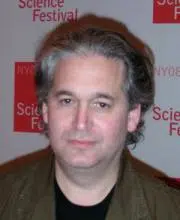
Wou’re listening to Philosophy Talk. Joining us today is Professor David Albert of Columbia University. David is a physicist and a philosopher, so he’s a perfect guest for today. He’s a director of Columbia’s MA program in philosophical foundations of physics. He’s written lots of cool stuff. Two books are time and chance, perfect for our topic today, and quantum mechanics and experience. David, it’s a pleasure having you with us on Philosophy Talk. Welcome.
David Albert
It’s very nice to be here.
John Perry
Well, David. John Perry, glad to have you with us. You’re both a physicist and a philosopher. Why don’t you put your physics hat off to the side for a minute, and let’s talk some philosophy. Okay, so there’s a future, maybe an artificial come on in the suspense. Is it real?
David Albert
Gee, I’m not. You know, you guys are a little too fancy for me. I’m not sure I know what the question means exactly. Let’s see. Let’s see what kind of trouble I get into. If I say yes, the future is real. Let’s see what kind of trouble I get into. For example, if I compare now to here, when, when you know there is something special. About the here. It’s always where I am when I’m saying here, but that doesn’t lead us to have suspicions about the reality of parts of space to the left of me or parts of space to the right of me. What kind of trouble am I going to get into if I if I think of the now in much the same way.
Ken Taylor
Okay, that you go ahead.
John Perry
Well, I, I don’t like that. I must admit, I used to like it, but maybe as I get older, I don’t like it so much. I mean, the here. I mean, if you have a world with no people, no speakers, no thought, there’s no here, right, right? There’s space, there’s space. And there can be places where, you know, places where people could be, yeah, right, but, it seems to me, there would, there would time would still be unfolding. To me, it seems that some, some events wouldn’t, wouldn’t have happened yet. Of course, that’s putting me in there and saying that yet,
David Albert
yeah, that’s like some events would be to my left and some events would be to my right. But, but where is the change some events, some events would be earlier than me in time, and some events would be later
Ken Taylor
than wait a minute, rattating back and forth here. Let me get in here. I’m a little more simple minded than both of you. Okay, so if the future is real, David, then that means all these moments, like in space, all these moments, all these points in space exist simultaneously, right? Well, moments of time don’t exist. No, yeah, well, I one after another, right?
David Albert
No, but you’ve made kind of an awkward pun when you say simultaneously, yeah, I know that’s analogous to saying all the points in space exist in the same place. Of course, they don’t. They’re strung out in space, and the various points in time are strung out in time. What’s that stringing out mean, though? I mean, well, do we know what it means in the case of space?
John Perry
Well, let’s think about it for a minute. So so we have a sense that that time I made a common sense, sense, maybe it doesn’t show up in physics, that time is much different than space, right? That we can change our place in space, in time, and that will make our perceptions change, right, right? Or we can stay in the same place, and the things around us can change in time. So there’s, there’s two different kinds of change, right? Just us changing our position and seeing something new, and things actually changing, yeah, I think there’s now, can you? Can you bring that out? If you believe time is the future is as real as the past and
David Albert
the present? Sure, I’m not sure I see off the bat, why not? There is yeah, we experience time very, very differently than we experience space. And I think there are a couple of ways to be a little bit more concrete about what the difference in the in the texture of those experiences are. First of all, we have a certain kind of, in philosophers lingo, epistemic access. We have a we have a certain kind of access through our senses, for example, to other regions of space. I’m sitting here in a studio, and I can look across the room and see something that’s not where I am. We don’t have the same kind of access to other points in time as we do to other points in space.
John Perry
Well, how about how about memory?
David Albert
Well, we do, but that’s a very different kind of access when, when I call to memory something that was across the room a year ago, for example, the experience is palpably different than becoming aware by by means of my eyes, of something that’s across the room,
Ken Taylor
that’s on the other side. David, you’re right. David, on the also, there’s anticipation, right? I see the ball moving down the slope. That’s right. Reach my hand out to where it will be right, right. So I anticipate the future course of things. In some way I have Right, right.
David Albert
Okay, that’s right. And I, I think those sorts of access are very, very different. So, so sitting here in sitting here in my spatial location, I have various kinds of access to things at other spatial locations. Sitting here in my temporal location, I have various kinds of access to things at other temporal locations and but you’re perfectly right in pointing out that the kind of access I have to other spatial locations sitting here is very different from the kind of access I have to other temporal locations sitting now.
John Perry
But wait a minute, David. I mean, you’re probably younger than me, but I’m sure that you’re have have lasted a significant number of years. So what do you mean? More than I care to What do you mean by your temporal location? I would guess that you have existed through many times.
David Albert
So sure, and I’ve been in many places. Yeah, I’ve been in many places in the course of that, there is a here now for every particular instance of, say, my speaking or my thinking.
Ken Taylor
And here now is Ken. David, here now is Ken. I’m going to let you continue that thought in a little bit. At after the break. So queue it up. You’re listening to Philosophy Talk. We’re discussing time with Professor David Albert of Columbia University. We invite you to join us. We’re eager to have your phone call. So the number is, as always, 415-841-4134, that’s 415-841-4134,
John Perry
And you if you think you that we’ve lost our senses, or we’re not making any sense, or we’ve lost the thread of our own conversation, give us a call and tell us where we’ve gone wrong. Or if you’ve lost the thread, give us a call and let us help you get back on it. Yes, we can.
Ken Taylor
Yeah, this is a complex, complex topic, or you can call us also with your favorite conundrums about time. We’ll see if we can unravel it with our guest physicist and philosopher David Albert, the number again, is 415-841-4134, or you can go to our website, philosophy talk.org and send us a comment. Philosophy Talk will be right back.
Neville Brothers
Time keeps on slipping, slipping, slipping, into the future.
John Perry
The Neville Brothers with “Fly like an Eagle,” or was that the Eagles with “Fly like a Neville Brother?” I can never get that straight. I’m John Perry. You’re tuned to Philosophy Talk, the program that questions everything…
Ken Taylor
…except your intelligence. Of course. I’m Ken Taylor. We’re talking about the concept of time with David Albert, a professor of both philosophy in physics.
John Perry
We’d like you to join our conversation. The number is 415-841-4134, or you can email us at comments at philosophy talk.org the number again, 415-841-4134.
Ken Taylor
Hey, David. And a little bit, we ask you to put your physicist hat back on. I have a question. I’m gonna go back sure the here now that you were talking about, there is a here now and here. And we said, well, the here wouldn’t be there without us, because that means, you know, the here is where I am located, right? Something like where I am located now, I want to focus on this nowness again. You know, different moments take their turn as now, right? Without me doing anything, without me moving like I move through space. Could it just? Could it be John, dismiss the ideality?
David Albert
You know that they don’t take their turn without you moving through time?
Ken Taylor
Well, right? I know, okay, okay, right, but all I do is stand there. That’s true. Well, here’s what I want. Let me ask my question. Let me ask my question. Could it just be that the flow of time is is nothing but my now indicator moving right? So it’s all in my. The flow of my, my representations, as we philosophers would say, it’s not in something objective. So time is out there, kind of arrayed, you know, once and for all, but the flow is just, it’s just in us because our representation flows. Could that be?
David Albert
I don’t see, let me put it this way. These are very deep and very hard questions, but I’d love to make perfect. I’d love for somebody to make it more obvious to me that it is than it is, that what you say couldn’t be true. I don’t see offhand what the obvious obstacle to that kind of a view is. Let me say a little, let me, let me say, if I can just take a minute and say, What made these kinds of issues very vivid for me in particular. This involves putting my physics hat on a little bit. If that’s okay, yeah, definitely there. There’s a long standing problem in the foundations of physics that’s referred to as the problem of the direction of time, which arises something like this, if you imagine watching a film of, say, two billiard balls colliding in otherwise empty space. There’s no billiard table, there’s no friction. There’s nobody hitting the billiard balls. What you see initially is a frame that’s empty except for a single billiard ball stationary in the middle. Another billiard ball comes in from the left, say, hits, it stops, and the first, initially stationary, billiard ball goes off and leaves the frame towards the right. Imagine watching that—
John Perry
And miss and misses the pocket, if it’s like my experience.
Ken Taylor
Okay, but go on with your example.
David Albert
Imagine watching that film in reverse. What you’re going to see is, is a billiard ball sitting in the middle of the screen, another one coming in now from the right, I guess, impacting it stopping, and the first one going off and exiting the frame at the left. If you think about seeing a movie like that, it’s clear that nothing in our knowledge of the way billiard balls behave when they knock into each other is going to give us a clue as to whether we’re watching that film forwards or backwards. If somebody shows you a film as simple as the one I’ve just described, and asks you to guess whether you’re being shown the film forwards or backwards, there won’t be anything in the way these billiard balls behave that’s going to tip you off one way or another about that.
Ken Taylor
So, where does, does, where does, okay, that’s, that’s the nice point. That’s a very that’s—
David Albert
No, but it’s just a big it’s the beginning. Okay, go, okay. It just, I’m sorry, I don’t want to take up too much time. I’ll get to the punch line. Okay, fast. Physicists refer to this phenomena by saying the laws of billiard balls, the laws of collisions between billiard balls, are time reversal, symmetric or invariant under time reversal. That is any process that makes sense going in one direction makes just as much sense given those laws going in the other direction. A very important, very resilient, very deep upshot of the physics of the last several 100 years is that every one of the sets of fundamental laws of the world that physics has been tempted to take seriously, and this is consistently true. Over the last several 100 years, has had the feature of being entirely time reversal, symmetric.
John Perry
Yes, okay, imagine this. I mean, my wife and I have a calendar on a refrigerator for a month. Suppose you had a infinite number of refrigerators going in either direction, and each of them had a month long calendar on it, and you just wrote down all the events. And I suppose you know in great detail, instead of day by day, second by second or nanosecond by nanosecond, it seems like that would have all the information about everything that ever had happened, is happening or was to happen. But by looking at that refrigerator, you couldn’t tell which direction was the future, and you couldn’t tell which of those boxes was now. So let’s say, so haven’t you left something out?
David Albert
No, no. Well that’s this was actually the punchline of what I was going towards. And actually, it seems to me, if I understood you correctly, that what you just said about the refrigerator is something I disagree with. What’s enormously puzzling is that if you watch a more interesting film, not a film depicting two billiard balls colliding in interstellar space, but a film of people walking down the street or fighting or falling in love or getting old or something like that. Now you’re talking perfectly. It’s perfectly easy to decide whether you’re being shown the film forwards or backwards, and the tension between what it looks like, we have very good reason for believing based on the history of our experimenting and theorizing about the behaviors of the fundamental constituents of the world on the one hand, and what couldn’t be more obvious from the from the texture of our everyday macroscopic experience, on the other hand, the tension between these two has been known for a long time As a problem of the direction of time, right? There is this profound asymmetry between past and future that, you know, I forget which of you said it in the opening. You know, if you have to qualify the top three or four most fundamental features of our experience of the world, that’s certainly among them, it doesn’t seem to show up in the fundamental microscopic laws that seem to govern the evolution of everything that there is.
Ken Taylor
David, that’s what makes me think that that maybe the direction of time is imposed by us in some sense. But I should say you’re listening to Philosophy Talk. We’re talking with our professor, our guest. Professor David Albert, about time, we’d like you to give us a call. You can join our discussion by calling 415-841-4134, that’s 415-841-4134, and we have a caller on the line now. Donna in Redwood City. Welcome to Philosophy Talk. Donna, Hi. What’s your comment or question?
Donna
My question is, I mean, regarding thinking about time, I sometimes imagine it is we’re being suspended in the present moment and moving through it. And I guess my question about that, I’ve that it’s arisen from, from that anyway, is, how would we know that time was moving any faster or slower? And then that, of course, leads to, what would it mean for it to move faster or slower? And I come down to thinking, well, maybe it would be in a universe for the speed of light, or a processes that you know would be different. I don’t know. But anyway, I wonder what your comments are about.
John Perry
Is this like a practical problem you have if you could just kind of plan your big days for the days when time was moving forward? Or this is, it sounds more like a philosophical fantasy
Donna
That’s a I think, you know, as we get older, but that’s a psychological thing. I think more than it’s actually speeding up or, well, it raises the question.
John Perry
Thanks for your call, Donna, it’s very interesting,
Ken Taylor
If every event speeded up and went twice as fast, and also the events that were the tickings of clocks happened twice as fast, we couldn’t tell the difference. Could we?
David Albert
David, no, I don’t know how we could, and moreover—
John Perry
I bet Stanford wouldn’t pay us twice as often.
David Albert
And moreover, I just don’t. And the caller alluded to this herself. I’m I’m not at all sure I have a grip on what it would mean for time to be flowing faster or slower when we say when we speak of things as flowing at a certain rate, when we speak of a river as flowing at a certain rate. If we unpack a claim like that, it amounts to a claim of the form, as in the as this much time goes by, the chunk of water in the river has moved this spatial distance. So verbs like flowing always have in them implicitly a relative to the advancement of time. Okay, something is flowing at a certain rate. If it gets this far, as time gets this far, what is it going to mean to ask? How far? How fast time itself is flowing? It seems to me a question either that I can’t make any sense at all of or a question whose answer is tautologically and uninformatively. I don’t know one second per second. Okay, what it would mean?
Ken Taylor
Go ahead, we have a there’s a caller designed to get in, I think, on just this point, from what I gather, Margaret in Daly City. Welcome to Philosophy Talk.
Margaret
Yeah, hi. I don’t pretend to have the answer, but I think it has to do with our being stuck with our language, and that because we’re we’re all of us involved with the same language, we cannot think outside of that language, whereas other cultures are able to do that. For instance, time does not mean the same thing in the head of our English speakers as it does say in Native American speakers, and that has to do with all kinds of aspects of life. In terms of relationship, they say all our relations. Well, you know, we don’t have a concept that covers the fact that they talk about all our relations, and I just feel that there’s something missing in the word time.
John Perry
So but Margaret, do you think there’s cultures that don’t make a distinction between the past, the present and the future?
Margaret
Well, that may be, and how can we know when we cannot think that way?
Ken Taylor
Margaret, thanks. So you know, there are lots of people who talk about that. Somehow our time consciousness is kind of socially constructed, culturally relative, historically specific, and that this thing changes. David, do you think there’s any sense to that idea?
David Albert
Well, I just don’t know what I’m, you know, I’m, I’m, I’m perfectly willing to believe that that there, there may be other cultures that construct the world in, significantly, interestingly, conceptually different ways than we do, but I don’t know. I don’t think it’s the case of of native, you know, Native American cultures, or of any other culture I know about that they spend a lot of time and energy avoiding, avoiding past unfortunate occurrences, as opposed to future unfortunate occurrences. Well, that’s something, that’s something, even if you look at the behaviors of animals, even if you look at the behaviors of fairly primitive organisms, it seems to be hardwired into the way they behave. There seems to be conviction some amateur is something they can do something about, and the past isn’t. And yes, I agree. I think the place to look for that is not going to be in cultural histories so much as in, say, natural selection.
Ken Taylor
David, let mystery of natural David, let me, let me ask you a question about you said you can’t imagine time flowing at different rates, but. There is this thing. Help me. You’re even in relativity theory. I accelerated speed of light. I set my clock. I coordinate my clock with you. I come back after what seems by my lights a year. It’s 10 years by your light. What’s going on there?
David Albert
That’s absolutely right there, there. Well, let’s, let’s back up a tiny bit, Einstein made an extraordinarily interesting discovery about temporal relations, which amounts to something like this. We’re familiar with all sorts of circumstances in which it’s just straightforward to us that judgments of a certain kind depend on your perspective. So for example, if you and I are sitting across a table from one another and there’s a salt and pepper shaker sitting on the table, I say the salt shaker is to the left of the pepper shaker, and you say that the salt shaker is to the right of the pepper shaker. And unless we’re very stupid. That’s not going to precipitate an argument of any kind. Rather, we both know that what we mean is that claims like the salt shaker is to the left of the pepper shaker are claims which are just not even grammatically complete until you index them by saying something like from the point of view of somebody sitting here, or from the point of view of somebody sitting there. There are all sorts of features of the world which we’re used to thinking of as needing to be indexed in that sort of a way. Time was absolutely not one of them. There are these famous quotes in in Newton’s system of the world about about time flowing on absolutely and equitably at all points and so on and so forth. It’s very, very deep in our in our straightforward, everyday empirical experience of the world, that that temporal relations are things that all sorts of different observers in all sorts of different circumstances agree upon, quite unlike judgments of right or left, Einstein discovered that that’s because we hadn’t considered a wide enough range of observers, and it’s because in order to get to observers, to to to into situations from which issues about say whether or not two events are simultaneous or not will differ. They need to be going at fairly high speeds with respect to one another and and so on and so forth. On closer examination, that’s the way the world looks.
John Perry
So is the order of the events going to be different, or just the the temporal distance between?
David Albert
No there, there will be for events that are that are at a finite distance from one another, and that certain observers experience is simultaneous. Other observers will experience one coming before the other, and and still, other observers will agree, will experience the second coming before the first.
John Perry
Well, let me ask you a question about that. Could these observers, in spite of this relativity, could they come up with a coherent and agreeable, causal story, or would yes, that be relative too?
David Albert
No, they they. It turns out to be the case that that observers can only disagree with one another and disagree isn’t quite the right word, because it’s not as if we’re disagreeing about whether the salt shaker is to the right or left of the pepper shaker. But if you understand it in that way, it turns out that observers are only going to disagree with one another about the time order of events which are sufficiently far from one another and sufficiently close to one another in time, so that it would be impossible for a light signal to travel from one of these to the other. Moreover, we have reasons for thinking that light signals travel at the maximum possible velocity of causal of causal effects, so these switching arounds among the orders of events isn’t going to affect the causal structure. The causal structure is likely to be something that all observers will agree on.
Ken Taylor
David, my head is spinning here. I’m going to take a little break and see if I can re reconfigure my brain. Here. You’re listening to Philosophy Talk. Our topic today is time, and our guest is Professor David Alpert of Columbia University. After the break, we’re going to kind of shift gears just a little bit to talk about time travel and the paradoxes of time travel. You can join our discussion. If you got a paradox of time travel, give us a call. You can join our discussion at 415-841-4134, that’s 415-841-4134, you can go to our web page, www, dot philosophy talk.org. Philosophy Talk. We’ll be right back.
Huey Lewis & The News
I’ll be back in time, gotta get back in time.
John Perry
Huey Lewis and the News with “Back in Time” from the film “Back to the Future.” I’m John Perry, and this is Philosophy Talk.
Ken Taylor
I’m Ken Taylor. Joining us today is Professor David Albert of Columbia, University, University, philosopher and physicist. To add to this conversation, you can give us a call at 415-841-4134.
John Perry
That’s 415-841-4134, just before the break, David, you suggested that although time might be relative in a way that really goes contrary to our common sense, causation doesn’t seems immune from this. That is that kind of suggests to me that causation may be more basic than time and it also suggests to me that if time travel is possible, it’s going to be after the kind of tribe time travel. It doesn’t interfere with the causal structure of the world. Since we’re going to talk about time travel now, you want to kind of react to that.
David Albert
Well, time travel certainly does introduce interesting kinds of causal situations. Let me tell you the one that people are standardly concerned about and and this is the one that comes up in the kinds of science fiction movies that that you were talking about earlier philosophers refer to them as grandmother paradoxes. And the puzzle is something like this. Suppose it’s possible to travel backwards in time. And it’s worth mentioning that our best current understandings of the general theory of relativity. I don’t want to be too dogmatic about this, but they encourage the speculation that, as a matter of principle, at least things like time travel into the past, or that may be maybe physical possibilities are these, wormholes. I’ve heard about. These are wormholes. I mean, the speculation goes back a long way. There is already from the from the late 1950s a solution to the equations of general relativity by the famous logician Kurt girdle that that it would that he noticed, had in it what he called closed time, like loops, that is trajectories that systems might follow, that that intersect their own past.
John Perry
What this got to do with my grandma?
Ken Taylor
Yeah, maybe you can pass, okay, but what follows good?
David Albert
Here’s the worry people. People immediately began to worry. And in science fiction, I think, considerably before that, that suppose you go into the past, suppose you’re you’re a competent person, an excellent marksman, so on and so forth. And you you travel back into the past with the fixed intention of murdering your grandparents at a time long before you were born. The worry is that succeeding at such an endeavor makes it impossible that such an endeavor could ever have succeeded, because, after all, the success of such an endeavor would mean you were never born, right and didn’t exist in the first place.
John Perry
So a lot of a lot of science fiction movies kind of carefully avoid that. I’m thinking of our own governators, movie Terminator, one that’s right, that’s right. It’s told you could tell a totally coherent picture.
David Albert
Right, that that that’s exactly right. And there has been, it’s interesting. This is a case where there have been relatively parallel attempts in the philosophical literature and in the scientific literature to grapple with this. They’ve grappled with it in very, very different ways, and they’ve grappled with it in ways that were relatively uninformed by what the other one was, was doing.
Ken Taylor
David, there are attempts in the David, I bet you are caught. Dollars are grappling with this a little bit, so I’m gonna let some of them in here. Josh in Tiburon. Josh, welcome to Philosophy Talk.
Josh
Thank you. My question is really more an observation that I’ve kind of thought of for a while about time as time is kind of made up on Earth by humans as a measurement tool. For instance, you can measure something started here and ended here, past, present, future. However, when you take that same concept and apply it to the universe, it’s really no end and no beginning. So it’s really just one whole being, I guess, which is the universe. Now, if you take the universe’s theory of one and apply it to Earth. Time really doesn’t exist.
John Perry
That’s a little—that’s a little deep for me, but…
Ken Taylor
Yeah, it does raise a question. Thanks for the call judge Dave. There is something I don’t under. I have never been able to get my head around. You know one thing, oh, there’s lots of big bang, right? It’s supposed to be the all timelines converge at the Big Bang, and there’s no before. How could that be? I mean, when did the Big Bang happen? If there’s no I, I know you’re supposed to physically tell you that’s nonsensical somehow or something.
David Albert
Yeah, you know that’s that’s the tradition of saying that’s nonsensical. Doesn’t start with 20th century physics. Goes back to Augustine, right? Augustine worried, worried how it could have been that God chose some particular time to create the universe, because it seems as if the choice would have had to be arbitrary and and arbitrary choices are not, are not the sorts of things one wishes to attribute to to the creator and Augustine had an answer to that which is strikingly similar to the kind of answer that emerges in, I think, a more coherent way in 20th century physics, which has to which, which is basically that time is time is a measure of changes, or of The way certain things are changing relative to the way certain other things are changing and and by definition, prior to the existence of the world there, there aren’t any such relative changes. So you think it’s just not very interesting to speak about time. You know, when nothing is there’s a nice quote by Richard Feynman, which is exactly in the opposite direction of this that goes time is what happens when nothing else does right? Augustine would dissent from that. And I think, and I think the bulk of modern physics would would dissent from that as well.
Ken Taylor
We’ve got a caller in the line who wants to get us back to time travel. Steve and Berkeley is on the line. Welcome to Philosophy Talk, Steve.
Steve
I would. What I’m wondering about is these we, you know, when you talk about these time travel paradoxes, they seem to be related to the fact that, or the, you know, the our perception that the past is fixed, but the future is still contingent. Don’t Don’t you believe that Steve, the present can alter the past, but that we are capable of altering the future, and so that’s the one thing about that, is, if the future is not determined, is not yet determined, what does it even mean to talk about traveling to the future?
John Perry
Well, Steve, thanks for the call. Those are good questions. Questions are on my mind. I mean canon and and you seem to have, David, have a little the idea that, well, if physics can’t give us a reasonable answer to the question, why the time has the arrow it does. Maybe it’s an illusion and and I would say, Well, nothing’s less of an illusion than the feeling that then our eye, than our insight into the structure of the world, that the past is fixed in the future. Isn’t a physics can’t find it so much worse for physics.
David Albert
I agree with that 100% I don’t know what it means to call that an illusion. I think the question can be put a little differently. Do we expect? The question is from where we expect an elucidation of that? That is, there is this phenomena we have a different relationship to the past than we do to the future. We have it epistemically. We have it vis a vis our capacity to intervene and change things, we have it in all sorts of ways. Now, you might expect that that that, that the fact that the relation is asymmetric in that way comes from, ought to emerge from a philosophical analysis of what time is, or you might hope that that that an explanation of that asymmetry is going to come from a careful examination of the kind of physical world that we happen to live in. I think the traditional approach is the first one. I think there. A great deal more resources within physics to address these matters than have usually been appreciated. You know, back when we were talking a few minutes ago about this problem of the direction of time, I posed the problem. I didn’t give what many physicists consider the solution is, and just very much in a nutshell, there’s a great deal of hope building slowly over the past century or so, that by adding to the and the laws, are these things that don’t make any distinction between past and future. By adding to the laws, certain very simple claims about what the initial conditions of the universe were, we can get out in a in a stunning, simple, enormously comprehensive way all of these various different asymmetries, ranging from the fact that smokes, smoke spreads out from cigarettes rather than ever collecting into it, all the way up to the most abstract level of thinking that we can affect the future by what we do now, but not the past. And the difference in our epistemic relationship to the past and future. So nobody, I think, would be crazy to say this is an illusion. The question is, is it grounded in a sort of metaphysical analysis of what time is, or is it grounded in the structure of the scientific laws that actually.
Ken Taylor
But that may not be an either or, because you hope the metaphysical analysis of what time is is grounded in, you know, it touches reality. But it still seems to me that, okay, so our time perception could be a way of perceiving, of cognizing, you know, some fundamental objective fact about the universe, but that. But, you know, there could be different creatures who cognize that different, that same thing in a different way. I mean, well, they wouldn’t experience time as flowing. They would. They would see like they might. They might somehow experience, and I think we do this, and this the past necessitating the future, right? It’s the direction of causation, or something like that, or no.
David Albert
But look, I think there could be differences among creatures. But on the basic level, I think it’s the here’s maybe a way of saying what I think it means that it’s not an illusion. I think that a that a mutant that that was born with a brain structure such that it spent more of its time trying to arrange past events to its liking than it did trying to arrange future events to its liking would not survive. That seems, I think, I think a creature that’s built like this has got hardwired into itself something fundamentally wrong about the world out there. It’s not just that. It’s not sharing an illusion that we have. I agree this kind of creature has got the world wrong.
Ken Taylor
David, I agree with you, and I unfortunately, I wish I could arrange this so that we had the more time, but time is a cruel master, and we’re about out of time, so well. Thank you. It’s been fun. Yeah. Thanks a lot. David. David Albert of Columbia University, author of time and chance and also quantum mechanics and experience, we’d like to thank the New York studios of the radio foundation for making this conversation possible. So I think David’s already gone. Is that right? Bye. David, bye. David, bye. So John, this is tough stuff. You Are you wise? I mean, you’ve been thinking about this stuff a while, you know?
John Perry
Oh, yeah. But, you know, it’s not always successful to think about things real hard. I must say, my, my, my my conviction remains unshakable that the explanation for the difference between the past and the future is the common sense, one, that the future hasn’t happened yet. It’s not real, that the world is a process in which events occur out of you know, they’re caused by what’s happened so far, and that it’s not in any way an illusion. It’s, it’s probably the most basic way we’re in connection with the fundamental way the world is.
Ken Taylor
I don’t think it’s an illusion, and I wasn’t trying to say that, but I do think, though you underestimate the analogy between here and now, and you’re a great student of here and now. I mean, that’s how you how you got famous? Actually? No, I don’t think let me, let me finish, because I think just as though there wouldn’t be a here without us in the picture, cognizing agents in the picture there, I also think there wouldn’t be a now, nothing distinguishes metaphysically, a present moment as present except something we do with our representation.
John Perry
No, no, see, I think you put your finger on it, and then you’ve hit your finger with a hammer. Oh, there’s, there’s, there’s a huge difference between these three things, the here, the now and the actual they can all be treated formally as indexicals, but that’s a fancy term, you know, just words we use based on where we are and when we are. But there’s only but, but there, there’s a huge difference. And you’re sliding into this view that time is subjective, and I fear for you.
Ken Taylor
Oh, it’s not that time is objective. Time is objective. It’s really out there. But the flow of time is our way of experience in this, this, this objective time without flow is like beer without frog. Yeah. Well, John, look, we’ve only got about a minute left to talk about time anyway, so let’s turn it over to the only person in the world who could do justice to such a topic in just one minute. And you know who that is. It’s Ian Shoales our Sixty-Second Philosopher.
Merle Kessler
Ian Shoales… The word chronology comes to us from Chronos, whose name means time, the youngest of the 12 Titans and the father of Zeus, the king of what would become the gods, because it was fated that one of his children would overthrow him, he took to devouring his newborn. Zeus, with the help of mom, escaped, and the fate that Cronus tried to escape overtook him. This is a common theme in myth and tragedy, that prophecy fulfilled generally through the actions of the person trying to avoid that fate. In addition to providing fodder for drama and myth, the notion of destiny or fate is part and parcel of the notion of the irreversibility of time. Time’s Arrow, coffee will cool, the sun will rise tomorrow. Oedipus will kill dad. The Burnham Woods will come to Dunsinane, the arrow will reach its target, or at least land somewhere. Newton claimed the time and space are the infinite containers of every event, but do not depend on events to exist. Leibniz countered that Newton was making too much of time as a measurement of duration and not enough of the fact that something must be there to be measured. Time needs events to exist, so to speak. In the 20th century, theories of time were thrown into a cocked hat by quantum physics. It gave us the concept of space, time, a continuum of four dimensions that contains physical time. Space. Time came to be considered something even more fundamental than time and space, a union that makes past, present and future one event. Quantum physics also opened up the physical possibility that we can time travel using wormholes that connect our universe with itself at an earlier time. Of course, if you go back in time and murder your grandfather say you would never have been born. So you’re going back in time would be an impossibility to avoid such problems. Quantum mechanics therefore allows for the existence of multiple worlds. Quantum Mechanics, that governs all physical phenomena can be interpreted literally. Interpreted literally as a Theory of Parallel Universes, a multiverse in which all possibilities of anything occur simultaneously. The quantum mechanics view of reality is often criticized as being overly deterministic, which is odd when you think that it is a total rejection of the kind of time that made Chronos fate inevitable. And how did it all begin? The tick of the clock began with a big bang, 13 point 7, billion years ago, there was nothing, and then suddenly something. So what caused the Big Bang? Nothing. So it was there before the Big Bang, nothing. But, oh, you think about it, I don’t have the time. I gotta go.
John Perry
Wow, Ken, my head is dizzy from 60 seconds of rapid fire philosophy.
Ken Taylor
If your head is dizzy, that means you’ve got a conundrum in your mind, and we can solve it for you. Can’t we, John?
John Perry
Yes, go to our web page.
Ken Taylor
conundrums at philosophy talk.org or hit that conundrums button on the web page. We won’t promise to solve your problem. Actually, I promise we won’t solve it, but we will give you lots of new ways to think about.
John Perry
Philosophy Talk is a presentation of Ben Manilla productions and the trustees of Leland Stanford Junior University, copyright 2004.
Ken Taylor
Our executive producer is Gordon Earle. Special thanks to Nicole Sawaya, Roman Mars, and Alan Farley.
John Perry
Support for Philosophy Talk comes from the Hoover Institute, the Greenwall Foundation, and the Pacific Division of the American Philosophical Association.
Ken Taylor
Also from the Provost Office at Stanford University, the Dean of Humanities and Sciences, Stanford’s Office of Public Affairs, the Stanford Humanities Center, the friends of Philosophy Talk—that’s you—and the members of KALW information radio San Francisco, where our program originates. They make our shoestring possible.
John Perry
The views expressed on this program and the views misexpressed on this program do not necessarily represent the opinions of Stanford University or our funders.
Ken Taylor
Or anybody else for that matter, John. For more information, visit our beautiful website, www.philosophy talk.org.
John Perry
I’m John Perry.
Ken Taylor
And I’m Ken Taylor. Thank you so much for listening.
John Perry
And thank you for thinking.
Guest
Related Resources
- The Stanford Encyclopedia of Philosophy
- Westphal and Levenson’s collection on time, called Time
- A collection of contemporary essays on time, The Philosophy of Time from the Oxford Readings in Philosophy series
- Philip Tuertzky’s history of the philosophy of time, Time
- Stephen Hawking’s classic introduction to physics, A Brief History of Time
- Robert Geroch’s excellent introduction to relativity theory, General Relativity from A to B
- Paul Horwich’s book on the philosophy of time, Asymmetries in Time
- J. Richard Gott’s book on time travel, Time Travel in Einstein’s Universe
- Hans Reichenbach’s The Direction of Time
- Immanuel Kant’s Critique of Pure Reason, which defends time being ideal
- The Back to the Future trilogy on DVD
- Twelve Monkeys on DVD
Get Philosophy Talk

Leave a Reply
You must be logged in to post a comment.