Death of the Sentence
August 21, 2022
First Aired: January 26, 2020
Listen


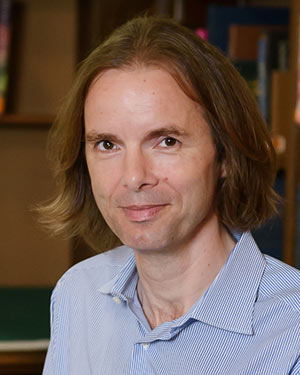
A child’s first sentence is a pivotal moment in her development when she is recognized as now capable of communicating complete thoughts. But in the 21st century, thoughts have become increasingly mediated by technology, and language more careless and informal as a result. Are texts, emails, tweets, and emojis responsible for the decline of the formal, grammatical sentence? Are our writing standards getting worse, or are they simply changing with the times? And what effect—good or bad—will new communicative styles have on participation in the democratic polity? The philosophers share complete thoughts with Jan Mieszkowski from Reed College, author of Crises of the Sentence.
- Existential crisis
- |
- Forgiveness
- |
- Ideas
- |
- Language
- |
- Reason. Facts
- |
- Speech
- |
- text
- |
- Writing
Josh Landy
Are tweeting and texting killing the sentence?
Ray Briggs
Don’t outmoded forms of writing deserve to die?
Josh Landy
Isn’t there room for more than one kind of writing?
Ray Briggs
Welcome to Philosophy Talk, the program that questions everything…
Josh Landy
…except your intelligence. I’m Josh Landy.
Ray Briggs
And I’m Ray Briggs. We’re coming at you from the studios of KALW in San Francisco.
Josh Landy
…continuing conversations that begin at Philosophers Corner on the Stanford campus, where Ray teaches philosophy and I direct the Philosophy and Literature Initiative.
Ray Briggs
Today we’re thinking about the death of the sentence. In an age of emojis, memes, and reaction GIFs, are complete sentences becoming passé?
Josh Landy
Passé, Ray? Oh, gosh, I don’t think so. And I really hope not.
Ray Briggs
Well, maybe you’re just out of touch. Kids these days are creating all kinds of new forms of communication. And it’s really cool.
Josh Landy
Well, look, I’m not I’m not here to bash the youth of today. I mean, I think they’re fantastic. They’re politically active. They’re resourceful. They’re forward looking. But, you know, if they can’t use complete sentences, what are their essays going to look like?
Ray Briggs
Oh, come on. Josh. Why are you so invested in these conservative outmoded ideas about writing anyway? You should be encouraging creativity,
Josh Landy
Creativity, sure. I mean, they should definitely be creative in their ideas. But once they’ve got their ideas, what’s wrong with putting them down in the form of sentences and then making an essay out of it? So, you know, saying things clearly, so we can all understand them?
Ray Briggs
Oh, geez, that’s so narrow. Why not encourage them to create word clouds or computer programs or collections of images, something like that?
Josh Landy
Well, because I want them to express complete thoughts, Ray. And I want them to organize those thoughts in a way that makes sense to another human being.
Ray Briggs
Well, okay, sure. But why do you need a whole essay to do that? You could express a complete thought in just a few words.
Josh Landy
Oh, yeah? How?
Ray Briggs
Aha, see, you did it right there! When you said “oh yeah how” you expressed a complete thought
Josh Landy
But that wasn’t a complete thought!
Ray Briggs
Well, gee, Josh, I understood you, didn’t I?
Josh Landy
Yes okay, you did understand me, but only because I was responding to your half of the conversation. I mean, if you took those words “Oh, yeah. How” and like, put them in a different context, they mean something completely different. I could use them to ask how I don’t know how lasers work or, or how the presidential elections gonna turn out. Or, I don’t know, how to make a nice english trifle.
Ray Briggs
Well, yeah, of course, if you take someone’s words out of context, you can change the meaning. But isn’t that just as true of a passage from an essay as it is for a sentence fragment or a series of GIFs?
Josh Landy
Look, I really don’t think so. After all, a GIF can have multiple interpretations. Some people even call them a GIF. But a wel- formed sentence, right? That’s going to be easy to understand.
Ray Briggs
Oh, well-formed sentence—oh, here, what about this one: Wherefore art thou Romeo? That’s a well-formed sentence. But people misunderstand it all the time. They think wherefore means where but it really means why.
Josh Landy
Okay, all right. Fair enough—you got me, and you kind of got me on my own home turf. So Okay, points to you. But I still want to say about that: that’s a 400 year old play. I feel like people are gonna have an easier time understanding things that have been written today.
Ray Briggs
Oh, so you do like contemporary language. I’m so glad you’re a fan of GIFs and emojis after all.
Josh Landy
Wait, you’re calling GIFs and emojis language?
Ray Briggs
Ah, old man yells at cloud Josh!
Josh Landy
Angry face emoji, Ray!
Ray Briggs
Hashtag get off my lawn! But seriously: emojis are language just like written English.
Josh Landy
I don’t get it. How is that supposed to work?
Ray Briggs
Ah, I’m so glad you asked. We sent our Roving Philosophical Reporter, Holly J. McDede, to investigate the creative potential of emojis. She files this report.
Holly McDede
Marcel Denesi is like the smiling face with the sunglasses emoji. He’s chill.
Marcel Denesi
I send text messages and I had a rock’n’roll band. Don’t get me wrong.
Holly McDede
Denesi he teaches semiotics at the University of Toronto. So naturally, he was once in a band called The semitones. One member of the semitones always ended her texts with a smiley face—until one day…
Marcel Denesi
She sent me a text and it was not there, and I started to panic. I said, Oh my god, something is going on in her life.
Holly McDede
Denesi he called her to find out what was going on. Sure enough, she was having a bad day. The absence of the smiley face said it all
Marcel Denesi
I knew right there and then that this is a very powerful new form that is emotive and communicatively. Powerful. It moved me to call her up.
Holly McDede
Texts, emails, and emojis might seem like they’re making us lazy writers. But over time, very specific rules developed. Like if you don’t use multiple exclamation points or throw in a smiley face, something might be wrong. Emojis bring warmth and tone to electronic communication.
Marcel Denesi
Even if it’s ironic and so on, in the end, smile, laugh at off life is too short. I don’t know I can say this on an American program, but your president does not use them.
Donald Trump
I know words, I had the best words.
Holly McDede
There are other unspoken guidelines too. You might say lol ironically after something terrible happened. Or you might use capital letters or periods to show you’re angry.
Gretchen McCulloch
So if you send someone “Sounds good” with no period, then that’s kind of the sort of flat or default intonation.
Holly McDede
Gretchen McCulloch is the author of “Because Internet: Understanding the New Rules of Language.”
Gretchen McCulloch
But if you send someone “Sounds good” with a period, it sounds kind of like “Sounds good!”
Holly McDede
McCulloch says like speaking writing now has formal and informal versions. But that doesn’t mean the internet will kill off the formal sentence.
Gretchen McCulloch
You know, you talk differently to your dog than you do to your boss, or at least I hope so. And that doesn’t mean that informality is a bad thing.
Holly McDede
Emojis bring facial expressions to a faceless online world, but they can’t replace words.
Emogenius
Let’s play Emogenius!
Holly McDede
It’s difficult to understand emoji sequences. There’s even a show called “Emogenius” where contestants try.
Emogenius
Welcome to Emogenius, the show where solving emoji messages will earn one team a shot at $10,000.
Holly McDede
In this segment, contestants must identify the band expressed through emojis. A white square album, park ranger, and pepper emoji appear on the screen.
Emogenius
Go! Blank, white.. Armies… Army soldiers? Red hot chili peppers? Red Hot Chili Peppers! No, that’s not it.
Holly McDede
The answer was the White Album and Sergeant Pepper. Next there’s an image of four beetle emojis by
Emogenius
Um, spider… Spider Man! Oh um… what… Oh my god! The Beatles—that was the correct answer.
Holly McDede
And emojis aren’t so great for expressing complex ideas. A group of people even tried reading Moby Dick entirely in emojis. But it’s impossible to read without the text. Just a sample:
Emoji Moby Dick
Telephone, man with moustache, sailboat, whale, okay sign.
Holly McDede
That means, “Call me Ishmael.”
Emoji Moby Dick
Five, X, nostril, chart increasing with yen, question mark, muscle.
Holly McDede
And that means, “It is a way I have of driving off the spleen and regulating the circulation.” But then again, Herman Melville made up a lot of words when he wrote Moby Dick. Some scholars say that’s because the English vocabulary was too limiting for what he wanted to say. Imagine then what Melville himself could have done with emojis.
Moby Dick
Why are you wearing that long face—are you not game for Moby Dick?
Holly McDede
For Philosophy Talk, I’m Holly J. McDede.
Josh Landy
Thumbs up smiley face, Holly—you definitely have some of the best words. Thanks for that great report. I’m Josh Landy, with me is my Stanford colleague Ray Briggs, and today we’re asking about the Death of the Sentence.
Ray Briggs
We’re joined now by Jan Mieszkowski, Professor of German and Comparative Literature at Reed College, and the author of “Crises of the Sentence.” Jan, welcome to Philosophy Talk.
Jan Mieszkowski
Thanks for having me.
Josh Landy
So Jan, what first got you interested in the subject of sentences and changes in the senses? Did you have some kind of dangerously bad text exchange what happened?
Jan Mieszkowski
I guess everybody’s had some dangerously bad text exchanges. But my interest began when I was very young, actually, my mother used to recite texts to me in languages that I only understood a part of, or in some cases, didn’t know any of the words at all. But what was already clear to me as a child was simply from the rhythm and the structure of the sentences of what she was saying, one could understand quite a lot. And so to this day, even when I’m going to write a sentence, as much as I like everyone else, I’m looking for the best adjective to modify the noun and so forth. I’m also trying to realize a certain kind of rhythm. And that was the first way as I say, in these experiences, my mother that I started thinking about the different elements of sentences and how it’s actually quite a complex dynamic.
Ray Briggs
So clearly today, the internet is changing the rhythm of the way we use language, and the way we met and the way we write and talk. Do you think that’s a good thing or a bad thing?
Jan Mieszkowski
Well, I think that language always changes. I think, at certain times certain aspects of it change at different speeds than others. I think what’s different about the internet and the kinds of communities you have on social media platforms, is that in a certain sense, groups of people are actively watching these changes in a self conscious way, possibly in contradistinction to the past.
Josh Landy
That’s interesting. So people will actually comment on how things are changing.
Jan Mieszkowski
I think a lot of the conversation about the changes in the language is inextricably bound up in the commentary on it even since we’re talking an earlier report about emojis. I think it’s very rare that somebody uses an emoji in an entirely non ironic way. In other words, there’s not there’s nothing natural about the emoji. The emoji is deployed in a very self conscious fashion. And that can make it very complicated to understand because there can be multiple levels of irony involved. But it’s, again, it’s the awareness of this. It’s the fact that the sense of the of the language being in a kind of volatile state is an explicit theme that people are grappling with all the time.
Ray Briggs
Do you think that that commentary actually feeds back and changes the way that people use language when they’re not talking about language?
Jan Mieszkowski
Absolutely, I think I think that that distinction, in fact, is, is somewhat blurry. In other words, there’s a certain sense in which you’re always think you’re always thinking about how you’re using the language as you’re using the language. But I think it definitely permeates other other platforms, as the kids would say.
Josh Landy
That makes perfect sense. You know, something I’ve been thinking a lot about is, why is it so fun? You know, it’s obviously it’s, I mean, it’s not unprecedented. Obviously, we’ve had slang for a very long time. There’s always new ways of doing things. But maybe is that part of the fun? You’ve always got a choice, you could send a text message that spells everything out in words, or you could send an emoji or string or emoji. Why is the latter more fun? Is it partly because of the irony you’re talking about? It’s all very self aware.
Jan Mieszkowski
I think there’s also a sense of the rules being loosened. And one feels one has a license to a certain kind of creativity, that one maybe doesn’t have in grammar school, when you’re told, Don’t, under any circumstances, write something that might even vaguely resemble a fragment, and so forth. I think it’s also to certain extent, for the younger generation, it’s empowering to see that even older people are experimenting in new ways. So I know some some very accomplished professionals who write emails that don’t have a single capital letter, a punctuation mark. However, in some cases, they’ve been doing this for decades. And when I first saw this, I was I was appalled. But I’ve gradually come to appreciate it as a kind of, say, a kind of experimentation and a kind of kind of loosening of the rules that I think is, is ultimately productive.
Ray Briggs
I know that you Jan, and actually you Josh too, enjoy using Twitter. And I’m curious if you think that there are sort of special things that Twitter enables you to do that other kinds of languages don’t?
Jan Mieszkowski
Well, the fascinating thing about Twitter is that it takes the basic conceit of the internet and turns it on its head. And what I mean by this is the internet, there’s infinite space. In other words, if you want your blog to be a million words long, your blog can be million words long, you don’t run out of ink, you don’t run out of paper, Twitter, takes that in reverses and says, Okay, we’re going to give you virtually no space, you have to work within these very precise length constraints. And I think that’s, that’s a very interesting parameter in that regard. Twitter is in certain respects, very conventional. It’s something you might have once done in a poetry class where you were told to write with so many syllables per line, or you were told to write a certain kind of verse. In other words, Twitter’s very formal, it gives you a precise form and says, work within that. And there’s nothing as I say, there’s nothing unusual about that, historically speaking, that that would be part of a very conventional kind of language experiment.
Josh Landy
But that’s it raises an interesting question about language change that we’re talking about. I mean, you because you might think, hooray for breaking down the sentence and getting creativity in and, you know, let 1000 Flowers bloom. But you might also say, Well, you know, what constraints are sometimes generative, right? In the same way that the Twitter constraint is generative. Well, why don’t we, you know, maybe the sentence form is generative too.
Jan Mieszkowski
absolutely, and I would say to anybody who’s afraid that the sentence is dead, that reports of its demise are indeed grossly exaggerated. I think with the sentence, the rules, in a certain sense, are there to be broken. I mean, they are quite resilient. No matter how many times the rules are broken, the sentence still persists. But a certain amount, as you say, there’s something generative about breaking the rules. And that’s what writers and speakers have always done. There’s nothing new about
Josh Landy
Right, and if you don’t have that background stability, the departures aren’t really going to stand down. You’re listening to Philosophy Talk. Today, we’re thinking about the death of the sentence with Jan Mieszkowski from Reed College.
Ray Briggs
Is this sentence on its way out? Or will it always play an important role? And should we even care about keeping formal language alive?
Josh Landy
Memes, emojis, and meaning in the age of the internet—plus your calls and emails, when Philosophy Talk continues.
OMD
With every little word you’re getting closer to me. Talking loud and clear, saying just what you feel today.
Josh Landy
In the age of texts and tweets, our sentence is still the best way of talking about unclear. I’m Josh Landy, this is Philosophy Talk, the program that questions everything
Ray Briggs
except your intelligence. I’m Ray Briggs, and we’re thinking about the death of the sentence. Our guest is Jan Mieszkowski from Reed College, who’s the author of “Crises of the Sentence.”
Josh Landy
So Jan, earlier on we were talking about new forms of communication and how there may be undermining formal language in certain areas. But look at look at the three of us were talking in complete sentences like like old conservative tools that we are so so is in fact the death of the sentence, greatly exaggerated as you were saying before the break?
Jan Mieszkowski
Well, I was thinking that in the 1990s, people were saying that students had become visual learners because they’d grown up with television and various guests. Have pictographic media and that they were no longer reading in the same way that prior generations had. And whether or not that was true. And I think a lot of people were skeptical about that, at the time, the advent of the internet and social media has sort of resoundingly put that to rest. Because whatever you want to say about social media, it encourages an enormous amount in the way of verbal productivity, I think there are more people writing more sentences, more of the time than probably ever before. And I think so when you actually scour the internet, as it were, of course, you find all sorts of experimental forms and codes and whatnot. But at the same time, you find this outpouring of very traditional in certain respects, but extremely lively, extremely energetic prose.
Ray Briggs
So that does seem true. But also, it’s now possible to transmit a lot of video and images on the internet in a way that sort of I guess it wasn’t maybe like in the 90s. Do you think that that’s having an effect on the way people think and write and? Yes, I’ll leave it there?
Jan Mieszkowski
Well, absolutely, I think it’s much more common for people to think about a kind of mixture of verbal and the visual. And as we know, I mean, seven year olds who have a facility with certain kinds of software can probably do this with greater dexterity than any of us can. So it’s, it’s increasingly becoming a Normal skill that one grows up with that one, in a certain way, as a kind of audio visual engineer, in a fashion that would have been inconceivable 1520 or 30 years ago. But again, I think that’s sort of on the side of creativity of new possibilities. It doesn’t necessarily dismantle old forms, as much as it means that people have strengths in certain areas that previously would have been, you know, the purview of a couple of media artists or something like that.
Josh Landy
That seems reasonable. You know, you’re basically I’m a person who not only loves using these things myself, but in general thinks, Gosh, what a fun array of additional tools to have in the toolkit. But but for the sake of argument, let me let me push back just a little bit, right. I think about something that Nietzsche said, over 100 years ago, which, you know, in a way makes makes me think we’ve always been having this debate, right. He was complaining that in, you know, in the in the late 19th century already, as he put it life no longer dwells in the hole, the word becomes sovereign and leaps out of the sentence, the sentence reaches out and obscures the meaning of the page. Right? So, so he was saying, people aren’t capable anymore of forming complete, lengthy thoughts, right, a whole argument or taking in a whole argument, reading a whole book and understanding. And instead, they just want to focus instead of on the book, they want to focus on the page, instead of on the page, you want to focus on the sentence, instead of on the sentence, they want to focus on the word. Don’t you think that could be a worry if you know, in this age of decreasing attention span that people want to read tweets, instead of reading books and things like that? I think there’s some argument to be made there.
Jan Mieszkowski
Well, as I understand it, empirically, and you should correct me on this potentially, as I understand it, people are reading more books than ever before. So I don’t actually think that book sales per se has plummeted with the rise of Twitter and so forth. That said, I’m not sure you know, when you go on Twitter, Josh, how many tweets do you read in a row? Do you actually scroll through the thread consuming tweets? Are you just sort of pop in and out as it were?
Josh Landy
Well, depends, right? I’m, you know, I’m an old fashioned person. So I will read somebody’s thread. I know there are people who think threads defeats the entire purpose of Twitter, which is to say what you have to say 280 characters I get out, you know, so I think it depends. But I worry, I do worry sometimes about this sort of interesting, you know, something, actually, you talked about, interestingly, in your book, that there’s this sort of choice point that writers have, and readers have to write, so a writer might think to themselves, I’m going to write a great book, right? Where the whole is greater than the sum of its parts, and you need to read that whole book, or they might think to themselves, I’m gonna write a book with a few great sentences that are going to go viral. Right? And so that seems like an interesting dichotomy.
Jan Mieszkowski
No, that is a very interesting point. And a number of people have said, particularly about contemporary fiction, that we live in an age of sentence fetishes. And that is to say, what we regard as a great novelist is not necessarily someone who has the most exciting plot, but somebody who writes great sentences. And that is for the reasons, I think you’re suggesting that is a very odd notion, the idea that one would simply pile up an enormous list of great sentences, and that would count as a great book is kind of a curious thing.
Ray Briggs
I want to ask a little bit more about these sentences, leaping out and strangling books, which seems like a very dramatic way to put it. So One of the things that seems really common on the internet is the ability to take a quote out of context and like, screenshot it, or take a passage from a book. That’s a famous quote, and take it out of context and screenshot it. Do you think that changes its meaning?
Jan Mieszkowski
Well, I think it’s even worse than that. I think a large percentage of the quotes that are circulated on the internet that are attributed to various famous people are actually miss attributions. That’s true. And,
Josh Landy
you know, Einstein,
Jan Mieszkowski
I’ll go, I’ll go one step further. I believe I may be guilty of having disseminated false quotations. And by that I mean simply if you if you tweet for example, a quotation and you attribute it to Einstein, what will happen is various quote, bots will pick that up, and it will become amalgamated with other quote unquote Einstein tweets. So the possibility for inadvertently generating misinformation this ways is great. And because there are literally dozens or maybe even hundreds of these quotation bots that are always trolling the internet for this information, you can create a lot of chaos inadvertently, rather quickly.
Josh Landy
So blaming young,
Jan Mieszkowski
your Well notice I didn’t I didn’t specify which thinker I actually go hunt that down.
Josh Landy
You’re listening to Philosophy Talk. Today, we’re thinking about the death of the sentence with Jan Mieskowski from Reed College. And we’ve got Peter from San Francisco on the line. Welcome to Philosophy Talk. Peter, what’s your comment or question?
Peter
Thank you very much. Thank you for having me. So I’m a teacher and an author. And I feel like the depth of the sentence was having a harsh effect on children, and their ability to write and articulate their thoughts in complete sentences. They’re having difficulty I’ve noticed in using correct grammar, punctuation, capitalization. And also they don’t seem terribly enthusiastic about learning how to write and even read, it seems like more of a chore than a way to communicate their thoughts.
Josh Landy
This is great. Thank you so much for that call pizza. You know, it’s something I’ve been thinking about yawn in relation to sentences that, obviously, part of the question is about writing and speaking, but part of it’s also about thinking, right, Peter said, it’s not just about writing sentences about thinking in sentences, I sometimes wonder whether there may have been this kind of feedback loop when literacy entered the world, when people started writing that, you know, made possible, more complex sentences, right? Once you have writing, you can produce and then receive more complex senses. And maybe that, in turn, helps us to get habituated to thinking in more complex sort of thought patterns, right? If we allow the sentence to degrade that’s assume its degradation. Are we in danger of affecting people’s capacity for complex thoughts?
Jan Mieszkowski
Absolutely angry entirely. In fact, I would, I don’t know if this is a step further. But I would say, I always tell my students until you’ve actually tried to write your ideas down, you haven’t thought through them at all. In other words, thinking and writing out one’s thoughts are in some sense, the same process. So if you really were to positive situation where people weren’t able to write sentences in a sophisticated way anymore, that would be horrific for the possibilities of thought. I haven’t seen quite as, as sort of dire situation as as the caller was describing. But I do think it’s very important say for, for him as an educator, it’s very important for him to be clear to his students, why certain standards of writing are important. And because I think this is one of the most difficult problems with with writing and writing style debates in general is that it’s not always very clear where our models come from. Right? In other words, if a teacher tells you Well, you’re not writing correctly, as a student, this was always my question was, well, what’s the model? What should I be emulating? And so I guess to the caller, I would say it would be helpful if you could give the students examples of the kind of writing you want them to be doing. And I’m sure it’s doing that, obviously.
Ray Briggs
Do you think the models that we should have for our writing ought to be changing as our world changes?
Jan Mieszkowski
Well, I think that they necessarily do change. In other words, part of the internet in the media phenomenon that we’re talking about is that we’re not totally in control of what the models are. And sometimes, of course, the models come out of left field, you know, suddenly you have, say, a president who has a very particular relationship to the language that becomes a model for certain kinds of expression or a kind of anti model. But so I think, and I think also, we’re always going to have multiple models, right? I mean, journalism, reading the newspapers always going to be a different model than reading, so called Long Form texts, or scholarly essays or fiction and so forth. So you’re always going to be juggling models. I think you just need to be self conscious about what authority you’re according to different models.
Josh Landy
We have another caller on the line it’s Mark from Millbrae Welcome to Philosophy Talk. Mark, what’s your question or comment?
Mark
I believe that modern day society and especially the modern day generation is gravitating more towards truncation and condensing of thought and emotions. And that the ability to express one’s thoughts in a verbal way or written way, is basically gone the way of the dodo bird. I mean, you have Twitter, which only allows you so many syllables or letters to form a concise and complete thoughts. That instant gratification seemingly has gravitated, and placed its ugly fingerprint into today’s society where the ability to converse and engage in conversation is, is a lost art, to lost art.
Ray Briggs
So Jan, truncation, what do?
Jan Mieszkowski
I appreciate the caller’s sentiment. And I, I believe there’s certainly evidence for what he’s describing. But at the same time, I can’t help but think of an example I had a student a number of years ago, who told me that they texted every thought they had. And I did, of course, a double take. And I said, What are you possibly talking about? And they said, well, in the course of the day, I have thoughts, and I text them. And interestingly, my next question was, to whom do you text all these thoughts? They said, Well, I have a whole array of friends or acquaintances that received these texts. And I said, so how many texts is that per day 1000 1200. So here was somebody whose relationship to these changing media was quite literally a kind of a kind of text diary, but a diary of a bizarre form where every quote unquote, thought one had had to be put out in writing. And that’s, of course, an extreme example, you know, for the other end of the spectrum, as it were. But I don’t know that there isn’t an element of that for everybody. That is to say, precisely, as Josh was saying, that sort of interdependence of thinking and writing, I’m not sure we’re doing so horribly on that front. So pressures that we’re talking, we got
Josh Landy
an email, it’s exactly on this point, it’s Joanne from San Francisco, and she says the following, I’ve taught courses at the college level, and I’m appalled at the lack of good grammar used in reports and essays written by most students. I’m wondering how it’s happened, have high school teachers and college professors become lazy, but insisting on good grammar, and sentence structure. So maybe I put this together a little bit with what Mark was saying earlier, because, you know, I think we’re the three of us, I take it all agree that it’s wonderful to have different strings to one’s bow, right. It’s wonderful to be able to do the informal thing, and have fun with it and be creative. But you know, sometimes it’s also good to put on your Sunday best and martial a good argument and be clear and powerful and everything else. Do you worry that along with Mark that there’s an instant gratification, there’s, there’s a seduction, there’s a kind of addiction, a temptation, which drag, you know, just drawing people away from the possibility of putting on that Sunday best and making a really cogent argument and imperfect sentences.
Jan Mieszkowski
I think that’s a reasonable worry, I guess an example I often think about is, is journalism. So journalists typically use various kinds of informality in their writing for emphasis, particularly the use of fragments. So they might, they might write a complete sentence, but they want to emphasize something. So it’s set off a dependent clause at the end of it, and so forth in a way that in fifth grade, you’d be told, that’s a sentence fragment don’t do that. But this is fairly, fairly common in journalistic vernacular, just to give one example, and I do notice students imitating that style more than they used to. In other words, it’s not that journalists weren’t doing this 15 years ago, but for whatever reason, given the nature of the internet, and so forth, I feel that it’s become a more direct model. So I do see more college students papers that look like they’re imitating your journalistic style than I used to.
Ray Briggs
So I’m wondering sort of what’s wrong with it, because there are sort of two things that you might think are wrong with it. And one of them strikes me as a problem and one of them not, you could think that it’s a problem if you’re not communicating clearly. But you could also think it’s a problem if you’re not communicating in a way that like signals that you’re dressed up, like if you communicate clearly in your T shirt and hoodie rather than in your like, fancy suit. Is that so bad?
Jan Mieszkowski
I think that’s a great question. And I have to say, I asked myself that question a lot, because it’s not obvious to me, it is bad. So five years ago, I would have always admonished a student who was using dependent clauses for emphasis. This is standalone sentences, I would have circled them and said, these are fragments. I’m a little less proactive in that regard right now, precisely because I’m no longer sure there is anything wrong with it. It has achieved a certain kind of generality. You might say that I’m I’m not sure I can, I can mark it as wrong anymore. But that feels very strange to me as an educator because again, I I’m not sure where these these standards are coming from. With regards to the Sunday best, I think that is one of the most complicated issues when it comes to writing style. Because there’s no doubt just the same way, the moment you lay eyes on somebody, you make 100, snap judgments about them. The first time you read a paragraph, somebody’s written, you draw 100 conclusions about them. And there’s, I mean, some of those might be well founded inferences, but others might be wildly unfair. And so I think we have to be very careful, I hear how judgmental we are about certain features of pros, because we can very quickly come to a lot of conclusions that may or may not be warranted.
Josh Landy
That’s a really good point, get making the right kinds of distinction, what kind of language we want, what kinds of judgments are reasonable, what kinds of just completely unfair, but we’ll get back to that into this in the next part of the program. You’re listening to Philosophy Talk, we’re thinking about the death of the sentence with Jan Mieskowski from Reed College, author of “Crises of the Sentence.”
Ray Briggs
Are stanfards of writing deteriorating, or are they just evolving? What makes for a good sentence anyhow?
Josh Landy
Writing with style in the age of emoji—when Philosophy Talk continues.
Bobby Bones
Emoji love, whoa, whoa, whoa.
Josh Landy
How do I love thee in Shakespearean sonnet or in memes and eggplant emojis? I’m Josh Landy. And this is Philosophy Talk, the program that questions everything…
Ray Briggs
…except your intelligence. I’m Ray Briggs. Our guest is Jan Mieskowski from Reed College, and we’re thinking about the death of the sentence.
Josh Landy
So Jan, we’ve been talking a lot about how the internet is changing the way we write whether formal writing or just texts. So yeah, are we becoming worse writers or some of the callers worries justify, but what does it even mean to write well or badly?
Jan Mieszkowski
Well, that is indeed the the million dollar question, possibly, maybe a million dollars isn’t enough anymore? It’s not the $64,000 question. But I think that historically, this has been a very vexing issue politically, obviously, what is what is the simplest standard of good writing? People say? Well, you want to write clearly. And one might say, Well, how could you possibly be unhappy with that? What better standard? Could there be? And on one level, that’s probably true? The The problem is that who gets to judge what counts is clear or not clear writing, as with clear, not clear thinking is a very, is a problematic issue. That seems
Josh Landy
reasonable, but I would add something else, which I know already that you agree with, that there are times to be clear and times to be enigmatic, right? There are some there are some wonderful, I think, for example, of aphorisms of the rush Foucault that 17th century, right, so he has this fantastic thing. Our virtues are mostly just vices in disguise. And it seems initially clear ish. What does that mean? What does it mean? And what does it mean, mostly? And who’s always my vices? And does that mean that vices could be good because they lead virtue? And I love sentences like that, that they’re not just fake, complicated. They’re genuinely complicated. They get you thinking in cool ways. And so So, you know, clarity can be good in some contexts, but maybe this kind of generative enigmatic feel to it has something going for it as well.
Jan Mieszkowski
Well, I absolutely agree that that a sentence that and I think the aphorism is a good example. It wins you over in the first instance because you blink and you think, well, that’s clever, that must be true. And then you have the second point, which is you say, But wait, what does it mean and suddenly you’re baffled and you almost feel you’ve been tricked? Because you somehow assented to something before you understood it. But then you go back and you revisit it and this I think this is absolutely right. I mean, a good sentence is a sentence that has to be read more than once. Write a sentence that can be read once and is completely exhausted is probably not that much different from an item on a shopping list or something like that.
Ray Briggs
I want to ask about things that are almost sentences but not quite that can be read more than one so there are these things that like language log calls snow cones, for instance, the king is dead long live the king that’s that’s an example I think you use in your book but we can also we can also say like radio is dead long live radio you can fill in like different words for the king and just like a shape Yeah, it’s like a shape it’s
Jan Mieszkowski
a it’s a template. It’s a template. It’s a template. Absolutely. No And and I think your examples are nice. I mean, I do write about those as talking about them as slogans and slogans languages is very interesting because on the one hand, it’s very instrumental. In other words, a slogan is designed to do something sell you a product or get you to vote for a particular party or something like that. But slogans are also some of the most carefully crafted pieces of language. There’s nothing offhand there’s nothing casual about them. So if you actually go and study some of these slogans, you start to realize just how complex they are now What you’re referring to is, in some sense, a staple of Twitter, which is precisely the template or the meme. In other words, you have a form, and the form can be reproduced over and over in different iterations. And I think I think partly that’s just a testimony to something I was saying, you know, back at the beginning, about understanding rhythm and syntax as being as important as word choice. In other words, when you construct a really nice syntactic formation, you can recycle it over and over. And I don’t think there’s anything wrong with that. Again, I think that’s a testimony to sort of the resilience and the generative power of the structure.
Josh Landy
All right, great. We’ve got a caller on the line. It’s William from Blackhawk, California. Welcome to Philosophy Talk, William.
William
Hey, first time, caller. Good to be here.
Josh Landy
Great to have you. What’s your question?
William
I thought that, and this is gonna get into semantics a little bit, which is kind of funny a little bit. But I thought that the premise of this discussion was just the slightest bit likely unintentionally misleading. I thought that referring to it as the death of a sentence opposed to just a fundamental change of a sentence. It it has this really negative connotations, this, this really, possibly patronizing to uneducated individuals, possibly a whole lot of different things, you could deconstruct it a million different ways. And there’s a lot I want to say with not a lot of time.
Josh Landy
Well, this is I think that’s great to be going on with thank you so much, William, because I think that gets back to a really important question that Yan was asking a moment ago about these kind of invidious distinctions, invidious defenses of grammatical form. Right. So, there, it seems to me that there are ways of celebrating grammatical form that are sort of neutral. Right? I mean, there are certain, just regular everyday coordination principles that help us to understand each other nothing that’s subject, verb, subject, verb agreement. Yeah, totally fine. And, you know, we all sort of agree about it, and no one’s really, it’s not a problem. But then there are some that act as kind of exclusion mechanisms, right? Where it’s like, Oh, you don’t know this, you split your infinity, you split your infinity?
Jan Mieszkowski
Precisely, precisely. I mean, we’re not we’re not trying to teach students to write in a certain way so that they can get into the right country club or something like that, right. Although historically, a lot of writing and stylistic standards have been precisely about that.
Josh Landy
Precisely. And we know. And that’s why it’s so difficult to tease it apart, right? Like which things fall into which category.
Jan Mieszkowski
As the caller was talking, I was thinking the sentence is dead, long live the center. Previous, the previous conversation, I don’t disagree that there’s something perhaps slightly overblown about speaking about the death of the sentence, the only thing I would say is that historically, particularly in times of sort of social and political upheaval, people have made extremely strong cases for the word is precisely is the death of their language. So I’m thinking, you know, many of the things that are said today about the internet, and many of the concerns we’ve been alluding to, and numerating. Were more or less verbatim, used in the early part of the 20th century. And one of the particular targets there, strangely enough was newspaper headlines. People thought newspaper headlines were evidence for the way that the language is being used in extremely sloppy a grammatical, overly ambiguous ways. And again, I could take some of those charges there and simply rewrite them and you would think that they were about about the internet. So this is not a new thing. And as I said, that’s, that’s one example. You could go back at fire century in a century before that, and so forth.
Josh Landy
That’s fantastic. And of course, the nature thing. Yeah. So that it’s an awkward, and I would say, on both sides, that is not just on the side of people lamenting the death of the sense but people calling for an overthrow that I want to quote, a line for your book that I suspect, you probably don’t fully mean, which is this, you say we may wonder whether true change is conceivable without some change in the hegemonic sentential order. So that’s a strong claim, you know, let’s kill the king. Right, and we won’t be free unless we’ve overthrown the sentence. Is that really your belief?
Jan Mieszkowski
I historically, avant garde aesthetic and political movements have always recognized that true change will include trying to at least trying to change the language. I would actually stand by that. I think, as I say, I think you can look at all sorts of different revolutionary events and it’s very clear that part of the revolutionary movement is to try to effect a certain kind of revolution in the language but think about I don’t I don’t think that’s an exaggeration. You know,
Josh Landy
So think about people who actually have made revolutions right Marx and Lenin they were using grammatical sense is very powerful ones workers of the world unite Martin Luther King, I have a dream you know, Audrey Lord, and then on the other side, you got people like Ezra Pound, who are revolutionising sentence form and lyrics form, but he didn’t quite get the memo about being on the side.
Ray Briggs
I just want to break in about Ezra Pound, actually, I remember going to an avant garde poetry event. And the avant garde poetry was all from like the first half of the 20th century, which you may have noticed we’re no longer in. So I’m a little bit skeptical that breaking down the sentence is all that.
Jan Mieszkowski
Well, no, I totally agree. I totally agree that this kind of challenge to the sentence does not necessarily mean your left wing, I mean, used example of Ezra Pound, I was thinking, say, of the Italian futurists, so Marinette II, and so forth, they are usually regarded today as fascist or proto fascist, they were every bit, as you know, engaged with disrupting norms and conventions and anyone else. So it doesn’t follow that it puts you in a certain place on the political spectrum. Just to go back very quickly to your Marx example, though, Marx wrote obsessively about slogans. He also wrote, As a journalist, he also wrote obsessively about the nature of journalistic language. And he was extremely concerned with the extent to which changing the society would or would not involve challenging certain kinds of linguistic constraints. That’s not to say he wasn’t a great writer. He was obviously a little angles, also a great slogan near as quoted, like some of the most famous slogans, right? Precisely.
Josh Landy
I mean, he’s brought about great societal change using very grammatical senses.
Ray Briggs
I want to know, like, what kinds of change to the language do you think would would make for real societal change? Or would really be desirable?
Jan Mieszkowski
Well, I mean, that’s a complicated question, I think you see some that are going on. And again, what’s interesting is, it’s not quite clear, who’s driving them. That’s always they always say that’s interesting about the language, language always changes. But no one’s quite clear who’s in control, who’s running the show, as it were. One obvious example is, of course, the way in which people are now seeing it as their prerogative to have a particular pronoun set. Right? That is not something that was going on anything like the prevalence of this today, 25 years ago, but people perceive that very directly as an intervention in a variety of different kinds of ideological debates and so forth. And that’s something that’s not just happening, you know, at the, at the college level, or in some sort of rarefied setting. I mean, that happens in elementary schools now. And that seems to be
Josh Landy
That does seem to be a clear case, for your point, right? Some degree of change in the language is going to be necessary for certain kinds of societal change.
Jan Mieszkowski
And I think you could look at a lot of different sort of political events or debates. And you can see that there is a linguistic there’s a, there’s a verbal facet to the maybe we don’t always identify it immediately. But it’s certainly there. And I think it’s a constitutive part of them.
Josh Landy
Well, that optimistic note, I think, is a good stopping point for us. But we could talk for hours. It’s such a fascinating conversation. I really want to thank you for the bottom of my heart for joining us today, Young. Well,
Jan Mieszkowski
It’s really been my pleasure. I’m very, very happy I could be here. Thanks so much.
Josh Landy
Our guest has been Jan Mieskowski, who is Professor of German and comparative literature at Reed College, and author of “Crises of the Sentence.” So Ray, what’s your thinking now?
Ray Briggs
I keep coming back to this point about clarity and clear communication. And it just occurs to me that clarity depends partly on who’s listening, like something could be clear to me and not clear to you, and maybe the style—
Josh Landy
I don’t understand what you’re saying.
Ray Briggs
Well, maybe you should supply your own clear thought.
Josh Landy
So Is that Is that—depends who you’re talking to, and presumably it depends on what your intention is, right? I mean, maybe you intend to be a little ambiguous. Or maybe you want to be clear to some people and not to others.
Ray Briggs
Or clear about some things and not others. So So what kind of language I use to communicate probably depends on who my audience is, and what I’m trying to do and isn’t just some fixed fact.
Josh Landy
Yeah I love that. Well, this conversation continues at Philosophers Corner at our online community of thinkers where our motto, with apologies to Descartes, is Cogito ergo Bloggo—I think therefore, I blog. And you can become a partner in our community by visiting our website, Philosophy Talk dot ORG.
Ray Briggs
And if you have a question that wasn’t addressed in today’s show, or if you’re bedeviled by a conundrum in your own life and could use philosophical insight, we’d love to hear from you. Email us at conundrums at Philosophy Talk dot ORG
Josh Landy
Now… Running man with text bubble—it’s Ian Shoales, the Sixty-Second Philosopher.
Ian Shoales
Ian Shoales… Not that long ago, historically, our prose and speech were dictated by the cadences of Shakespeare and the King James Bible. Or so conservatives would like us to believe. I suspect that we, by we I mean Americans, my people, have always been lazy cussin’ wise crackers out for the cheap shot and then moving on. I’m as big a fan of Herman Melville as the next guy, but I do have to admit that some of Henry James’ sentences, which stroll down a page for ages, it seems, often lost me halfway through. So it’s no wonder that people began to turn to Dashiell Hammett for solace in prose. Hard bitten sentences that get on and get off. Like grabbing a taxi as opposed to waiting for a train. And, like leisurely ocean voyages, availed by the wealthy few, long letters in fluid prose flowing from heirloom fountain pens, went by the wayside. We got postcards. Telegrams. Radio. Movies. Comic books. Porn. Staccato replaced the languid. As time went on, sentences became catchphrases, “I can’t believe I ate the whole thing,” “There you go again,” “Ich bin ein Berliner.” “Tear down this wall.” “Mama mia that’s a spicy meatball.” Sentences by others, when attached to images devoid of the context of the original utterance, became punchy alternatives to rational discourse. And then there’s lingo. Always changing, always fresh. Crazy comfy. So fun! All the punchy variations of get. Get it. Got it. I get it. She got it. She doesn’t get it. Who gets this? Get with it! I’m stoked. I’m pumped! Sentences got shorter, and commonly used phrases became replaced by the shorthand we call acronyms. AWOL. SMH. MYOB. AYFKM, pardon my French. LOL. The Internet ruined everything! Or T.I.R.E. Ignore that sentence at your peril. Not to mention the barrage of memes that serve to replace discussions. If somebody online says, for example, “Vaccines cause autism,” you can’t really argue with that, it will just unleash a barrage of trolls sending you snake emojis. Instead what you do is find an animated .gif of Keanu Reeves doing a double take at a puppy. Even if it’s not sarcasm, it will seem like it, in a way that will “go viral,” in the charming way the Internet has of substituting contagion for popularity. And all the while nothing changes! Twitter, of course, has replaced the postcard as the medium of choice for giving people pieces of your mind, with a character limit per tweet making the missives even more shorthanded. Mainstream media, or MSM, limps on, but mainly to provide fodder for Twitter and Facebook, which slowly starve them of revenue streams, even as they bleed them dry. Hell of a way to run a railroad in my humble opinion. IMHO. But nowhere do we find a sentence more emblematic of where we all stand lingo wise than in these simple three words that popped up out of nowhere a few years back, and are now as ubiquitous as “Awesome,” “Excellent,” “Great,” and “Fantastic.” I am referring to the simple three words we call “I know right?” Where did they come from? What do they mean? Is it a declaration? It’s usually said in response to something like “Boy that Trump really jumped the shark this time didn’t he?” “I know right?” So you are agreeing with what has been said, with the “You know,” but then the “Right?” is added. Does that mean there is doubt? I think it means that it almost goes without saying. “I know right? I can hardly believe you even had to say that to me.” And sooner or later we will stop bothering. It’s all understood, and if it’s not, it’s not somebody we want in our club anyway. Which again could mean one more footstep in the path towards the death of the sentence altogether. Why do we need complete sentences when we have a video loop of Jabba the Hut winking. I know right? I gotta go right?
Josh Landy
Philosophy Talk is a presentation of KALW local public radio San Francisco and the trustees of Leland Stanford Junior University, copyright 2020.
Ray Briggs
Our Executive Producer is Tina Pamintuan.
Josh Landy
The Senior Producer is Devon Strolovitch. Laura Maguire is our Director of Research. Cindy Prince Baum is our Director of Marketing.
Ray Briggs
Thanks also to Merle Kessler, Angela Johnston and Lauren Schecter.
Josh Landy
Support for Philosophy Talk comes from various groups at Stanford University, and from the Partners at our online Community of Thinkers.
Ray Briggs
The views expressed—or misexpressed—on this program do not necessarily represent the opinions of Stanford University or of our other funders.
Josh Landy
Not even when they’re true and reasonable! The conversation continues on our website, Philosophy Talk dot ORG where you too can become a partner in our Community of Thinkers. I’m Josh Landy.
Ray Briggs
And I’m Ray Briggs. Thank you for listening…
Josh Landy
And thank you for thinking.
The Player
I don’t like reading. Do you like books? I like words. I’m not crazy about complete sentences.
Guest
Related Blogs
-
January 26, 2020
Related Resources
Danesi, Marcel (2016). The Semiotics of Emoji: The Rise of Visual Language in the Age of the Internet.
McCulloch, Gretchen (2020). Because Internet: Understanding the New Rules of Language.
Mieszkowski, Jan (2019). Crises of the Sentence.
Get Philosophy Talk
