Changing Minds on Climate Change
April 20, 2025
First Aired: September 8, 2019
Listen


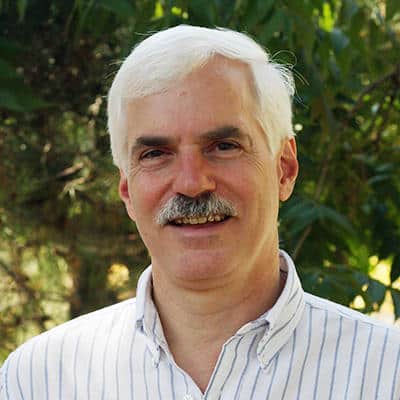
There is consensus among scientists that global warming is real and that it’s caused by human activity. Despite the overwhelming evidence and the urgency to act, there are still many who are skeptical of or flat-out deny climate change. Are these climate deniers simply impervious to scientific evidence? Or have they just not been exposed to the right kind of information? When it comes to ideologically driven views, is it possible to change people’s minds by appeal to facts? Or are humans hopelessly and incorrigibly irrational? Ken and Josh don’t deny talking to cognitive scientist Michael Ranney, head of the Reasoning Research Group at UC Berkeley.
Ken Taylor
Can we ever change the minds of climate deniers?
Josh Landy
Could the mere facts of global warming be enough to persuade them?
Ken Taylor
Or are some humans just too irrational to be convinced by evidence?
Josh Landy
Welcome to Philosophy Talk, the program that questions everything…
Ken Taylor
…except your intelligence. I’m Ken Taylor.
Josh Landy
And I’m Josh Landy. We’re here at the studios of KALW San Francisco.
Ken Taylor
Continuing conversations that begin that Philosophers Corner on the Stanford campus, where I teach philosophy, and Josh directs the philosophy and literature initiative.
Josh Landy
Today, we’re thinking about changing minds on climate change.
Ken Taylor
You know, Josh, the ice caps are melting, forests are burning, temperatures are rising all around the globe. It’s something like 98% of all climate scientists agree. But surprisingly, there are still people—I mean, some of them with a lot of power, who ought to know better—who deny climate change.
Josh Landy
Yeah, tell me about it. It’s infuriating. I mean, how are we going to avert a climate crisis if people are just too irrational to respond the way they should?
Ken Taylor
Yeah, I’m not sure it’s all about irrationality. I mean, think of the fossil fuel industry and the politicians they’ve bought off. They spread what they’ve got to know is false information. Why? Well, so they can sow doubt, because they profit from the doubt. I mean, I grant you they might be among the lowest of the lows. I mean, maybe I can go a little lower than them. But But yeah, I don’t think I’d call them like irrational.
Josh Landy
Oh, what would you call them?
Ken Taylor
Well, I call them despicable. I call them immoral. I call them greedy, but not not necessarily irrational.
Josh Landy
Look, I’m prepared to accept that the fossil fuel industry is you know, diabolically rational, good word for it. But the people who listen to them those folks, surely they are irrational. I mean, all the fossil fuel guys have is a handful of paid off pseudo scientists. So why would anyone with half a brain choose to listen to them?
Ken Taylor
Oh, no, Josh, I’m not even convinced that those people are being totally irrational. I mean, I mean, look, think about, we’ve got the internet, we’ve got hundreds of TV channels, we’ve got social media all over the place. We’re inundated with information. Yeah, but also a lot of misinformation. And I think it could be really hard for an ordinary people to figure out what’s true, and what’s false. And login at to boot at if you your trusted news source, is telling you that climate change is not real or that it’s not caused by human activity. Well, it’s not like irrational to believe your trusted source.
Josh Landy
Trusted news source, Ken… Tou’re talking about what Fox News, Breitbart? I mean, who on earth would trust sources like that?
Ken Taylor
Josh, come on, where have you been millions of people, and you kind of seem to be implying, you know, they’re all stupid and ignorant. That’s That’s hardly a way to change their minds.
Josh Landy
Well, what do you suggest, Mr. Kill Them With Kindness?
Ken Taylor
I suggest you give them the facts. You give them scientific evidence, you trust them to be rational, and you don’t treat them like, you know, idiots.
Josh Landy
I love it that you’re such a Pollyanna. Can you really think facts and evidence change people’s mind? Yeah, I do. Well, if that’s the case, how do you explain that in the 21st century, people are still taking up smoking.
Ken Taylor
Oh, come on, Josh. That’s not fair. Smoking is different. Smoking is addictive. I mean, people started to often start smoking, you know, in their teens, when their executive functions, you know, we’re a little questionable and not fully developed. You can compare that with climate denial.
Josh Landy
Actually, you know, I think we can, we’re addicted to fossil fuels. You know, we we need our big cars, we need our long haul flights or, you know, aircon in the summer heat in the winter. We know full well, there’s an impending crisis. But But guess what? We can’t bring ourselves to give up a single one of our toys.
Ken Taylor
Yeah, that’s too that’s too pessimistic. Because habits are changing slowly. But they’re changing made people are buying solar panels, electric vehicles, reusable batteries. We’re voting for laws that protect the environment, San Francisco, for example, just ban the sale of single use plastic bottles?
Josh Landy
Right, San Francisco.
You got something against San Francisco?
No, but you’re talking about the true believers. You’re talking about people who are ready, except the reality of climate change. What about the millions of folks who are still in denial?
Ken Taylor
I think I think those people they’ll come around to they’ll come around eventually. You know, I think maybe you’re the one who’s in denial. You deny the possibility of hope.
Josh Landy
Touché. Okay, look, all I’m saying is San Francisco is not the world and and until we get money out of politics in this country. I just don’t think we’re going to get the wide scale change we need.
Ken Taylor
Well, now there I’m going to complete pletely agree with you totally 100%. But just that does still leave the question how to convince the skeptics to join the fight to save the planet?
Josh Landy
Well, to help us think about that question, can we send our Roving Philosophical Reporter, Holly J. McDede, to talk to some former skeptics who are doing just that. She files this report.
Holly McDede
10 years ago, Richard A. Muller was skeptical about climate change. Or as he says he was agnostic about the whole issue.
Richard Muller
If you had asked me back then, what is your feeling about global warming, my answer would have been well, I don’t know.
Holly McDede
Moeller is a retired UC Berkeley physics professor. He remembers having lunch with the department when a Nobel Laureate walked in.
Richard Muller
And he as he walked in, he said, “So I’ve just been reading about global warming—certainly everybody here believes in global warming, right?” And everybody no other had except me. I shook my head.
Holly McDede
Muller says he was suspicious, the research at the time might be biased. So at his daughter’s suggestion, he put together a group of scientists to study the data. After intensive research, the team found the average temperature of the Earth had risen by two and a half degree over the past 250 years.
Richard Muller
And our conclusion was global warming was real, and it’s caused by carbon dioxide and other greenhouse gases. That’s a very strong, definite conclusion that I can defend in front of anybody in front of any scientist in front of the general public because we did the work ourselves.
Holly McDede
Now, Muller says he’s in a unique position to convince others he knows how to listen to skeptics and emphasize but not everyone can put together a team of researchers at an elite institution to address their own lingering doubts,
Richard Cizik
If you want to call me a denialist at the time, that was exactly it.
Holly McDede
Reverend Richard Cizik, president of the New evangelical partnership for the common good, just needed to hear the science. He says back in 2002, he thought climate change is a myth.
Richard Cizik
I was a victim of what was the emissions of human greed, ignorance and hatred. In other words, I would confess that even I had a degree of greed, a degree of ignorance and yes, anger in part toward environmentalists and others who said my lifestyle was wrong.
Holly McDede
Then Cizik says he experienced a conversion to science. A friend invited him to a climate conference for four days, he learned about rising sea levels, deforestation and pollution. Climate change was presented as a spiritual issue. And he felt a deep sense of repentance.
Richard Cizik
We don’t have an option here. God says, I will destroy those who destroy the earth. And then the question is, who is that that’s doing this? And we have to say all of us.
Holly McDede
He says it really was that easy. After that he changed his lifestyle and began educating other evangelicals about climate change. But he was ostracized and ultimately lost his job. It wasn’t until 2015 that the National Association of Evangelicals adopted a statement that recognized climate change as a threat.
Richard Cizik
Those of us that are advocates for creation care, we see people changing their minds, especially among the younger evangelicals, the millennials, they know what’s at stake, it’s their future.
Holly McDede
In fact, research shows that kids can be some of the most likely to convince skeptics. Danielle Lawson is a researcher at North Carolina State University. She recently tested this theory, the curriculum for middle school students, they were taught about the impact of climate change on animals. Lawson says these kids that inspire their parents to care more about the well being of the planet,
Danielle Lawson
There’s a level of trust. If their child is talking to them about climate change, they may be less likely to see their child as an ideological threat.
Holly McDede
She says concern about climate change jumped for conservative parents in particular, especially after their daughters talk to them about it.
Greta Thunberg
You say you love your children above all else. And yet you’re stealing their future in front of their very eyes.
Holly McDede
And Lawson says around the world, the young people leading climate strikes are keeping these conversations going.
Danielle Lawson
They’re not going to let us forget about it. It’s having an impact the sense that they’re talking to politicians and to adults, but it’s also influencing what’s happening in our home.
Holly McDede
So how do you convince a skeptic? Show them the facts, see if they’re willing to talk to a reformed physicist, or a converted evangelical, or see of a knowledgeable middle-schooler is around to talk. Philosophy Talk, I’m Holly J. McDede.
Ken Taylor
Thanks for that uplifting look at this kind of depressing downer topic, Holly. That was awesome. I’m Ken Taylor, with me is my Stanford colleague Josh Landy. And today we’re thinking about changing minds on climate change.
Josh Landy
We’re joined now by Michael Ranney, a cognitive psychologist at the UC Berkeley Graduate School of Education and head of Berkeley’s Reasoning Research Group. Michael, welcome to Philosophy Talk.
Michael Ranney
Thanks for having me.
Ken Taylor
So Michael, you’re a psychologist and you work on human reasoning. Lots of psychologists work on human reasoning. But I wonder what got you interested in what keeps you interested in human reasoning about climate change in particular.
Michael Ranney
Well, I started off my publication career in a physics lab and worked on in Applied Physics and material science. I did work, interviewing physicists. And over time, I got more and more interested in physics, education and cognition. And then there’s a personal level as well, where you know, I had a child, I was worried about the future as the sort of roving reporter report came out. And part of me just doesn’t want to even be in a nursing home when I’m 115. And look in the eyes of younger people and say, you know, I could have done something, but you know, TV was so good back then.
Josh Landy
So where do you stand on this question? You know, Ken and I were discussing a moment ago, whether it’s sufficient to give people the facts in order to persuade them that climate change is real. So what is your research tell us? Is it? Is it really possible to persuade people using evidence?
Michael Ranney
Yeah, I mean, facts rule, really, we have a website called how global warming works.org And then people can go to it and see the information that we provide in our experiments that we’ve empirically shown, increases people’s acceptance of global warming.
Ken Taylor
Wait a minute, you say facts rule, I mean, facts rule in the laboratory. Facts rule in, in the in the at least science classroom. science facts rule, sometimes in philosophy classroom, but out there in the world in the wild, I sure wish facts rule, but it doesn’t seem to me. I mean, if facts rule, why is there so much climate change denial?
Michael Ranney
Well, the facts definitely rule. In fact, we’ve run experiments where we give people a single statistic about immigration, or abortion or something like that. And that changes people’s minds in a heartbeat. Let’s say that you were, you’re sure that your partner were Fidelis. But you came home and found that person, you know, in bed with a male care in a second, your empirical mind kicks in and you change your mind about that.
Josh Landy
Thanks for putting that thought in my head.
Ken Taylor
Did you ever see that movie, Old Walter Matthau movie, “How to Cheat on Your Wife”? Oh, it’s a great comedy. And it’s like, if you get caught in the bed with your lover, here’s how you get out.
Michael Ranney
We were trying to change your lightbulb, and through a series of…
Josh Landy
We both happen to fall inside. Exactly, exactly. So yeah. So that’s interesting, right? Because you’ve got scientific evidence, you’ve done the studies, you’ve shown there’s a significantly statistically significant correlation, right, that people’s minds are actually changing, because you’re giving them facts and nothing else, real students just giving them permission. So Ken, why would you doubt this?
Ken Taylor
Well, because No, I don’t doubt that in your laboratory facts rule. I don’t doubt that at all. There’s nobody on the other side saying, Oh, don’t believe that psychologist experimenter don’t believe those effects. But I’m talking about in the wild, where people actually consume information and act on it. The claim that facts rule in the wild, as it were, where we all live in our politics, on our television in our hands. Why is there why why? If facts rule, there wouldn’t be all this climate denial.
Michael Ranney
Well, for instance, I live in a real world myself, I ride airplanes. Do I have people look at my slides, I’m working on a talk, uh, one person thought that climate change was caused by global warming was caused by volcanoes, and I had to help disconfirm that notion for him. And there are a lot of other instances in which a single statistic, you know, someone might think that methane has barely include increased since the dawn of the industrial age, but in fact, it’s almost tripled due to human cause.
Ken Taylor
We’ll have to dig into this deeper because I’m not sure we’re joining the issue in the in the way I want, but you’re listening to Philosophy Talk. Today we’re thinking about changing minds on climate change with UC Berkeley psychologist Michael Ranney.
Josh Landy
How easy is it to change people’s minds using only facts and evidence? Can ideology driven climate deniers ever be persuaded? Or should we just give up trying?
Ken Taylor
Climate evidence and ideology—plus your calls and emails, when philosophy continues.
John Mayer
We keep on waiting, waiting on the world to change.
Ken Taylor
Is waiting for the world to change his mind about climate change a hopeless cause? I’m Ken Taylor. And this is Philosophy Talk the program that questions everything…
Josh Landy
…except your intelligence. I’m Josh Landy, our guest is UC Berkeley psychologist Michael Ranney. And we’re thinking about changing minds on climate change.
Ken Taylor
So again, Michaell I want to grant that if I get somebody in your lab, and I give them the facts, pretty much they’re going to go with the facts, especially if there’s nobody lying in their ear, like Fox News or something. But I want to ask you a question. Some people just have this ideology that they have to give up. That is challenged by climate change. How do you get people like that to change their minds on climate change you have to take a different is giving an ideologically read rigid closed off mind the facts enough?
Michael Ranney
Well often what I find is useful as I asked them why So that’s um, well, okay, do you accept that Earth is heating up? If they don’t, I’ll say, Well, what evidence? Would you need to know to see that? And then I provide them the evidence if they say it is heating up, but it’s not being caused by humans. I say, Okay, what do you think that it’s being caused by? And that’s why getting conversations about volcanoes and so forth. But often, I can just ask them, okay, so like, there were 150 glaciers in Glacier National Park in 1850. How many do you think there are now? If they really denier they might say, Oh, I don’t know, maybe 148? Maybe we lost a couple. But if I say they’re only 25, left, we’ll have 1/6 of the glaciers, those little facts begin to add up. And eventually people tip over.
Ken Taylor
So again, that’s uplifting to me. I don’t know about to you, Josh was saying people are rational, right? You’re saying no, people are rational, they respond to them. But I still have this question for you. Why is there so much in the X in the wild, as I call it, you know, actual discourse or actual politics on our actual media? Why is there so much climate denial?
Michael Ranney
Well, obviously, some of it is due to desire to keep life as it is, that was sort of the intro piece, right? So there’s going to be a balance between culture and information. There’s not like a real dichotomy between the two. In the same way that nature, nurture is not a real dichotomy and development. And so often, you just have to listen to what people are saying and point out their error. But often, they’re just not getting the basic information. Like if people just learn the mechanism of global warming, something we have down to a haiku or 35 words, that changes people’s minds.
Ken Taylor
You have a haiku for global warming?
Michael Ranney
Actually, it’s better if I give you that 35 words away. So it’s Earth transformed. sunlights visible light energy into infrared light energy, which leaves Earth slowly because it’s absorbed by greenhouse gases. When people produce greenhouse gases, energy leaves Earth even more slowly raising Earth’s atmosphere.
Josh Landy
Earth’s temperature, right? That seems totally reasonable to me. And, you know, I was already convinced before and I think if I hadn’t been, you know, I’m the kind of I’m a kind of person who likes to think I’m persuadable by evidence, in fact, but you know, you’re a psychologist, you must have read all the research about our various cognitive biases.
Ken Taylor
And confirmation bias is on and on and on.
Josh Landy
And then you know, the polarization effect, right, all these things. I mean, so you think if there’s confirmation bias, then people aren’t people gonna ward off all the kinds of information they don’t like, and and then there’s the tribalism part, people feel it’s part of their identity that we don’t believe in climate change. And then you have this polarization effect, where supposedly if you tell people facts, that it’s designed to change their minds, that actually just makes them double down on their initial belief.
Michael Ranney
So yeah, I think polarization is a weird situation, because I think it’s kind of an artifact of the laboratory situation. Because often it’s because psychologists are using deceit and vignettes that are counterbalanced are used in a way that often the participants know that they’re being gamed somehow, I see. So one of the things we do is we tell people, Look, this is real information, you can share this with your family tonight, you can Google it, you know, when you’re done to make sure we’re telling you the truth. And so we find that even conservatives, the most conservative people, we have increased their acceptance of global warming, that is, our information rises all boats, it doesn’t polarize. But you’re right. If people get a sense, like, oh, I might be propagandized yet, then then they’re gonna potentially even double down. And early indications on, you know, capital punishment suggested that when people have that they can even become more firm in their position.
Ken Taylor
We’ve got a bunch of callers on the line. And Susan in San Francisco is our first caller, what’s your comment or question, Susan?
Susan
Hi, I was just gonna say that I think when talking about global warming, if people say there’s an average rise of 2.5 degrees, that is not helpful in persuading people that it’s a serious problem, because people think 2.5 degrees big deal, you know, I live in a range that goes from, you know, 28 degrees in the winter to 90 degrees in the summer. So 2.5 degrees. So what I think it’s much better to talk about things like sea level rise and extreme weather events and things that are actually having a visible impact rather than this 2.5 degrees. I mean, I know from doing open open water swimming that you know, three degrees difference can be huge, but most people don’t know that.
Ken Taylor
Thanks for that coughs isn’t that’s great guy. It raises a larger effect. I want to question it connects up to something Josh says. It turns out human beings are suckers for framing effects, right? If you frame a question in one way, right? You get one answer. You framed that same question in a different way than asking about the same thing but you frame it in terms of losses instead of gains or something. People give you a completely different answer. Kahneman Tversky argued that’s a form of irrationality. I wonder Is it? Do you find that in trying to persuade people about climate change that framing effects creep in? And that matters? How you frame it to them? Or is it just give them the facts and don’t worry about the framing?
Michael Ranney
The framing does matter. But what we try to do is try to give people information that they would want to know, free of sort of like some obvious rain. So we’d say, well, well, what would you really want to know if you were going to assess whether global warming is happening, but I think the caller is quite spot on. Unless you provide an accurate context for 2.5 degrees. I mean, if your temperature went up 2.5 degrees, you would be worried about yourself, right? If you increase the temperature is in the Great Barrier Reef by 2.5 degrees, you no longer having have one gender of turtles, they’re all the same gender. And that’s really bad for turtles, right? So if you think about it in those terms, but what we do is like, we have graphs that show temperature over time, from 1880, to today, and if you average it enough, if you take out those, those variations that people confuse it with the way that people confuse weather with climate, you take out those variations, it’s going up like a jet, it’s virtually monotonic, and it’s increase.
Josh Landy
So yeah, but again, I feel like you know, Susan’s still gonna, if you give people that information that’s sort of dry, abstract factual information that doesn’t necessarily feel like it connects with people’s what I always think about the ancient rhetorician is talking about, you know, ethos, logos, and pathos, you know, you can use logos you can use reason, you can use facts and evidence, but that’s not enough.
Michael Ranney
You really think about if your temperature, your body temperature actually increased two and a half degrees throughout our life, now, it might be higher or lower.
Josh Landy
So that’s going to be a good argument. I think about things like telling people, Hey, you like hunting, zoom, soon the fish, there’s not gonna be no fish for you to fish. Soon, there’s gonna be no animals for you to hunt, you know, you even want to live, you want to live in your house by the ocean, you’re not gonna be able to—
Ken Taylor
So we have a colleague at Stanford, Jeremy Bailenson, who’s in communications, although he’s trained as a cognitive psychologist, and he works on virtual reality. He started working in virtual reality before cognitive scientists started thinking a lot about this. He’s one of the pioneers, and he has an experiment, a series of experiments to increase what he calls environmental empathy. And it immerses people in in in, in the facts about climate change, it doesn’t just, it doesn’t just tell them, it gives them an upfront, it’s the virtual reality. This is a virtual reality, you can walk around, you can walk, walk around the melting ice cube, and stuff and is apparently extraordinarily effective. And that goes back to Susan’s point. I mean, do you have to make it I mean, people, you know, people are pretty good to mystical reasoners. But only pretty good. A lot of work has shown that.
Michael Ranney
Well, I think one thing to keep in mind is that people are quite different, right? So the way I like an individual who denies global warming, is that they’re sort of a table being propped up by a few shaky legs. Now, person A may have three legs, person B may have four legs, they may have completely different sets of legs. But if you actually address what those legs are, like, one person might not know the mechanism one might not know the the effects when might not know the sea level rise. Like one of the things that’s sort of shocking to people that if all the ice on the planet melts, our sea levels will rise over 200 feet. Now, that’s not going to happen in the next few years for anything, right. But if you think about the amount that sea level could rise, you realize what sort of dangers are out there.
Ken Taylor
Right. We’ve got more callers on the line—Steven in San Francisco, what’s your comment or question?
Steven
Hi, thanks for taking my call. I just want to point out that the term climate change was coined about 20 years ago by Fred lence a specifically to disarm urgency about global warming, it’s less scary than global warming. And in spite of this, it’s it’s sort of the, you know, the coin of the realm. Everyone calls it climate change. And, you know, in some way, it I think it contributes to inaction or stasis, on on, on doing something about it. That’s really interesting at once, has since disavowed climate denial, and is calling for people to do something about it.
Josh Landy
That’s interesting. I mean, he was he was one of the people who was driving the push to discredit science by emphasizing that it was a controversy.
Ken Taylor
But that’s back to those framing effects. It’s totally up to you, if you if you frame it the right way. You can sell it the way you want. If you frame it the wrong way. You can’t sell it the way you want.
Josh Landy
But I was gonna say I’ve heard the opposite claim that that global warming is not the best term because then politicians cynically can say, well, we had a cold winter. So I guess global warming isn’t.
Michael Ranney
We actually have empirical evidence on this, that when you ask people about climate change, they confuse it with weather, whereas global warming is more clear that it’s talking about the heating up But the planet and in fact, I make a distinction. So I think we can take back climate change in spite of its origins, that global warming is really the fundamental phenomenon. That is that on average, the planet is increasing its temperature. Climate change is an entire set of effects based on that. That includes the melting of ice caps, the desertification of landscapes that acidification. So climate change is the what happens due to global warming.
Ken Taylor
I get all that, I get all that. What I’m wondering about—Luntz was a marketing type guru who helped advise Republicans on how to frame issues.
Michael Ranney
Merchants of Doubt, which you have on your website.
Ken Taylor
Exactly. And, but So, and you know, some people say, progressives, were they are I don’t want to identify myself as anything here. Progressives are just bad at these framing things. I mean, do you think that’s true or not, do you think?
Michael Ranney
Well, I think that progressives have the way to go, I’d have to run a study, to see if they’re really different. But one of the things that I do to help disarm people who deny global warming, and I give talks in red states, I love doing this in Kansas, Missouri, Indiana, what I’ll do is I’ll start off by explaining the motivations of scientists. And I don’t think this is clear to many people. But scientists aren’t rewarded by just going along with it, people were rewarded by really transforming paradigms. And so I pointed out that virtually all climate scientists wish the global warming were not true. So the fact that they accept it is really sort of stunning. And in fact, I even make this pledge, I say that if someone could please convince me that global warming were not true, which I would love to be the case, I would rent the biggest SUV I could find drive to wherever that person is, shake their hand, stop doing work on this entirely give back any money I ever got related to this. And I would even probably win the Nobel Prize because I would publish this. And can you imagine if you could actually just get from globe warming? How famous you’d be? You’d get a beer in any bar you go into, right?
Ken Taylor
I think for most people that’s a really nice motivation.
Michael Ranney
The motivation is somehow we’re just involved in this weird, elaborate hoax is just insane. Yeah, that’s not how science works.
Ken Taylor
No, not at all. You’re listening to philosophy? Doug, we’re talking about changing minds and climate change. We’d love to have your comment or question and Dan in San Francisco is on the line. Welcome to Philosophy Talk, Dan, what’s your comment to question?
Dan
My point for me is, I have a number of friends who don’t agree with Global Local Climate Change correlated with carbon dioxide levels. And that really has to do more with the fact that they believe that the scientific enterprise of which I’m part is hopelessly corrupted by funding and that scientists are leaders. What it really comes down to, unfortunately, is not the information that they receive, but who they received the information from, who they trust. And I guess my question maybe is, how do we build trust in single source of information that because really, the media gets caught up in over interpreting the data to, you know, attributing everything global warming these days?
Ken Taylor
So thanks for the question. I think, actually, you’re raising a really profound question. I think, Mike, I agree with you about the nature of science and all that. But I, I don’t believe that that fact has widely penetrated the consciousness of Americans, because we are such a polarized politicized. I mean, you know what just happen. I mean, I don’t want to date this call. But there was the hurricane Trump said, it’s going to Alabama, Alabama. And and it turns out in the news this morning, the head of the Weather Service, or something said around a letter saying don’t contradict Trump, right. And all the scientists were upset and are in arms and are blowing the whistle. But that’s what our politics has become.
Michael Ranney
I mean, it would have hit Montana too, but just as a very gentle breeze.
Ken Taylor
But that’s what our politics has become, right? People are so distrustful of anything that goes against their belief. How do we how do we break through that?
Michael Ranney
But I think it’s also helpful to understand the motivations of people. Because, you know, if you’re running a shrimp shack on the banks of the the Gulf, even though you’re not being paid by, by fossil fuel industry, if you’re selling your shrimp sandwiches to people off the oil rigs, you’re related to it. And so I think there’s that there’s also a fear. And one of the things that I tried to point out is that we can actually fix global warming relatively quickly and easily and inexpensively, if we act and the sooner we act, the better. It’ll be. But people often hear this doom and gloom and studies have shown if you don’t talk about how we can fix it, how it’s readily changeable, how cheap, sustainable fuels are, then people turn off because, you know, you’re frightened, right? If you have this sort of learned helplessness helplessness response otherwise.
Josh Landy
So it sounds like it’s a combination of things. Let’s get back to ethos, logos and pathos right you’ve got the logo so you’ve got the evidence and the fact but you’ve also got emotion you’ve got the fear combined with the hope it’s gonna be a problem for your shrimp but there is This hope is on the way if we take action, right? And then you’ve also got the ethos, you’ve got trust, you know, I’m someone you can trust. I’m not your enemy, you know, we’re on the same side. So it seems like maybe the ideal strategy is a combination.
Michael Ranney
Yeah. And I think trust is really important. And we’re doing some empirical work on this. It turns out that really, the general public does trust scientists a fair amount. I mean, if if they’re going to predict that there’s an eclipse tomorrow, you know, even people who might think the earth is flat, although they’re very few of those people, you know, will begin to think maybe there will be an eclipse, right. And so in it also, I can point out that scientists have really very good employment. I mean, the unemployment rate for people with PhDs is like point seven 5%.
Ken Taylor
In the sciences, not in the humanities, even overall.
Michael Ranney
I teach a class on how to get a job after your PhD. So this is this is more more than a passing interest. And so it’s not like these people couldn’t do things outside of climate. I certainly was not interested in climate change as an issue or a scientific topic. I’m interested because it’s important.
Ken Taylor
You’re listening to Philosophy Talk. We’re thinking about changing minds on climate change with Michael Ranney, from the UC Berkeley psychology department.
Josh Landy
Are people fundamentally rational or irrational? Do we form our beliefs based on evidence or something else?
Ken Taylor
Humans: the rational or the irrational animal—when Philosophy Talk it continues.
ABBA
Take a chance on me, take a chance on me.
Ken Taylor
Can we get more people to take a chance on the evidence and change their minds on climate change? I’m Taylor, this is Philosophy Talk, the program that questions everything…
Josh Landy
… except your intelligence. I’m Josh Landy. And our guest is Michael Ranney from the UC Berkeley Graduate School of Education.
Ken Taylor
And we’ve got a caller on the line, John in San Francisco. Welcome to Philosophy Talk, John, what’s your comment or question?
John
Hello, thank you for taking my call. Maybe I came in late, but I’m having a bit of a problem understanding the gist of your guests position, is it that certain means of persuasion are found to be more valid and reliable in predicting an outcome than others? And if that is true, has your guests also attempted to use the same means of persuasion to take a random group of people and move them against the climate change thesis?
Michael Ranney
It’s interesting you ask that but we did publish a study that way? Yes, you can, in fact, frame information in such a way that it increases the doubt about global warming. I mean, you have to cherry pick it and it’s terribly misleading. But I think the reason you know, it’s misleading, is that if you ask people, well, what would it take you to convince you that your position is wrong? And then let’s look at those data. That’s when people are possibly probably best compelled. And in fact, when you marbled together, the sort of more more representative statistics we have with these misleading or cherry pick statistics, people can tell the difference. So if I, if I give you the choice between two graphs, one that shows the temperature change in Peoria, Illinois in 1991, or one about the entire planet, from the 1880s to today, which of those two graphs do you want? Well, of course, given the contrast, you’re going to want the one that has the most for D extend that the largest extent over time and space, right, not Peoria. 1991. Right. But if you’re just given Peoria 1991, and you’re, and it’s purported that this is representative of what our climate is doing, then yeah, you might be misled by so.
Ken Taylor
So I gotta tell you, you sound like an optimist to me, especially, especially for a psychologist, because I’m gonna tell you a psychology, social psychology and all the experiments but people like Kahneman and Tversky, and loads of students who followed in their wake, a part of what helped convince me not the only thing but part of what helped convince me that human rationality is way over. So the rationality of everyday human cognition, I don’t mean science, right? Because that’s a big complicated cultural achievement, but the like individual mind doing its everyday reasoning, its rationality is way oversold, but you, you make the individual cognizer sound a lot more rational, in not just what it concludes from the evidence, but in its evidence seeking behavior, right? Confirmation bias says, Oh, I’m going to seek out the information that confirms me. And I’m going to, I’m going to discount any information that’s offered. I’m certainly not going to seek out disconfirming evidence and then somebody offers it to me, I’m going to discount the evidence I’m going to discount them for for pushing it in my face, but you make it sound like people are actually hungry for good evidence.
Michael Ranney
I think that’s the case and getting back to your part of your your point. I am optimistic and as people see that the solution to global warming and climate change are in our mental horizon in in our pathway, they will feel that too. In fact, we have fun in my research group, because there are elements that can give you pleasure when you see that the solution isn’t within your grasp. In terms of rationality, I’ve actually written a paper relating to that. And I think part of the difficulty is when people are banding about whether people are rational or not, is that we’re a mixture of both right? And some of this relates to our goals. So for any given moment, I might have 100 to 200 goals. I mean, pretty soon, I’m gonna want to eat, but I want to also want to stop climate change, you know, I’d like you know, my, my finances to be a little bit better than they are. They’re all these. And they’re also modulating in terms of their importance. And so what people are trying to do is try to be fidelity just to their goals. You’re trying to satisfy all these goals at once, under changing conditions. It might seem like people are irrational, and perhaps people are, but unless you know that person from the inside out, yeah, very hard to say if they are.
Ken Taylor
That suggests that, to the extent that there is irrationality, and massive widespread rationality, it might show up not in adjusting and means to an end, not in the pursuit of a goal. But in balancing the kind of competing goals. I mean, balancing the kind of competing goals is really hard. And I actually don’t know that the theory of like, rational choice, or any of that stuff, has told us like, this is how you do it.
Michael Ranney
Right. And it vary so much in the circumstances. So if you’re living hand to mouth, and your income is indeed related to the fossil fuel industry, and your children are in danger of losing their home, or not being fed enough, then climate change is not the top of your list, and you may not act that way. And that’s one of the reasons why those nations that have the best resources should be tithing their part like sending money to help the Amazon and so forth.
Ken Taylor
You’re listening to philosophy dog, always want more comments and question and we got Rosa in Oakland on the line. What’s your comment or question, Rosa?
Rosa
Okay, I feel that to help people understand this better that maybe the title of you know, this crisis should be called global warming acceleration crisis.
Ken Taylor
That’s very modern in Silicon Valley.
Michael Ranney
Sometimes people call it a global heating, just to make it clear that that that way, yeah.
Josh Landy
But that would acronym nicely to black.
Rosa
And I just want to say that, you know, that tell people, you know, yes, climate has changed over the ages. But it happens slower. You know, when it’s natural, and giving things time to adapt and evolve, but now that we’re doing things that are accelerating the change, that’s the reason why we need to do something, because we’re just making it faster, right? And if people could think of like their body, like the earth, and you know, what we do, people are so into healthy things, what we do to our body could accelerate our death, or help us to live longer. Yeah. Now what choices we make?
Ken Taylor
Well, that’s a little tricky, because accelerator people like to use accelerator as a good word these days, like a Technology Accelerator, right and ideal accelerator?
Michael Ranney
Well, one way to think about it is in terms of the pace of change. So for instance, you know, our planet has survived to some degree or another, with climate changes in the past, but they’ve been more slow. So for instance, I’ve seen one analysis that suggests that organisms are going to need to migrate about a yard a year in order to survive. Well, that’s not too bad if you’re a squirrel, but if your Redwood moving a yard a year is difficult, let alone you know how to route are you gonna move over like the Sierras and come down into Nevada or not? So it’s really the pace of change. And that’s why we’re having the number of species, organisms.
Ken Taylor
Organisms are gonna have to move a yard a year. And as those organisms move a yard a year, this is something that I tell people, oh, you’re upset about immigration and migration. Now, you haven’t seen anything yet, unless we deal with this global warming crisis, where so many places on the earth will not be fit for human habitation be a massive movement of people.
Michael Ranney
Indeed, a lot of social scientists have shown that we’re already seeing, seeing the effects of climate change in migrations that the Syrian Exodus is not just about ethnic cleansing or ethnic conflict. It’s also about turning to desert they’re not being food. Bangladesh is having their Delta in innovative saltwater.
Ken Taylor
So I’ll go back to this goals thing. And because I, I hear you and I want to believe I want to be an optimist. I really want to be an optimist. But I look at the thickness of the the prevalence of denial, even though there are lots of people like you, lots of really smart people out there ringing the alarm, right. You don’t have the bully pulpit of some of the deniers you don’t have. And the bully pulpit isn’t just an informational pulpit. It’s a kind of self interest thing back to this, the economy’s all this sort of stuff. I mean, how do you how do you—
Josh Landy
I mean, it’s self interest on the part of the fossil fuel industry and of the politicians.
Michael Ranney
I didn’t but you can see how quickly people do change their minds like look how quickly the the mean of the of the population change toward thinking that gay marriage was all right. And even more pointedly more recently, there was this flip flop about Russia. So before Trump was elected, the conservatives and Republicans were made way more concerned about Russia than were the liberals. Okay, that’s a flip within about six months, I agree that the entire population,
Ken Taylor
I agree that minds can be changed quickly. But I don’t think that necessarily, the change is always in the direction of the true and the good. I think the the, the human mind walks around. Now science mostly marches in the direction of the more likely to be true, but social life is not science, social life is a mess.
Josh Landy
And in addition, we want to press you a little bit on attitudes, changing attitudes to gay marriage, because a lot of that, it seems to me was driven by the coming out movement. And so here what you it seems to me, what you really had was a kind of appeal to basic human goodness, it was, it was ultimately an emotion appeal. Look, you know, someone you, you know, you might have been living under a rock, but now you know, that some of your best friends and your closest family members are gay, don’t you care about them? Don’t you want them to be happy?
Ken Taylor
If your name is Dick Cheney, you don’t? Well, okay. But right.
Josh Landy
But I think I think I think the success of extraordinary and wonderful success of that movement had to do with Athos, it had to do with, you know, when paths, appeal to emotion, and appeal to who the person is and what their relationship is to you. So it seems like a very different kind of—
Michael Ranney
Every movement has, has momentum, and so forth. But there are inflection points. And I think that when Joe Biden for all of his words, and so forth, when he thought when he came out saying that that was fine. That changed a lot of minds. And I think it was a tipping point. And I think we’re moving to the tipping point in climate change as well. In fact, if you look at surveys, the number of people who are most alarmed about climate change has doubled, doubled from December of 2013. In five years to December 2018. December 2013. was right when our website how global warming works came out.
Josh Landy
There was the tipping point. Correlation is causation.
Michael Ranney
In this case, I’m willing to entertain the hypothesis.
Josh Landy
So the kids are gonna say, maybe Greta Thunberg people.
Michael Ranney
Yeah, and the numbers of deniers are dwindling. They’re only 16% who are now in the two most denialist camp where 60% are in the most.
Ken Taylor
Okay, so I’m gonna ask you maybe already flipped. I’m gonna ask you. I know you’re a psychologist, not a social prognosticator. But how long can the deniers who are a diminishing minority? How long? Can they hold out? When will climate change denying climate change be like denying the Earth is, is around?
Michael Ranney
Well, when I first started giving talks about this, like around 2013 or so I said that in 20 years, everyone will accept global warming. And I think I could still hold to that. And I think the data are showing that that that’s that momentum. There certainly is a political asymmetry. But even that’s shifting, if you look at the people who used to deny that global warming was even happening, that is that we’re heating up. Now they’re saying it is heating up, and maybe humans are causing it, but it’s not that much, or it’s too expensive. So on this continuum, of flat out denial of that phenomenon, to the extreme being, we got to work on this right now. The entire population is moving.
Ken Taylor
Okay, on that, on that note of optimism, I’m gonna thank you, Michael. It’s been, it’s been great to talk with an upbeat psychologist.
Michael Ranney
Thanks.
Ken Taylor
Our guest has been Michael Ranney. He’s a cognitive psychologist at UC Berkeley Graduate School of Education. He’s head of Berkeley’s Reasoning Research Group. So Josh, you got a brief bit of reasoning for me?
Josh Landy
Now look, I like the idea that sort of all of the above, you know, that maybe facts and evidence can work. That’s fantastic, you know, discovery that our guests Michael Ranney, you know, came up with, that’s wonderful. But you know, let’s not discount other things. Here. Here’s what I think we should do when somebody says that global warming is a hoax. Turn it around, and then and say no, the claim that it’s a hoax. That’s a hoax. Yeah, you know that they want you to believe it’s a hoax, so they can steal Greenland, globally.
Ken Taylor
Yeah, there’s one thing that we didn’t talk about, though, enough is the role of politics in distorting human decision making, and especially a political system like ours, in which money controls things in which the rural minority has a disproportionate share of political power and getting decisions and China wants to be dominate the world and so they have a certain interest. So it’s a really complicated thing. If it were just believed the true and the goodwill follow, I would be a lot. But you know what? This conversation continues at philosophers corner at our online community of thinkers, where our motto is Cogito ergo Blago. I think this is with apologies to Descartes, I think, therefore, I blog, and you can become a partner in that community just by visiting our website, philosophytalk.org.
Josh Landy
And if you have a question that wasn’t addressed on today’s show, or if you’re bedeviled by a conundrum in your own life, Could use some philosophical insight. We’d love to hear from you email us at conundrums@philosophytalk.org.
Ken Taylor
Now here’s the guy who changed his mind using speed alone—it’s Ian Shoales, the Sixty-Second Philosopher.
Ian Shoales
Ian Shoales… I came home for lunch one day in junior high and told my mother that Mr. Johnson, the health teacher, had informed us that the governor of California was a communist. No, my mother told me, he’s a Democrat. My mother then informed me that people believe all sorts of crazy things. A lesson I have taken to heart over the years. He also said that the world was going to run out of oil by 1970. Why he was telling this to a bunch of 12 year olds I do not know. Maybe he wanted us to head for the bunkers while we were still unable to drive, thus adding a few years of oil use before the crisis. Well here we are in 2019 and we still have oil, though we might be hitting bottom, like using the spatula to scrape out the last of the peanut butter. It is hard to build consensus around a crisis, unless you can literally see the floodwaters roaring at us. “Just go buy more peanut butter.” No, it’s all gone. “Well then, we won’t eat peanut butter any more, what’s the big deal?” The trouble with climate change is that words are our enemy. It used to be called global warming, and any fool could see that winter is still cold, what are you even talking about? Before that of course, it was the Cold War, and it was Communists that threatened capitalism, not these damn tree huggers, So the language changed. But is change really a crisis? And is it really man made? People have a hard time accepting that. I don’t know why. You’d think bringing a planet to its knees would be something to brag about. It proves our dominion. Also, come on. It’ll bounce back, it always does. Not so reassuring when you see half the state of California on fire, and you’re wearing gas masks to the Safeway. But come on. Safeway is still open! Out of peanut butter, but open. Just a phase. Nothing new. Same old same old. Whiney libtards can’t take the heat and they won’t trust the wisdom of the marketplace, which is smarter than a junkyard dog. Conservatives also think they’re taking the blame for a crisis that doesn’t exist, which means if it DOES exist, they can’t escape blame. Which may help explain the weird behavior from the President of Brazil who tweeted that he would not accept French help to plant new trees and fight the huge Amazon rainforest fire, unless the President of France apologizes for insulting him. Also, in throwback to Cold War lingo, the Brazilian president claimed that the French president “… disguises his intentions … to ‘save’ the Amazon, as if it were a colony….” Well, plundering of the Amazon has been going on for years- illegal poaching of lumber, burning of forest to create farmland, clearing it to make room for the upwardly mobile to build their cute little houses, free of snakes, toxic frogs, and hostile natives with poison darts. Climate change will end all that. See, that’s the dark secret here. There are many who can’t wait for it to catch fire and burn. The poor will die, the losers will die, the whiners will die, leaving more than enough oil for the rich survivors to snowmobile in their new Styrofoam winter getaways. Why do you think we made that half hearted offer to get Greenland? That’ll be shorefront property when the icebergs melt baby! Drink your juleps from your bungalow and watch the tankers pass by laden with oil and ambergris and blubber and polar bear rugs for you to dry your feet before you come back in the house. I sometimes think this is what climate change deniers not only secretly believe will happen, they hope and work for it. Of course, there would still be dangers. Sea serpents, the Kraken, awakened from their ancient slumber, may prove easily adaptable to our new Florida clime, a depleted world chock full of tasty overweight billionaires. And there could also be mutated survivors with lungs like leathery wings flapping in their hollow chests. They have fangs. Talons. Grievances. They are easily triggered. Identity politics is their jam. They say they are Vegan. They say they’re here for the recycling. Just outside the door, lightly tapping. You gonna let them in? I would not if I were you. I gotta go.
Ken Taylor
Philosophy Talk is a presentation of KALW local public radio San Francisco and the trustees of Leland Stanford Junior University, copyright 2019.
Josh Landy
Our executive producers are David Demarest and Tina Pamintuan.
Ken Taylor
The Senior Producer is Devon Strolovitch. Laura Maguire is our Director of Research. Cindy Prince Baum is our Director of Marketing.
Josh Landy
Thanks also to Merle Kessler, Angela Johnston and Lauren Schecter.
Ken Taylor
Support for Philosophy Talk comes from Stanford University and from the partners at our online community of thinkers.
Josh Landy
The views expressed or mis expressed on this program do not necessarily represent the opinions of Stanford University or of our other funders.
Ken Taylor
Not even when they’re true and reasonable.
Josh Landy
The conversation continues on our website, philosophytalk.org, where you too can become a partner in our community of thinkers. I’m Josh Landy.
Ken Taylor
. And I’m Ken Taylor. Thank you for listening.
Josh Landy
And thank you for thinking.
John Boehner
I’m not qualified to debate the science over climate change.
Mitt Romney
I’m not a scientist.
Mitch McConnell
What I have said repeatedly is I’m not a scientist.
Stephen Colbert
Yes, everyone who denies man-made climate change has the same stirring message: We don’t know what the f*ck we’re talking about.
Guest
Get Philosophy Talk
