Is Philanthropy Bad for Democracy?
November 21, 2021
First Aired: April 28, 2019
Listen


In a liberal democracy, individuals should have the freedom to give money to charities of their choice. But is there a difference between charitable giving from ordinary individuals and philanthropic giving from extremely wealthy individuals? Whose interests are served when the wealthy give? Should the state continue to encourage big philanthropy with massive tax breaks for the rich? Or should it focus more on taxing extreme wealth? Is big philanthropy destroying democracy? Josh and Ken donate airtime to Stanford political scientist Rob Reich, author of Just Giving: Why Philanthropy Is Failing Democracy and How It Can Do Better.
- Dying
- |
- Education
- |
- Government
- |
- Lying
- |
- Money
- |
- Society
- |
- Videos
- |
- Wittgenstein
Josh and Ken begin the show by debating whether philanthropy is driven by compassion or ego. Ken believes that philanthropy is borne out of a desire to better the world and that it has a positive impact — funding research and building institutions, among other things. Josh, on the other hand, views philanthropy as a way for the elite to disguise the unscrupulous means by which they made their money. Rather than reward the wealthy for spending money on “monuments [for] their own vanity,” he argues, they should be taxed more. Citizens, instead, should decide how the money is spent.
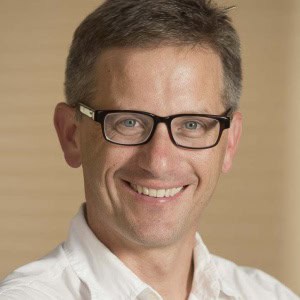
The hosts are joined by guest Rob Reich, political scientist at Stanford University and author of Just Giving: Why Philanthropy is Failing Democracy and How It Can Do Better. The thinkers discuss the issue of private donor influence on public services and how it undermines democracy. As an example, Ken points to the private police force that patrols Chicago’s Hyde Park neighborhood and is hired and paid for by the University of Chicago. Rob criticizes this use of private funds to direct a public service of the most basic sort and argues that these funds should be directed to the government instead. Josh questions the efficacy of shifting private funds to the government, asking whether we can be certain that the government will spend the money more wisely. Rob’s response is that while there is no guarantee, democracy is not meant to be a mechanism for maximally-effective public spending anyway. Its purpose instead, he claims, is to allow citizens to have a voice and to make progress over time. This ability can be limited, however, if funds are constrained by private donors and the strings that they might attach to their contributions.
In the final segment, the hosts and Rob discuss the future of philanthropy. Rob points to one potential instigator of change: a tax bill passed by Trump that allows only the wealthiest individuals to itemize their charitable contributions. This bill, he believes, will make it more apparent that charitable giving is a mechanism for the rich created by policy and may incentivize people to fight against philanthropy as a deterrent to their interests. Finally, the hosts discuss the implications of the perpetuity of foundations. Rob makes the case that foundations should have a time-limited existence so that the “dead hand of the donor” cannot control future generations.
Roving Philosophical Report (seek to 6:57) → Holly J. McDede takes a closer look at debates about whether to accept donations from the elite, which have gone on from the Gilded Age to present day. She delves into the case of the Sackler family, which owns the company that produces OxyContin, and its members’ attempts to use philanthropy to boost their social clout and be seen as patrons of the arts rather than creators of an opioid crisis.
Sixty-Second Philosopher (seek to 45:57) → Ian Shoales examines philanthropy’s role over time in sustaining art and culture.
Ken Taylor
Is philanthropy driven by compassion or by ego?
Josh Landy
Is it better if the rich hoard their money or if they give it away?
Ken Taylor
How about taxing them and using the money the way we want?
Josh Landy
Welcome to Philosophy Talk, the program that questions everything…
Ken Taylor
…except your intelligence. I’m Ken Taylor, here at the studios of KALW San Francisco.
Josh Landy
And I’m Josh Landy, coming to you this week from the Windy City in the studios of the Chicago Recording Company.
Ken Taylor
But we’re still continuing conversations that begin that Philosophers Corner on the Stanford campus, where I teach philosophy and Josh directs the philosophy and literature initiative.
Josh Landy
Today, we’re asking whether philanthropy is bad for democracy.
Ken Taylor
What kind of question is that? Philanthropy pays both of our salaries in fund scholarships for needy students. It builds libraries, hospitals, museums—what’s not to like?
Josh Landy
Those are great things—especially my salary. But we can’t let them blind us to the corrosive harm that philanthropy actually does, especially to democracy.
Ken Taylor
Philanthropy corrosive to democracy? Come on, Josh.
Josh Landy
Well, ask yourself why exactly. We need to bribe rich people into giving their money away using tax breaks. I mean, I mean, huge tax breaks. I mean, all that does is basically reduce the overall sum of money that government has to spend on all the things we need.
Ken Taylor
Wait a minute, would you rather rich people hoard their money?
Josh Landy
No, that’s not what I’m saying. So what I’m saying is, instead, we should tax them a lot more.
Ken Taylor
You don’t want to bribe the rich, you want to soak the rich? Is that it?
Josh Landy
Well, it’s something like that. I mean, the thought is this like, instead of rewarding them for wasting money on monuments to their own vanity, we the people should get to decide democratically, how to spend that money on things that matter to all of us.
Ken Taylor
Monuments to their vanity? Come on, Josh, you’re making it sound like most philanthropists are driven by ego rather than selfless compassion.
Josh Landy
Ego, lust for power, a desire for absolution
Ken Taylor
Jeepers!
Josh Landy
Yes, I mean, look, think about who these philanthropists actually are. I mean, back in the Gilded Age, it was people like Rockefeller and Carnegie and today, it’s the likes of Sheldon Adelson and the Koch brothers. I mean, you’re really telling me to trust the motives of people like that?
Ken Taylor
Look, I can’t deny that there have been some unsavory characters among the pantheon of great philanthropists. But you know, there’s also the likes of George Soros or Bill Gates. They seem like pretty cool, guys. And I’m sure there are politics it much more to your liking.
Josh Landy
Look, it’s not the politics is the issue. I mean, the point is that these folks didn’t make their billions by being selflessly compassionate. They made them by you know, rigging the system or being ruthless robber barons.
Ken Taylor
Well, first of all, what suppose you’re right, why does it matter how they made their money? All it really matters is what they’re doing with the money they’ve gotten now, now that they’ve switched from, you know, robber baron mode to philanthropic mode. That’s all that matters.
Josh Landy
I don’t know Ken, dresser robber baron up and philanthropic clothing. All you got is a robber baron in a friendly looking suit.
Ken Taylor
Who are you, dude, Bernie Sanders? It’s like you think that all great wealth is ill gotten? I mean, I don’t believe that. But even if it were, shouldn’t we be pleased? I mean, like really pleased when some of it is given back to society.
Josh Landy
So we were supposed to be grateful to them, like they’re doing it out of the goodness of their heart. I mean, haven’t you noticed how often they plaster their names all over everything they build?
Ken Taylor
Josh, a wealthy donor gives like $30 million to build a cancer center. And you begrudge them a little name recognition? What’s so bad about giving credit where credit’s due dude?
Josh Landy
Well, so let me see if I understand you correctly. You’re saying we’re supposed to take their tainted money, ignore who we are, who they are, ignore where their money came from, and then bow down before them and say, Thank you so much. I was saintly one for building us a monument in your honor. Thanks but no thanks.
Ken Taylor
Oh gosh, in your honor. Come on, Josh. Let me get this straight. I mean, it’s like you think I mean, do you really think, like you philanthropy is a form of? I don’t know. It’s like, it’s like the moral equivalent of money laundering or something like that. Come on.
Josh Landy
Well, yeah. Yes. I mean, look, it’s a way for the Rockefellers of this world to disguise the unscrupulous means by which they made their money. And it’s also a way for them to whitewash their reputation.
Ken Taylor
That’s way too harsh, Josh, come on. Surely some philanthropists are just good, caring people who made their money honestly, and they’re interested now in using their wealth to change the world and make it a better place. Surely you admit there are people like that?
Josh Landy
Well, Okay, and more power to them if they are, but can, if they’re really such great people? Why do we need to bribe them to give their money away using tax breaks?
Ken Taylor
Oh, well, I’m willing to admit you might be right about that. We should maybe rethink the tax policies, no doubt. Okay?
Josh Landy
It’s good to see you’re starting to come around.
Ken Taylor
But still, I think you’re way too cynical about this question of how many philanthropists are genuine saints? And how many are just sinners in disguise?
Josh Landy
You know, that’s an excellent question can and to help us think about it, we sent our Roving Philosophical Reporter, Holly J. McDede, to take a closer look at the motivations of some well known philanthropists from the Gilded Age down to the present. She files this report.
Holly McDede
In a recent HBO segment, comedian John Oliver takes on the Sackler family and their company Purdue Pharma, the makers of Oxycontin.
John Oliver
Purdue famously aggressively marketed oxycontin to doctors as a less addictive painkiller that could be used to treat common conditions like backaches and knee pain, which was obviously untrue.
Holly McDede
The Sacklers have rarely spoken publicly about this addictive painkiller. So Oliver brought an actor Michael Keenan to play Richard Sackler.
John Oliver
A news article about oxycontin addiction says it’s caused 59 deaths in a single state. How do you respond? That’s not too bad. It could have been far worse.
Holly McDede
In 2001, the opioid crisis was escalating. Richard Sackler wrote an email urging Purdue pharma staffers to blame the people who were addicted,
John Oliver
Michael Keaton, what do they actually write? We have to hammer on the abusers in every way possible. They are the culprits and the problem. They are reckless criminals. Sackler genuinely wrote that.
Holly McDede
Outreach by the family’s actions activist took to the Guggenheim in New York to demand the museum cut ties with the Sackler family. In response to public pressure museums like the Guggenheim have begun to cut ties. The National Portrait Gallery in the UK cancelled a $1.3 million donation from the Sackler family.
Keith Humphreys
And I think the Sackler family cares about that.
Holly McDede
Keith Humphreys researches addiction at Stanford University,
Keith Humphreys
They are so insistent on putting their name on all their philanthropic donations says to me, they really want to be known as patrons of the arts, not as the people who brought us the worst drug epidemic of the last 100 years.
Holly McDede
Humphreys says the Sacklers use their social clout to convince regulators, medical schools and doctors that oxycontin was not addictive. He says rejecting the donations sends a powerful message.
Keith Humphreys
Rich people aren’t like you and me. They care a lot about being able to go to dinner parties and fancy places and not be cursed under people’s breath. So that elite rejection by museums and I expect some universities are going to start rejecting them as well may motivate them to change not out of the goodness of their heart, but because they care about that very deeply, maybe more than they care about just the money.
Holly McDede
This is not the first time institutions have grappled with accepting donations from the contentious elite.
Benjamin Soskis
The philanthropy is inherently a problem for democracy.
Holly McDede
Benjamin Soskis, a historian with the Center on Nonprofits and Philanthropy at the Urban Institute, says this debate really came to a head during the Gilded Age. This was after the Civil War when oil tycoon John D Rockefeller became America’s first billionaire. Andrew Carnegie was another robber baron. He made a fortune off of steel and ruthlessly broke up unions.
Benjamin Soskis
The massive fortunes of the Industrial Age confronted the public with a real quandary. What do you do if you are asked to accept public donations that are really attractive, that could do good but that seemed to connote a sort of endorsement of the modes of accumulation.
Holly McDede
Some communities refused Carnegie’s money, saying the libraries he wanted to build were like monuments to exploitation. In 1905. Rockefeller donated $100,000 to Congregationalist Missionary Society. Saska says this sparked widespread debate about whether accepting this money would amounted endorsing a merciless oil monopoly.
Benjamin Soskis
And that’s when the phrase tainted money really became most prominent. Half the nation thought it was cool for the Congregationalist to accept the money and half thought it was completely immoral.
Holly McDede
During the 19th century, it was easy to point to millionaires and philanthropists like Rockefeller and Carnegie as examples of corporate greed. Now the Sacklers have come to represent a similar ethos. But Andy Chambers, an addiction psychiatrist with the Indiana University School of Medicine, says focusing on individuals like the Sacklers is missing the bigger picture of
Andy Chambers
What’s going on in our healthcare system that doctors are so poorly trained that they instead of listening to what they were taught in med school, they listen to drug companies. What’s going on with that?
Petra
Now we’re in what some people call the second gilded age where a small number of people get again on a huge chunk of the nation’s wealth. And many of these very rich individuals are looking to make big donations. Chambers says addiction research might be a good place to start.
Andy Chambers
There is an incredible lack of philanthropic interest and support for addiction diseases.
Holly McDede
But when it comes to fighting addiction, there’s not usually a prestigious museum wall for billionaires to stamp their names on. For Philosophy Talk, I’m Holly J. McDede.
Ken Taylor
And thanks for that fascinating tour of debates about philanthropy from the old Gilded Age down to the new Gilded Age. I’m Ken Taylor, with me is my Stanford colleague, Josh Landy. And today we’re asking whether philanthropy is bad for democracy.
Josh Landy
We’re joined now by Rob Reich, who’s a professor of political science at Stanford University, where he also directs the Center for Ethics in Society. And he’s the author most recently of a book called “Just Giving: Why Philanthropy Is Failing Democracy and How It Can Do Better.” Rob, welcome back to Philosophy Talk.
Rob Reich
Thanks so much. Great to be here.
Ken Taylor
So Rob, despite the title of your book, I’m guessing that at some point you were like most Americans, I doubt that most Americans see philanthropy is all that corrosive for democracy. So tell me what was your aha moment when you were open? Your eyes were open to the downsides of first time.
Rob Reich
Yeah, there was an aha moment. And it wasn’t by thinking as a scholar and looking at Rockefeller and all these other Gilded Age or second Gilded Age barons, it came in a kind of humdrum way. Like, like you I live in the Bay Area, relatively wealthy suburbs here in the peninsula, and had my first child getting ready to send him off to kindergarten in Palo Alto, on the first day, he was in school got sent home with a whole bunch of information about an Welcome to the school district registration for class, etc, etc. And an invitation from the school districts foundation to send a voluntary but expected contribution of $2,000 per child that year. That was really something. And so I put on my scholar hat, I had been writing a lot about education, education opportunity, and collected some data about these private donations to public schools and found exactly what you’d predict. They exacerbate inequalities in school funding, wealthy suburbs can raise a lot more money than can big cities or poor places. And then the really galling thing that on top of the exacerbation of inequality. Parents in Palo Alto got tax deductions for these for these contributions. And so the federal government and by extension, all American citizens, were adding fuel to the fire or were themselves helping out wealthy parents add more advantage to already relatively advantaged kids.
Josh Landy
So let me let me see if I have your right, Rob. It sounds like in the disagreement that Ken and I were having a moment ago, you’re a little bit closer to the position I was pushing, right I was let’s be a little tough, maybe a little open. Man was more inclined. Give us more glad to give you know, give them a pass you know, appreciate the good that they do. So you know, where do you stand on this? Or you know, are most of today’s philanthropist saintly do Gooding sure heaps? Are they more like the robber barons of old old times?
Rob Reich
Yeah, well, here’s, you know, we were on philosophy talks, let’s make it let’s make an important initial distinction. There’s a kind of backward looking accounting of the money making itself the mode of accumulation, and then whether you can sort of excuse any ill gotten gains by doing something philanthropic. And then there’s just a forward looking question to be asked about whether charity or philanthropy does something that actually has to do with poverty reduction or almsgiving. And I mean, the example I like to give about the Rockefeller the Sacklers is, can I see you’re wearing a nice watch right now, if I were to steal your watch, and then go down to the pawn shop down the street, sell it for a couple 100 bucks and then go to the was super effective charity and give them the couple $100. And then you come find me and complain like, Dude, you stole my watch? And I say, but can look at the amazing good that I’ve done because that’s the money laundering. That’s the money laundering. Exactly. So my good deed doesn’t excuse the initial harm. But I’m gonna give the Palo Alto parents a pass here. Let’s just assume that they have money that’s legitimately theirs, and they’re no robber baron harms done. Still, there are important questions to be asked should we have a system of charity that allows people to instead of directing their altruistic other regarding philanthropic donations to assist people in need, actually then adds advantage to advantage and add a taxpayer subsidy?
Ken Taylor
I know your answer to that. That’s what they call a rhetorical question. What we’re gonna do is take you up on that after a short break. You’re listening to Philosophy Talk. Today we’re thinking about philanthropy and democracy with Rob Reich from Stanford University.
Josh Landy
Is trusting the public good to philanthropists a form of plutocracy. What if the people and the representatives decide not to fund the arts or shows like Philosophy Talk? Wouldn’t we want philanthropists to step up?
Ken Taylor
Providing public goods: plutocracy versus democracy—when Philosophy Talk continues.
Travie McCoy
The world better prepare for when I’m a billionaire.
Ken Taylor
Become a billionaire and use philanthropy to turn your private wealth into public influence—that’s the ticket. I’m Ken Taylor. This is Philosophy Talk, the program that questions everything…
Josh Landy
…except your intelligence. I’m Josh Landy, and we’re asking whether philanthropy is bad for democracy. Our guest is Rob Reich from Stanford author of “Just Giving: Why Philanthropy Is Failing Democracy and How It Can Do Better.”
Ken Taylor
So Josh, I mean, Rob, I mean, I want to ask you a question. That’s kind of the flip side, you gave us a case in which you thought, plausibly, philanthropy in the way we structure it undermines the public good, and our shared values and all that stuff. But consider a different kind of case, a city with a declining tax base, barely enough money to provide basic service. Some big time philanthropists steps in builds parks and playing fields that the city really wants but can’t afford, isn’t that sort of thing in the public interest?
Rob Reich
It might well be and I think we should examine that closely to decide whether it is and the key there is we should examine it and scrutinize it. So in a case of a city with a declining tax base, you need to have a bunch of public services and a philanthropist want perhaps to fund them. First, we should ask about the tax incentives that are attached to it. We already went there. So let’s leave that aside. But then what do we want donor strings do we want all of our public marks be named after our grand philanthropists? And then the other thing I think is just relevant to point out here, that we have to ask questions about the power that these wealthy people are wielding in our public setting. So these public parks are meant to belong to citizens belong to us. And yet we now have this dependence upon private well,
Ken Taylor
Well, but go back to the schools and the your Palo Alto Education Foundation and in Los Altos educate the reason that thing exist, is because the state of California when when my son was in school was 47, per capita spending on education, because partly because the voters of California have decided they’re happy to be that way. So the voters exactly turn it all over to the voters. Well, yeah, right. And then we’ll get 47 per capita spending and public education.
Rob Reich
I hear the same exact thing about the school donations, well, if California can actually get itself together to have a decent school finance system, then we wouldn’t have to do these donations. But that suggests to me, stop acting as a donor for your nice little wealthy suburb start acting as a citizen to get at the root of the problem, which is in Sacramento, or at the very least get the school foundation to do both organize the parents in Los Altos to trip off to Los to Sacramento in order to complain about the root source of the problem.
Ken Taylor
But the parents in my town, they do. A lot of politically activist people in my town. And you know, and we pass parcel tax and all that Democrat, there are lots of Democrats in my down despite the fact that we’re in this really, and they’re a political activist, they knock on doors for elections. They right. But the state of California is a mess. Yes, it is an utter mess is very difficult to govern.
Rob Reich
Alright, let me ask one more question than about that. Because I think it’s important to notice that there’s a dynamic that could get set in set in motion that I wonder if you worry about I certainly do. People donate a bunch of money or the the wealthy people come in and supply the money for the parks and the libraries and the public spaces. And then the legislature, which is asking questions about whether it should continue to try to do this now says, Oh, look, a bunch of wealthy people or, you know, rich, rich people and authors have stepped in. We don’t need to fix this anymore.
Josh Landy
Yeah, I mean, it’s like these crowdfunding campaigns for people who have some kind of health issue. Right. You know, on the one hand, it’s heartwarming and other hand it speaks to a real failure of our system that these you know, even when some big philanthropist builds a hospital, you wonder to yourself, why was not necessary? And is it just papering over the cracks in a system that is that is somehow failing us all. But but that so that’s one issue. I also want to get back to something you’re saying earlier about influence, right? Oh, yeah. I don’t care if someone builds a park and has influence over that park. But I care if somebody builds a school and has influence over that school. I read that the there was a foundation like the broad foundation that made this big round the New Jersey Board of Education with a condition that Chris Christie had to remain the governor. Yes. And you really that, you know, when things like that are happening, you start to worry whether in fact this money is being used to put kind of put a thumb on the on the scale of public policy. Is that Is that something that concerns?
Rob Reich
Absolutely the donor influence there is really important. And I think there are even some places where our intuition suggests that there are kinds of public services that belong properly to the people and to citizens as a whole. So here’s an example I given in the book. Imagine instead of giving money to schools, the block that you live on in Los Altos, or Chicago, or Palo Alto, San Francisco, or wherever, there’s a crime wave. And it’s because the budgets been cut for the police department. And instead of going to city council, or badgering the mayor, you and your folks on the block decided to pony up a bunch of money and donate it to the police department with the condition that with this money, they hire a new police officer whose only beat is your block.
Ken Taylor
Where Josh is at the University of Chicago in Hyde Park, because of the crime in the on the south side of Chicago. And the problematic nature of the Chicago police force, the University of Chicago has, in effect done exactly that. It’s hired a private police force that police’s or augments the policing of Hyde Park, write reports to the university. They are somehow empowered to police by the city.
Rob Reich
So they’re, they’re accountable to the university not to citizens?
Ken Taylor
They’re accountable to the police department, but they’re ultimately but they’re hired and paid for by the University of Chicago, you would say that’s a crazy thing.
Rob Reich
At a minimum, morally and politically complicated. And and and I begin to worry that this is an example of wealthy people or a relatively wealthy University, directing what is effectively a public service of the most basic sort providing security for people.
Ken Taylor
But so you say, how is philanthropy failing democracy, right? Yes. But how is democracy failing democracy? Because why does the University of Chicago do that? Because the Chicago Police are underfunded, under resourced. But who did that? Yeah, the University of Chicago didn’t do that. Of course, I mean, who’s failing democracy, more philanthropy or democracy?
Rob Reich
And and if we stop acting as citizens and instead act as donors, then that failure and dysfunction of democracy will just persist. We have to act in our civic capacity as well as in our capacity as a donor.
Josh Landy
Well, okay. I mean, look, I’m very sympathetic to this line of argument. But let me make an obvious objection. Let’s say we succeed in shifting the shifting these funds essentially, into the government. What’s the guarantee the government’s going to spend them any more wisely, man, think about, you know, I don’t want to name any names of current, you know, folks who might be responsible for disbursing funds in education. But how can we be guaranteed that these funds will actually be spent better? All things considered, then if they were being given by private donors?
Rob Reich
Well, there’s certainly no guarantee you’re right about that. But I think that points to something about democracy. So you’re right. The standpoint of this book, is to think about the role that philanthropy plays in a democracy. And the argument I want to give about democracy is that it’s not meant to be a mechanism for maximally effective public spending, effectiveness, yes, but effectiveness where people have a voice and you can course correct over time, not outsource things for dependence upon private donors and the strings that they may they may attach and the influence they may want to wield. That’s where the issue is. Democracy is good for confronting and solving social problems in oftentimes slow and inefficient ways. Rather than relying upon the beneficence of technocratic philanthropists,
Ken Taylor
You’re listening to Philosophy Talk, we’re discussing philanthropy and whether it undermines democracy. And Melissa is on the line. Welcome to Philosophy Talk.
Melissa
So I’m really happy to hear this being discussed. This is the kind of corruption that I have been dealing with for the last seven years as a teacher. And I’ve seen my students, parents who work two jobs in order to afford to live in the Bay Area. Sometimes three, have asked to bring supplies to school that we can’t afford to purchase like paper, like tissue like pencil. And it’s unconscionable that we purport to have education for all. And yet, students are not given the tools that they need. And we were just told by the principal for the school that I work with now that we can’t bring that the school is not going to be able to pay for composition books anymore, and those need to be provided. Either by the Foundation for school, which I’m working in a different district, we’re lucky enough to have or provided by parents. Parents are already paying taxes. So I have two questions. The first one is where can we go that this will be heard because I’ve been complaining about this for a long time and people aren’t listening to me as an individual and I need more people behind me. The second is businesses get rates for crayons that are phenomenally cheap. And yet my parents are expected to pay full price for those crayons are able to take advantage of that. That’s my second.
Ken Taylor
Thanks, Melissa. So Rob, you want to take either of those? Where does he go?
Rob Reich
I mean, maybe places you’ve been already, I’d say go to the school board to complain, make sure that the people who are at the leadership of the district know about this issue, because you’re exactly right, that you don’t want to end up relying on donations for things as essential as books and paper to write on. And I mean, I guess what I want to say here is that the best that we should be able to say about donations to local schools is that they are a second best mechanism, we want to ensure that the basic services are provided collectively. And that’s a collective civic responsibility.
Ken Taylor
I want to go back to something you said about democracy, which I think is really true. Democracy may or may not produce optimal solution to coordination problems and shared problems you may or may not. You know, there are lots of I don’t know if you’ve ever said that lifeboat, whatever it was the Alfred Hitchcock movie, when the Germans looked like they were gonna say, and all the democracies were like, Yeah, and you know, you could have the belief during that time. Democracy sucks. Yes. totalitarianism finds the optimal solution. Right? I don’t think that’s true. But it’s not it’s an open question whether democracy, democratic self government is going to walk relentlessly toward the option, option or solution. So yeah, there needs to be a space. Yep. In the public, in the public domain, in the civic in civic life, for experimentation. That is not the government’s experimentation, right?
Josh Landy
Especially given the short timelines, I mean, these, you know, people are in power for maybe four years. And they, you know, we’re we need solutions that are looking to very long time.
Ken Taylor
So it’s so private individuals, using their ingenuity, their creativity, their compassion, and their wealth, say, I’m not gonna wait for the government to Democrat democracy gonna settle this. I’m going to try out something.
Rob Reich
Yep. Right. So that’s the case I want to make on behalf of philanthropy in here, in particular, big philanthropy, this this plutocratic element of democratic setting, you put your finger on it really well, in our public agencies, we have built in deliberately built in short time horizons because of elections, you can’t take a 20 year bet with a bunch of public money with no expectation that there’s a return on it. But philanthropists are perhaps distinctively able to do that. And so if what philanthropists do is take a kind of long time horizon social problem solving approach in which the successful experiments are presented to the rest of the citizens as a kind of evidence based innovation. That would be a really good function or, you know, put it in a wonky way. Philanthropy when it works well for democracy is an extra governmental mechanism for discovery and innovation.
Ken Taylor
That sounds positively million like something right out of John Stuart Mill, am I right? Because mill talked about experiments and living Yes, and the experiments and living, they run some fails and succeed. But there are there are huge, complex feedback mechanism that feed into our trying to figure out what’s the best way to live.
Rob Reich
Exactly right. But I’d add to it I don’t want this to be seen as just you know, to celebrate the existing activities of big philanthropists because part of what successful find three looks in the mode, we just described this mill this million mode or the discovery mode, is looking to the public sector itself as the ultimate scaling device for a successful innovation. Not saying of the public sector. We have to do this philanthropy because it’s so dysfunctional and broken and it’s so inefficient and sclerotic, that the wise people will now do things in a Technic, radically better way.
Ken Taylor
I get that. You’re listening to Philosophy Talk, we’re talking about whether philanthropy undermines democracy and Ed in San Francisco is on the line. Welcome to Philosophy Talk, Ed, what’s your comment or question?
Ed
Okay, well, you you’ve gone away on before I go into much more detail. But I do have a point, I think, I don’t know what percentage of people actually give money to philosophy who get rich. I mean, it’s what percentage suggest basis gives you a gift to give to the world. And you’ve got you’ve got the technic technocrats, the new technocrats running, you know, a Facebook and all these all these all these places who have amassed a great deal of wealth at the expense of the people working for them. And that includes apple and just about any any of these corporations, you can name. I’m wondering, however, I mean, given this given the situation that has to be changed politically if if possible, given the amount of money they have. But the fact that somebody is actually giving some money back is, is perhaps a small percentage of these people. I mean, is it something to be thrown away simply because it’s It’s not morally correct.
Ken Taylor
So thanks for the question,Ed. I mean, he’s asking, I mean, what’s the scope of philanthropic giving on what percentage of great wealth does it represent? And why not welcome it?
Rob Reich
Yep. Good. So let me just give you some facts there to the excellent question. Last year, the United States about $410 billion given away, and there’s what’s known as the famous U shaped curve of giving the percentage of one’s own wealth or income that you give away in any given year, is highest when you’re poor, goes down to about 1% 2% of your income in the middle class, and then goes back up for the very wealthy. So on average, people give away roughly speaking 2% of their income, in any given year, the rates of giving are indeed very high. 90 95% of people give something, but it’s not an equivalent percentage across all income classes.
Josh Landy
So what do you think Rob is a good model of something currently, you know, for example, Bill Gates tackling malaria, I bet you do you have examples of people who you think are currently essentially doing it right.
Rob Reich
Yeah, I mean, if I point to some examples of philanthropists who seem to be doing something and the democratically supportive mode I have in mind, I look at the Laura and John Arnold Foundation, which is based out of Houston, Texas, I happen to think the Gates Foundation does a lot of things that are terrific as well. But again, I want to emphasize the point of my book is not to inspect the particular causes of any given philanthropists to think about the public policies that structure all of philanthropy. Because if all we did in examining philanthropy is to say I like what the gates is do, but I don’t like what Bloomberg does, or Soros does, or whatever. We’re just expressing our policy preferences as ordinary citizens. The point is to inspect the structure itself and the incentives that exist for the giving.
Ken Taylor
You’re listening to Philosophy Talk, we thinking about philanthropy and democracy with rubbish author of just giving, why philanthropy is failing democracy and how it can do better.
Josh Landy
In our final segment, we’ll ask how to change philanthropy so it serves democracy rather than undermining it.
Ken Taylor
Fixing the future of philanthropy—when Philosophy Talk continues.
Calloway
I wanna be rich, full of live, peace, and happiness.
Ken Taylor
Rich, powerful and democratically unaccountable—that’s philanthropy in America. I’m Ken Taylor. And this is Philosophy Talk, the program that questions everything…
Josh Landy
…except your intelligence. I’m Josh Landy, our guest is Stanford political scientist, Rob Reich., and we’re thinking about whether philanthropy is bad for democracy.
Ken Taylor
We’ve got a caller on the line, Marilyn from San Francisco. Marilyn, welcome to Philosophy Talk. What’s your comment or question?
Marilyn
Thank you. I have a comment. I have had a long career in as a philanthropic consultant on the fundraising side. So there’s been a lot of study done about what motivates people to give. And I noticed that hasn’t quite been addressed yet. It there were studies done years ago that showed maybe 7% of all philanthropic giving was motivated by altruism, maybe a similar amount more to contribute to one’s community. On the rest was all the different motives that you have been discussing. And as it is a serious stream of money 410 billion last year, there’s a potential for a lot of abuse and twisting and personal aggrandizement, as you’ve been. But to saying that philanthropy is bad or might be bad for democracy is like saying business might be bad for philanthropy. The field has been very resistant to any kind of regulation, just as business has. So it’s everything you’ve been saying is true. And I wonder what your thoughts are on that.
Ken Taylor
Right. Thanks for the call. Lots of thoughts there. Yeah. I mean, true business. I’m not a socialist. I don’t believe we shouldn’t seize the means of production. I don’t believe that a government that occupies you know, the high ground, the commanding heights of the economy plans better than all those people. Right. But I do believe that business can’t provide for all public goods market doesn’t provide just will not provide pub, certain public goods. So I believe in a mixed economy. Right. Right. I really believe in a mixed economy. And I think philanthropy must be part of a mixed economy.
Rob Reich
I think that’s right. And Americans question I think was partly about how allergic business and philanthropy has been to any type of reform or allergic to the idea of reform. And I’ll point to one possible hopeful, you know, sign about what might be coming. The tax bill that Trump passed, made it the case by increased Seeing the standard deduction that very, very few people will be able to itemize their charitable contributions, it will really be mainly the wealthy who can do that. And that will mean that charitable giving across those $410 billion looks more and more like it’s a policy supported mechanism just for rich people, and that the rest of us who do give money, basically do it completely on our own dime. And then that might open up a window for some possible change. Because one of the real problems about philanthropy in my view is not just that there’s a plutocratic element of wealthy people controlling what kind of public goods happen, but that the policy mechanism itself, the tax deduction for charitable giving, is plutocratic itself, it overweights the interests of the wealthy as against the middle class and poor.
Josh Landy
Okay, so we’re getting to solutions. Now. I mean, we spent on Philosophy Talk with sometimes appoint people czars, you know, with the powers vested in us. So we’re gonna point you czar of the world where you were giving you total power just for one day and—
Rob Reich
So much for democracy!
Josh Landy
Right, so your remit is to fix what’s broken in in philanthropy and make it fit to democratic societies? So what’s the first thing you do as Azhar of the world in that situation?
Rob Reich
Excellent. So let’s just keep on the tax incentive thing. So I think we get rid of the charitable contributions deduction or that the particular policy mechanism. Now, would that mean that people would give left this we have no incentive to give at all? Maybe it’s an open question, keep in mind that the tax incentives are giving only came into being in 1917, when there was the creation of an income tax, people were giving money away like the Rockefellers and Carnegie’s before that, but that was money, laundry, that was different, a different kind of money, perhaps, I’m open. In fact, what I defend in the book is the idea that we get rid of the tax deduction, and we replaced it with a tax credit. So you know, this is a bit of tax wonky here. But the idea is if you know, Ken, you’re a billionaire. And I’m an ordinary citizen, you give $1,000 to Stanford University, I give $1,000 to Stanford University, it’s producing the same public good, you get a 40% deduction on your giving it costs you $600 To give it on middle class person who can’t itemize. It cost me the full $1,000. That’s a that’s a plutocratic bias in the mechanism itself. So instead, imagine that there was a $2,000 tax credit for each of us, you give $1,000, you get $500 back in a tax credit kept up to $2,000. In total, I get the same $2,000 tax credit, the policy weights, our voice identically, you’re free to give after you’ve used up your whole $2,000 tax credit.,
Ken Taylor
But then it’s completely on your own. So the credit tops out, it’s like pick a number $1,000 $82,000. But that I see that that flips the flips the thing? Right. The question would be, I guess, to the extent that we want to mixed economy, yep. With markets, and government provision of some goods, right. And, and, and experimentation in the philanthropic sector, with that disincentivize the that that’s fear.
Rob Reich
I mean, Maryland asked about the motives for people to give. For some people, the motive might be tax avoidance. For others, it’s a sense of duty or tithing. And so for others, especially the extremely wealthy, they have so much that a lot of people are aiming indeed like Carnegie to give back some money to the society that made it possible for them to make it in the first place. So I grant that it’s not a philosophical question about what would happen if you change the incentive? That’s an empirical question. But I’m, I’m optimistic that we don’t see a complete decimation of philanthropy if we radically change the incentive. Okay. One of the other strange things about big philanthropy in the form of foundations is that when you create a foundation, its legal default time horizon is to exist forever in perpetuity, and a perpetual time horizon is a very odd build design. Yeah. And you know, the line that lawyers give about this is that what that allows is that the dead hand of the donor reaches out of the grave to strangle future generations and but they’re wiser decisions might be.
Ken Taylor
I got you and I, I picked up on that in your in some of your writings. But I thought we’ll see because you kind of think the government should be able to come in and adjust this.
Rob Reich
Or spend down that money right now.
Ken Taylor
But think about Stanford University that has a lot of these. Harvard has a huge endowment, right. But a lot of it is useless to them, because people endowed their their 300 year old and Delmon, right for things that have it no longer does correct and they can’t spend the money because and it’s hard. And so Stanford has tried to get tries to get donors to give money that’s as with little as few restrictions as possible, but the donors want the restrictions because they want something done. Okay. But I don’t know why the government should come in. Why can’t I mean, the government should allow the recipient as it seems to me, it’s between the donor and the recipient, not between the donor and the government. That’s right.
Rob Reich
The donor Under string can can exist forever. That seems fine to me in a contractual sense. But the issue is whether the assets and the foundations should should be designed to live forever. I think foundations should have a time limited existence and their donations then can set up things that go on for a long time. But I have to say, Can I think even here, there’s a problem with Stanford. So I think I have the details of this right? person from the Midwest, came to Stanford in the 1890s 1910s, person’s back in the Midwest, as an alumnus gives a bunch of money to Stanford to support financial aid for a student who couldn’t afford the fees from the Midwest, but who arrives at Palo Alto on a horse. Stanford had to sue a family in order to be able to use the money in the 1930s.
Ken Taylor
But the government had stepped in and say, use the money for this, or should Stanford be free to say.
Rob Reich
Well, the government should step in, in the sense of undoing the perpetual wheel of the donor. And in that respect, the university should be able without having to sue the descendants of the initial donor for permission to change the will of the donor should be able to repurpose the use of the money, because it’s not even possible to award it anymore to someone.
Josh Landy
I want to come back to something you were saying earlier, Rob, about, you have an idea in an ideal world, these philanthropic foundations would be funding essentially experiments for living or experiments in public policy. That’s right. You know, these are experiments on human subjects, right? These are you might have a school where you’re experimenting with the lives of young people. I don’t know if there’s any way around this. But what do you want to say about that? I mean, is it totally responsible to allow a private foundation to do an experiment essentially, on the lives of, of a set of children?
Rob Reich
Yeah, well, the thing that gives me concern about that is when private foundations or philanthropists do their experiments within an actual public school setting within an existing public agency, if they were doing it at a private school, or, you know, charter schools, or perhaps the example now that are sort of sort of privately operated, but publicly publicly accountable and publicly funded. You know, I guess I feel like we’re gonna need social problem solving in a democracy over long time horizons, that experimentation has to happen somewhere.
Ken Taylor
Well, and I want to add, we as the democratic polity, we do these experiments. And I’m just not as convinced I guess there’s a part million in me, I’m not as convinced of the wisdom of the crowds. As Josh, you seem to be I think that crowds often take massive wrong turns, massive, wrong turns. And so I think there’s room for lots of what less thought, but yeah, I agree.
Rob Reich
I mean, so what I want to say about philanthropy in a slightly different way, but keeping with what you have in mind here can is that when it’s working? Well, philanthropy can be a partly decentralized mechanism for a sort of set of social experiments that people do partly by giving money or partly by volunteering for organizations. And we have a diverse, pluralistic contested Tory civil society. That’s a kind of cauldron of change and innovation. And that bubbles up then into the formal public realm in which we then use our capacity as citizens to vote various things with the majority into public funding.
Ken Taylor
Well, that’s a that’s a really good thought to end on. And and that and that, that good thought. Thank you for joining us.
Rob Reich
Thank you for having me.
Ken Taylor
Our guest has been Rob Reich. He’s a professor of political science at Stanford University, author most recently of “Just Giving: Why Philanthropy Is Failing Democracy and How It Can Do Better.” So Josh, you got a brief last thought very brief.
Josh Landy
Well, I just want to say my services are available for white washing of reputations. You got a billion dollars to give to Philosophy Talk. But seriously, like, I’m totally convinced that the problem is that if I rob by the problems and the solutions, but my worry is within the current economic and political climate about feasibility, like maybe we’d have to change a bunch of other things first, before we could really reform philanthropy.
Ken Taylor
Oh, I think we have to reform our whole social world, our whole political world. And, and I do think one place to start is with more people reading mill and digesting chapter three of on liberty because I think that’s one of the most profound things ever written. I teach it to students every year. This conversation continues at philosophers corner at our online community of thinkers, where our motto is Cogito Ergo Blogo, I think, therefore, I blog, and you too, can become a partner in the community just by visiting our website, philosophytalk.org.
Josh Landy
And if you have a question that wasn’t addressed in today’s show, we’d love to hear from you. Send it to us at comments@philosophytalk.org, and we may feature it on our blog. Now here’s someone who’s always on the lookout for a tax break on speed, it’s Ian Shoales the Sixty-Second Philosopher.
Ian Shoales
Ian Shoales… Back in the Gilded Age, to prove that they were not untouched by human feelings, our little empire building millionaires, moguls, and titans took time out from machine gunning factory workers to fund museums and libraries and university chairs. They could have spent their waning years on hookers and cocaine. We owe them so much. In the early early days of history, EVERYTHING was funded by the rich. You did not travel on Route 66, but the King’s Highway. Everything else was just a ditch you might could walk in if you paid your shilling. Art was fashioned in Salons and Academies, funded by the wealthy. Artists had patrons and donors, or they starved. Poor people only had household gods fashioned from rubble, which the king could seize, if he thought it would look good on a castle shelf. Philanthropy is met with mixed emotions in America. It’s about serving the COMMON good, but we’re a by your boostraps nation, any helping hand reeks of socialism. Also, if government is doing it, then it’s probably bad. It’s much better if Elon Musk helps out, or Jeff Zuckerberg. Or Bill and Linda Gates. They’re quite generous, with projects they approve of. Like charter schools. They LOVE the charter schools. See, if I were rich I would go around DEFUNDING charter schools, and use that money to pay for school supplies so public school teachers don’t have to pay for it themselves, or worry about losing their jobs because conservatives and liberals have made an alliance to destroy the public school system. But that’s just me. So what, exactly, is philanthropy? Anything that is not a bank, a market, or an insurance company. Anything guaranteed to NOT make money. Symphony halls, opera houses, the ballet, hospital wings, theaters, research facilities, chairs in universities, endowments, grants, scholarships. Take art. The criticism is: If funding is left to rich people they dictate what kind of art to fund. Well, yeah. They collect what they like, and then donate it. But the vagaries of taste affect public funding as well. Only it’s more overtly socially conscious. These days art installations about identity and gender get the grants. Am I wrong? I am not wrong. Kind of splitting the difference between public and private, after World War I, architect Walter Gropius was appointed to head a new institution to help re-build the economy, the self confidence. the self image of Germany. It was called Bauhaus, and it went on to become a major influencer on 20th Century design. Still being felt today. Plain steel, concrete, unornamented buildings. Cheap but snazzy housing for working people. No cornices or buttresses or eaves. Keep it simple. When they came to power, the Nazis made it clear they would rather spend money on methamphetamines and tanks. So the faculty fled. Among them, Miese Van Dr Rohe, who became an architectural cult figure. The Bauhaus influence was felt successfully in Tel Aviv, where 4000 apartment buildings built in the White City still stand today, but not in Chicago, where the Bauhaus inspired Cabrini Green became a national embarrassment. Also in St. Louis, where the Bauhaus-inspired Pruitt Igoe housing complex was built in 1953 and blown up in 1972. Poor people in the United States, at least those in slapped together high rises, do not flourish in half-baked social experiments. No matter who pays for it, the social good can be a mixed blessing. We’re tired of Confederate Generals, finally, and want to remove them from public squares. This angers some. Many on Facebook were peeved that people want to rebuild The Notre Dame Cathedral, because Catholics are evil, also it’s French, so who cares? Do people argue this way about the Pyramids? Built by slaves, therefore tear them down? Also, now the Sackler family, whose name adorns libraries, museum wings, standalone museums, galleries at the Smithsonian, etc. are getting pushback. Seems the Sackler 14 billion dollar fortune comes from OxyContin. So shut down half of East Coast art and give them back their ill gotten gains? Well no, I say keep the money. The Sacklers would just spend it on OxyContin and hookers. Do we want that on our conscience? Think of it as our own private bit of philanthropy. And if we have to step over the crashed bodies of addicts on our way into the museum, well that’s the price we pay for culture. I gotta go.
Ken Taylor
Philosophy Talk is a presentation of KALW local public radio San Francisco and the trustees of Leland Stanford Junior University, copyright 2019.
Josh Landy
Our executive producers are David Demarest and Tina Pamintuan.
Ken Taylor
The Senior Producer is Devon Strolovitch. Laura McGuire is our Director of Research. Cindy Prince Baum is our Director of Marketing.
Josh Landy
Thanks also to Meryl Kessler, Angela Johnston, and Lauren Schecter.
Ken Taylor
Support for Philosophy Talk comes from Stanford University and from the partners at our online community of thinkers.
Josh Landy
The views expressed (or mis-expressed) on this program do not necessarily represent the opinions of Stanford University or other funders.
Ken Taylor
Not even when they’re true and reasonable!
Josh Landy
The conversation continues on our website, philosophytalk.org, where you too can become a partner in our community of thinkers. I’m Josh Landy.
Ken Taylor
And I’m Ken Taylor. Thank you for listening.
Josh Landy
And thank you for thinking.
John Oliver
In New York City this weekend protesters flooded the Guggenheim Museum. They dropped fake prescription slips from the upper walkway, angry that the museum takes big donations from the Sackler family, which has been accused of engineering the opioid epidemic.
Guest
Related Blogs
-
April 29, 2019
Related Resources
Books
Reich, Rob (2018). Just Giving: Why Philanthropy is Failing Democracy and How It Can Do Better.
Giridharadas, Anand (2018). Winners Take All: The Elite Charade of Changing the World.
Callahan, David (2017). The Givers: Wealth, Power, and Philanthropy in a New Gilded Age.
Reich, Rob, Cordelli, Chiara, and Lucy Bernholz (2016). Philanthropy in Democratic Societies: History, Institutions, Values.
Web Resources
“Giving Statistics.” Charity Navigator.
Barkan, Joanne (2013). “Plutocrats at Work: How Big Philanthropy Undermines Democracy.” Social Research.
Matthews, Dylan and Rob Reich (2018). “The case against billionaire philanthropy.” Vox.
Pahlka, Jennifer and Anand Giridharadas (2018). “Why We Need Less Elite Philanthropy and More Democracy.” WIRED.
Kolbert, Elizabeth. “Gospels of Giving for the New Gilded Age.” The New Yorker.
Callahan, David (2017). “Billionaire Philanthropists Are Shaping a New Gilded Age.” Knowledge@Wharton.
Get Philosophy Talk
