Does Reputation Matter?
June 27, 2021
First Aired: November 11, 2018
Listen


We think about about our own reputation all the time, and we constantly reference the reputations of the people we meet and interact with. But why do we care so much about reputation? Is it rational for us to rely on reputation so heavily in our day-to-day lives? Are judgments about reputation just a handy social screening mechanism or something much more nefarious? Josh and Ken manage their reputations with Gloria Origgi from the Institut Jean Nicod, author of Reputation: What It Is and Why It Matters.
Josh and Ken begin the show by debating whether people should care about their reputations, and what the effects of doing so may be. Ken claims that we have little to no control over our reputations—for example, someone could deliberately tell lies about us, giving us a bad name. Thus, Ken says, getting too hung up on our reputations will incline us toward inauthentic and self-promoting behaviors. Josh, on the other hand, argues that our own actions can and do play a role in determining our reputations. Furthermore, he believes that caring about our reputations can make us more authentic and better individuals.
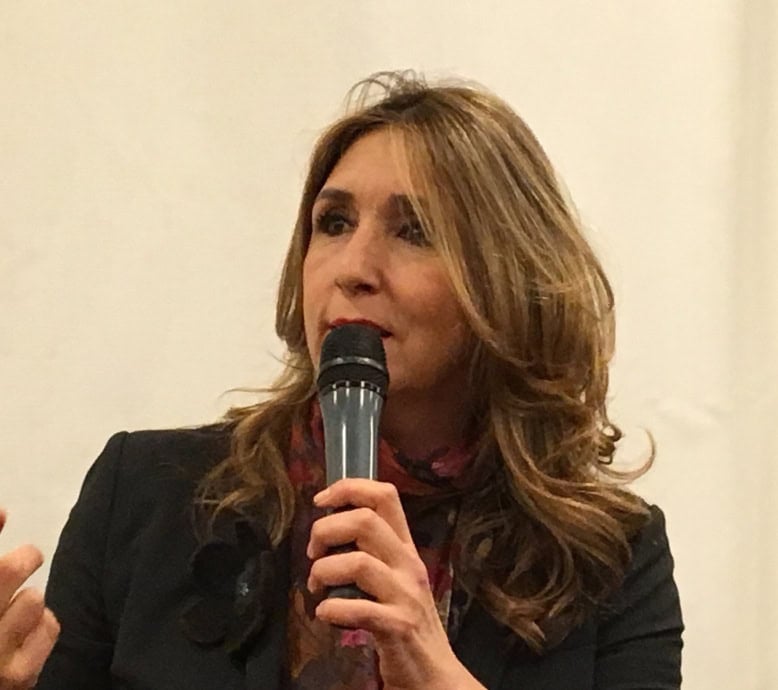
Guest Gloria Origgi, senior researcher at the Institut Jean Nicod, joins the discussion. She argues that reputation is important because it is everywhere. Our reputation is the social trace that we create and that follows us every time and everywhere we act—regardless of whether we’d like it to. As a result, we have no choice but to care about our reputations and be strategic about this social trace that we produce. Ken raises the question of whether it is possible to care too much about one’s reputation, which they debate. The philosophers then discuss the process by which reputations are formed. Gloria describes an individual’s reputation as the product of a non-linear, dynamic phenomenon in which the person puts out signals and then makes adjustments based on how other people receive them.
In the final segment, the philosophers discuss accuracy and authenticity when it comes to reputation. Josh and Ken raise the question of what to do when there is a difference between what we think of a person and how that person actually is. They ask how we can work to guarantee that people don’t gain reputations that are unwarranted—or are, in other words, inauthentic. Gloria challenges the notion that who we truly are and how people view us can be treated as separate concepts, arguing that we are never without our reputation. We are all partially constituted by how others see us, and they are partially constituted by how we see them. In response, Josh questions whether it is possible for total inauthenticity—for a person to get others to believe something about them that isn’t true.
Roving Philosophical Report (seek to 5:35) → Holly McDede investigates the reputation management strategies of two well-known musical artists. First, she examines Taylor Swift’s public image and how it has been impacted by her noticeable silence regarding political issues; next, she contrasts Swift with the Dixie Chicks, whose reputation took a massive hit after their lead singer voiced her controversial opinion on the then-president George H. W. Bush during a concert.
Sixty-Second Philosopher (seek to 46:43) → Ian Shoales discusses how the role of reputation in maintaining order, providing information, and selling to consumers has shifted over the course of history and has, under capitalism, become an indispensable tool for attracting new customers.
Ken Taylor
How much should you care about your reputation?
Josh Landy
Can caring too much turn you into a faker?
Ken Taylor
Can caring too little make you smug?
Josh Landy
Welcome to Philosophy Talk, the program that questions everything…
Ken Taylor
…except your intelligence. I’m Ken Taylor.
Josh Landy
And I’m Josh Landy. We’re here at the studios of KALW San Francisco.
Ken Taylor
Continuing conversations that begin that Philosophers Corner on the Stanford campus where I teach philosophy and Josh directs the philosophy and literature initiative.
Josh Landy
Today we’re asking, Does reputation matter?
Ken Taylor
On that one, Josh, I’m with the stoics. We don’t have any control over reputation they say, so we shouldn’t waste any time thinking about it at all. Just be a good person. Do good work. Forget the critics. Haters gonna hate you know.
Josh Landy
I just don’t think it’s that simple. I mean, it’s not like our reputation is completely out of our control. If I go around, kicking puppies in front of everybody, yeah, I’m gonna get a reputation as a puppy kicker. And that’s gonna be my own fault.
Ken Taylor
Well, Josh, if you kick puppies, you should kick them behind closed doors.
Josh Landy
Don’t kick puppies at all?
Ken Taylor
Look, okay. But people could still say that you’re a puppy kicker. I mean, they could mistake you for somebody else. Or they could even deliberately lie about you. Just I hate to tell you this. But you know, there’s a lot of malicious gossip out there about you.
Josh Landy
Oh well, thanks, at least for not telling me about it. Okay, so fair enough. Maybe we don’t have complete control have a reputation I’ll grant you that. But But surely you can make it more likely that your reputations a decent one. And it matters to do that. Because, you know, if you have a bad reputation, you can get ostracized?
Ken Taylor
Well, Josh, okay, I see your point. But I still say that if you get too hung up on your reputation, you’re gonna end up a totally inauthentic self promoting social climber something I mean, you’re gonna go to dumb places, just so you can post a photo on Facebook, you’re gonna go to concerts by famous bands, you can stand you’re going to pretend to like obscure philosophy, just so you seem cool or something?
Josh Landy
Yeah. Okay. Well, I don’t know that this seemed like superficial foibles. I mean, are you claiming that, you know, concern for reputation is going to reach all the way down and warp my character?
Ken Taylor
That’s exactly what I’m claiming. Too much concern for your reputation is a recipe for a deeply self alienated life, Josh?
Josh Landy
Well, maybe if all you think about your reputation, that might be true, but that’s not what I’m suggesting. I mean, I’m just saying reputation should be one of the things you care about. And and if it is one of the things you care about, you can actually make you a more authentic person.
Ken Taylor
Josh, you’re dreaming.
Josh Landy
Oh, no, I’m not. I mean, hey, Ken you use things like Yelp, don’t you? And TripAdvisor?
Ken Taylor
Well, yeah, So what?
Josh Landy
Well, so clearly, you do care about reputation. You care about the reputation of a restaurant or a hotel or a movement?
Ken Taylor
Yeah, but what’s that got to do? That’s got nothing to do with me and my reputation.
Josh Landy
What’s special about you? If you trust reputation, when it comes to other people and their businesses, you should also trust it when it comes to yourself.
Ken Taylor
Now, Josh, because I already know who and what I am. I don’t need no Yelp reviews to tell me about myself.
Josh Landy
You should read those reviews. At least they’re honest. That’s good. But seriously, can human beings don’t always know themselves very well. So you know, we need to check in with other people to make sure we’re not just telling ourselves a bunch of self serving stories. And you can’t say you’re funny, for example, if nobody ever laughs at you.
Ken Taylor
Yeah, okay, that’s true. But I still say, you got to think about the big picture. I mean, the cost of this massive reputation system we develop far outweighs the benefits. It’s destroying people’s life. You make one small step misstep, you know, kick, one little puppy. Suddenly, everyone on the internet is lining up to drag you completely through the mud and ruin your life.
Josh Landy
Yeah, look, okay, that’s true. But by the same token, the possibility of shame is motivating. It motivates us to be better people. Right. And meanwhile, the reputation system gives us early warning about bad guys who might come in and mess up our lives. So I mean, thanks to reputation system, I don’t have to listen to unfunny comedians, eat at bad restaurants, or read bad philosophy or hurray for reputation.
Ken Taylor
Yeah, some people are more shameless than you realize, Josh. But look, there’s a lot to argue about here, a lot to discuss. Maybe our Roving Philosophical Reporter, Holly J. McDede can help a bit. We sent her to investigate reputation management strategies of two well known musical acts. She files this report.
Holly McDede
Taylor Swift has gone through so many different reputations over the years, but she’s still remains one of the best selling artists in the world. If you want a quick tour through those reputations, start with her single, “Look What You Made Me Do.”
Taylor Swift
I don’t like your little games, don’t like your tilted stage.
Holly McDede
The music video is weird. It begins with Swift as a zombie bursting out of the grave. She declares the old Taylor cannot answer the phone right now.
Taylor Swift
She’s dead.
Holly McDede
Then all of her reputations over the years line up in a row. There’s Taylor Swift the country singer, Taylor Swift the snake, Taylor Swift the victim, Taylor Swift holding a VMA award. That one is a reference to the time in 2009 when Kanye West went onstage and declared Beyonce should have won.
Kanye West
No Taylor, I’m really happy for you. I’mma let you finish but Beyonce had one of the best videos of all time.
Taylor Swift
Look what you just made me do.
Holly McDede
On her recent album, appropriately titled “Reputation,” Swift sings a lot about her own public persona and feuding with Kanye West. But she has a reputation for staying out of politics that may have lost her a few diehard fans. BuzzFeed reporter Elana Bennett says she’s a fan of Swift’s music, but not her public image.
Elana Bennett
Regardless of the intent, her silence did speak volumes for a really long time.
Holly McDede
A lot of fans were angry when in 2017 Swift sued a blogger who demanded she denounce her white supremacist fan base.
Elana Bennett
She was still being silent while she was also punishing the people who were taking note of how her persona played into the white supremacy that was rising all around the country.
Holly McDede
Bennett has her theories about why Swift is usually silent about politics. Maybe she doesn’t want her reputation to end up like, say, the Dixie Chicks.
The Dixie Chicks
Two days past 18, he was waiting for the bus…
Beverly Keel
The Dixie Chicks have become a cautionary tale: Be careful what you say or this could happen to you.
Holly McDede
Beverly Keel, Chair of the Department of Recording Industry at Middle Tennessee State University, says this cautionary tale begins in 2003. It’s two years after 9/11, days before US troops will invade Iraq, and the Dixie Chicks are the darlings of country music.
Beverly Keel
The Dixie Chicks were that rare blend of critical darling and commercial darling. Everybody loved them,
Holly McDede
And then they hated them. During a concert in London, lead singer Natalie Maines said she was ashamed President George W. Bush was from Texas. The fallout is shown in the documentary “Shut Up and Sing.”
Shut Up and Sing
I think we in South Carolina say goodbye to the Dixie Chicks, and anybody that thinks about going to that concert ought to be ready, ready, ready, ready to run away from it. God bless GW!
Pat Buchanan
I think they are the “ditzy twits.” These are the dumbest, dumbest bimbos, with due respect. I have seen—
Bill O’Reilly
These are callow, foolish women who deserve to be slapped around.
Holly McDede
Country music radio stations baned their songs. Ex-fans met in parking lots to crush Dixie Chicks CDs with tractors. President Bush weighed in.
George W. Bush
The Dixie Chicks are free to speak their mind. They can say what they want to say. And just because—they shouldn’t have their feelings hurt just because some people don’t want to buy their records.
Holly McDede
At the time, Bush had a reputation for standing up for freedom, and Iraq had a reputation for weapons of mass destruction. Keel says the whole country and country music was swept up in a patriotic fervor. Take Toby Keith, for example.
Toby Keith
Hey Uncle Sam, put your name at the top of his list / And the Statue of Liberty started shakin’ her fist.
Holly McDede
Country music shunned the Dixie Chicks, so they turned their backs on country music.
Beverly Keel
You know, their career has not been the same. But the thought was, well, if country radio is not going to play us, then we’ll just release whatever we want anyway.
Holly McDede
So the band released “Not Ready to Make Nice,” a song about how their reputations as traitors led to fans mailing them death threats.
The Dixie Chicks
When a mother will teach her daughter / That she ought to hate a perfect stranger
Holly McDede
Many country radio stations still refuse to play them for their next album won them five Grammy Awards. Taylor Swift rarely speaks to the public. So her reputation is based on her catchy pop songs and general silence. But the Dixie Chicks turned their reputation as un-American anti-war villains into a country album. For Philosophy Talk, I’m Holly J. McDede.
Ken Taylor
Did the Dixie Chicks care too little or does Taylor Swift care too much about reputation? I’m Ken Taylor, with me is my Stanford colleague Josh Landy and today we’re asking does reputation matter?
Josh Landy
We’re joined now by Gloria Origgi, senior researcher at the Institute Jean Nicod in Paris and author of “Reputation: What It Is and Why It Matters. Welcome to Philosophy Talk, Gloria.
Gloria Origgi
Hi, thank you.
Ken Taylor
So Gloria, not a lot of philosophers have written about reputation. I wonder what first got you interested in this subject? Were you thinking about like celebrity culture and politics? Or worse yet maybe the reputation of some of our fellow academics?
Gloria Origgi
No, not really. Actually, I, I live in Paris, I’m Italian, and I come from Milan, which is a town of fashion, etc. So probably, and I think I come from a culture. And Amelia, which is particularly obsessed by reputation, images, social judgment, etc. So probably it was much easier for me to see the relevance of reputation in philosophy, which you’re right. I mean, it’s not such a glamorous topic in philosophy, at least it was not when I started now, it seems to be everywhere you change your trade. Actually, the book, the book was out in United States the same month in which the the Taylor Swift album, reputation was out. Yeah, unfortunately, I didn’t have the same I mean, the fortune of the two products is quite different.
Josh Landy
Yeah, that makes perfect sense about how you got into I’m just, I’m curious now what, what you ended up concluding? You know, it’s why do people get so obsessed about the reputation?
Gloria Origgi
Well, because they should, the reputation is everywhere, can’t help having a reputation. I mean, reputation is the social trace that we leave around us each time we act now I’m speaking. Now here, I’m in Paris, newer in California, and I leave a trace of myself, I mean, my voice and my accent, for example. And, and so it’s a trace that we produce anyway. I mean, you have a goal, our actions, and so we have to be, we have to be care about it.
Ken Taylor
But don’t you think but Gloria, okay, I get you that we have to care about it. To some extent, let’s grant that. But don’t you think it’s possible to care too much? And I suppose it’s possible to care too little dude, though. Don’t you agree that it’s hard to figure out how much they care? Or do you not think we care too much?
Gloria Origgi
Maybe we think sometimes we care too much. Because we feel vulnerable about reputation. We don’t know exactly what it is, we don’t know exactly how it changes, why transforms why one day we are cool. And the day after we are just like, forgotten by everybody. So we don’t know the rules about so we it’s it’s something that is very intimate. It’s very, it’s related to all the production of, of an image of ourselves that we do in our everyday life, are we leaving traces of ourselves around, etc, and on the other. So it’s something that is very intimate, it’s related to our very intimate concern. And on the other hand, we have the feeling we don’t have the control, we don’t control it. So this is why we become obsessed.
Ken Taylor
So I mean, you talk about, you know, we lose our reputation or gain our reputation. I mean, for most of us who live ordinary lives for celebrities and famous people, they have all this machinery dedicated to stoking and creating and managing their reputation. I mean, if you’re the Dixie Chicks, it matters a lot. But what about a schmuck like me, just the unknown schmuck like me going about my business every day? Should I care the way that say celebrities or politicians who are like all about reputation management? Should I care the way they care?
Gloria Origgi
You shouldn’t get in the same way. I mean, each one should have a personal strategy that fits a project a need. So you can also you may decide to have a bad reputation, you may decide to find strategies in order not to accumulate reputation. For example, I’m, I’m basically nobody, I’m very happy that you invited me because, you know—
Ken Taylor
Not anymore, Gloria, not anymore!
Gloria Origgi
Now, I know, after Philosophy Talk. and I’m sure Taylor Swift is listening to us, so Taylor, Hi, I wrote the book about reputation it was so yeah. And so I’m sure that will be coming. I will become a star tomorrow. But I mean, for the moment, I mean, nobody would come from Italy, almost third word and I moved to France, I have a terrible accent. So of course, I mean, I struggled also to construct a reputation with my strategies are very different from the one above a star of celebrity. So each one has to have a strategy about about his or her own reputation, but which which is in line with an objective—
Ken Taylor
So Gloria, this is fascinating stuff. And I’m really eager to dig in to it with you more, but we have to take a break. Now you’re listening to Philosophy Talk. Today we’re thinking about reputation with Gloria Origgi, author of “Reputation: What It Is and Why It Matters.”
Josh Landy
Is it rational to care so much about your reputation? Shouldn’t some people care more about it instead of just doing whatever they feel like and our reputations reliable in the first place?
Ken Taylor
Reputation, rationality and reliability—plus your calls and emails, when Philosophy Talk continues.
Joan Jett
I don’t give a damn about my reputation
Ken Taylor
Would a bad reputation matter any more or less than a good one? I’m Ken Taylor. This is Philosophy Talk, the program that questions everything…
Josh Landy
…except your intelligence. I’m Josh Landy, and today we’re thinking about reputation. Our guest is Gloria Origgi, author of “Reputation: What It Is and Why It Matters.”
Ken Taylor
So Gloria, I think I can guess here whose side you’re on Josh and me. I think I can guess I was arguing that excessive concern for your reputation is a recipe for inauthenticity. He was arguing that it motivates us to be better people we could so where do you stand on this? If I can’t guess but help me know.
Gloria Origgi
Okay, first of all, I’m not a moral philosopher. They know that at certain point of their life. All philosophers try to become a moral philosopher. I’m not. I’m not here to tell you. I’m not No I’m not. I don’t if I mean, moral philosopher, clearly, I’m an amoral philosophers, I mean, epistemologies and interested in understanding things I don’t I don’t, I’m not here to tell you what is good and what is bad. I mean, if you want to be upset for your reputation, can do and be and if Judge doesn’t care about, it’s okay. I mean, or, or the opposite. I don’t remember when. So I’m not here to tell you if it is good or bad. What I’m here to tell you is that it is impossible to get rid of a reputation you’re producing a reputation every every with every gesture, just breathing. I mean, so you have something it’s a sort of cloud that accompanies us that an avatar of yourself that is the social trace that is outside the in the social world, and it depends on you, and depends on what you do. And this is something that is there. I mean, and of course, I mean, depends, of course, what is the circle that it matters for you can be your colleague, yours, it can be the general audience can be your family, but you you can’t help in producing a reputation. And so you must be a little bit sort of strategic about what you what you do with your social ego.
Josh Landy
But I actually I, you know, there was something really brilliant that you said in your book that actually, I mean, you’re being wonderfully modest about your, your moral philosophy sign, but I thought you made—
Ken Taylor
Plus you’re being modest about your fame.
Gloria Origgi
Okay, okay.
Josh Landy
But um, so let me let me sort of run by you know, your own one of your own arguments, I think was really fascinating about how repetition can actually make us more morally, yeah, I took it to be saying that there’s a kind of outside in improvement that we can do, where we we start off pretending to be virtuous, just to cultivate a reputation, then other people see us be apparently being virtuous. And now they start to expect us to become more virtuous. And lo and behold, turns into a kind of benevolent circle. And so maybe it is morally improving.
Ken Taylor
So that’s what you that’s what Josh was arguing, and he seems to have borrowed that, from you, you endorse that argument.
Gloria Origgi
I think we, we, the back and forth between our sort of more intimate ego and the social ego is a is a very complex dynamic. So we we start to pretend to be someone to to have a certain image, and then we become what we, what we are, but I mean, you’re you’re making the more a case in which we stand to pretend to, to have a certain good reputation for certain moral moral behavior. And then we so this is something that is an adjustment I give some Exactly. You’re right. I mean, give some examples of this sort of lackey, lucky, moral development that can happen by pretending to be someone for example, better than what you are. And so then people create expectations. So you don’t want to, but I mean—
Ken Taylor
Gloria, Gloria, yeah. The other side of that there’s the girl cardinality minus in the, in Plato’s Republic, is one of the early philosophers to talk about reputation. And they say, well, Plato, you know, Socrates, you’re arguing for justice and all that, but here’s the best thing. The best thing is to be an unjust person to be but to be thought, just because then you get the benefit of the of the reputation for justice. That’d be everybody wants to be around you. They invited all the parties. But if you’re secretly unjust because you have this like magical ring that hides your axe, if you’re secretly unjust, you get to sleep with the king’s wife and steal and have the bug. So wouldn’t the best thing to be have a great reputation, but be free? Because you can do it in secret to do all the lousy, immoral, self aggrandizement acts that you want. Wouldn’t that be the best life?
Gloria Origgi
Well, it’s very difficult to do it, I mean, the best reputation is a signal. And I mean, the best way of signaling something is to be to have the property that you’re signaling. So, if you want really to have I mean, it’s this is it’s really, I mean, just to signal that I’m Italian, the best thing is to have an Italian accent, difficult to fake. So, Rob, robust reputation is, it works, when it is based on robust signal. So of course, I mean, many people, I mean, we all do things that we will pretend to be better, nicer, younger or whatever. And, and so we can adjust there is a sort of mismatch from between what we really are and what is our social image and what his reputation but I mean, it is very difficult to to entertain our reputation, which is based on nothing you can do that our stories that are based on this, if you should, if you have, if you can, you can do it, if you already have some other kinds of authority for, you know.
Ken Taylor
Gloria, I get that it’s a difficult thing to pull off, I get that. And so most people couldn’t pull it off. And, and I get I get you talk about reputation as a signaling system. And I get that that’s really important stuff. That’s a fascinating part of your book. But here’s the thing, I was thinking about it, but that you kind of dissed you well, you kind of sometimes just sometimes use some evolutionary stuff, you just the misuse of it, I guess. But but here’s the thing, I was thinking about that, you know, we were evolved to signal to our compatriots, what we’re like, and all that and those signals, the more reliable and they they are the more opportunities for cooperation and all that that we had. But you know, I was trying to figure out, I’m not sure of what the number is, what the average size of the hunter are Pleistocene hunter gatherers is progenitors was where a lot of this stuff evolved during the Pleistocene. And the numbers vary, but it was pretty small. I mean, your average hunter gatherer back in the Pleistocene, Pleistocene probably only encountered to two or 300 people at the most and in his or her lifetime. But now we live in these massive societies that provide a lot of opportunities for Miss signaling, anonymity, right mismatch between what you really are and what you signal yourself to be. So doesn’t that make it a little different? You know, what I mean?
Gloria Origgi
Of course, I mean, I think that reputation matters even more in this sort of information, then societies in which and also hyper connected society in which so the, the, we’re living in a sort of labyrinth of mirrors in which our image is projected, and refracted in so many ways around us. And so we have to compose and decompose ourself. In many ways, we don’t have the strategies. That’s why when, when I started to work at this project, I discovered how deep and how Rage was the topic of reputation, because we are not such experts of, of dealing with dealing with it. So I think that the fact of like crafting a social ego is a, as you said, I mean, something that is deeply entrenched in our human human nature. So I don’t think that it is something it’s only a sociological phenomenon that has to do with social media and hyper connected society. He said, I think that we, it’s the masterpiece of our life. We are who we are. And that I think that the best moment is life in is the moment in which we are recognized for what we want it to be. We are seen as we want it to be seen. It’s very rare, but it’s really a very powerful moment in life. So we are seen as we want to say, so we invest a lot of energy in in this and we are very clumsy sometimes.
Ken Taylor
Yeah, you’re listening to Philosophy Talk. We’re talking about whether reputation matters with Gloria Origgi, we’d love to have you join this conversation. And Ken from Citrus Heights is on the line. Welcome to Philosophy Talk. With a name like that you must have a good comment or question.
Ken
Yes. And I’m a friend of yours from Philo’s, you might remember that.
Ken Taylor
Ah, so what’s your comment or question?
Ken
My comment is simply what about the use of reputation as a form of social control? And in particular, the Chinese government is using its social credit system to track your traffic tickets and your credit scores and so forth. And then either gives awards or puts penalties on you, depending on what that is. So I’d be interested to have your guest comment.
Ken Taylor
Thanks. Thanks for the question, Ken. That’s good question. Gloria, what do you think?
Gloria Origgi
That is something I mean, welcome to the age of reputation. You’re totally right i mean reputation, which we are talking in a very informal way your reputation reputation has become a measure in many many systems especially and I distinguish in my book between formal and informal reputation Rubik. My reputation has become a formalised and it’s measurable, even our, our, for example, our behavior on our social network. We are not in China, but still I mean, I’ll be here is on social network is measured, and it gives us a certain ranking, I mean, how reliable we are in certain kind of moves, etc. And and this is a form of reputation. So and of course, I mean, I think that it is becoming a deep thing in our societies and this form, if we don’t become a little bit more sophisticated in a way of dealing with this traces that we live around. Yes, there is a there is a potential of control.
Josh Landy
Yeah but I’m really curious about this, because, you know, it seems like on the one side, we don’t want a situation, you know, big brother is ranking you right, on kind of the the Black Mirror episode about that was just Yeah. And of course, as the caller was suggesting, you know, the, the in China, they’re proposing introducing the social credit system. On the other side, there are surely some advantages for all of us from, you know, the fact that we give people medals for heroism and things like that, and, you know, or even more informally, that it can become uncool to smoke. And suddenly you have, you know, something that Anthony Appiah, the philosopher talks about this, yeah, sure, growing movements that that actually affect positive social change on the basis of repetitions. So how can we sort out these good uses of norm settings reputation from the bad ones?
Gloria Origgi
But that’s very internal, but there is clearly an interesting dynamics between social norms and how they change and reputation as a pirate rightly points out in his in his book, I mean, its reputation can be a very honor, he talks about honor, but I mean, those these symbolic values, as are called symbolic, are related to each other. Of course, they are a strong I mean, a strong incentive to change your, your, your norms, basically, some in many, in many cases, they are the strongest insensitive. I mean, you I used to smoke when I was young in Paris, everybody was smoking all the time. And the dinners I remember, were cigarettes everywhere. And now it would be really, it’s not that I have any, of course, I mean, I know that it’s bad, etc. But more than that moral judgment or my own my, my knowledge about what what are the effects of smoking, the strongest force was really the social change the super social now that you judge badly, if you take out a cigarette now in a dinner, I mean, it’s something that’s‚—
Ken Taylor
Try that out in California, Gloria.
Gloria Origgi
Maybe with marijuana, maybe you’re cooler on other dimensions. Norms change, even sometimes in different ways.
Ken Taylor
Yeah, we’ve got another caller on the line, Mark from San Francisco. Welcome to Philosophy Talk, Mark, what’s your comment or question?
Mark
Thank you. My question is this. What if people, it seems to me like the discussion has assumed that you do something people see what you do? They react to it in an accurate way. What if people completely misunderstand something? What happens?
Ken Taylor
Yeah, that’s a good question. Completely misunderstand. And then they tell other people about it. And you know, there it goes, what do you do? That’s a really good question. Mark. It’s one of my questions, Gloria might want to gang up with mark on you. And so because people’s perceptions of you and what you do, I mean, they their perceptions are driven by all kinds of stuff, rather than just the facts, and what do you do about that?
Gloria Origgi
But I think that most of my book is about this question. I’m challenging more than I I’ve talked, I’ve said before, in this conversation, that reputation is a signal, but actually, I challenge this view that is a die sort of linear signal. I say reputation. It’s, it’s, it’s not I mean, the opinion that other Have you sent a signal in a linear way and then you receive back a certain a certain judgment, etc. It’s much more complex, as Matt said, dynamics are nonlinear. It’s a nonlinear phenomenon, reputation, and that’s why I’ve just spent an entire book to write about it.
Ken Taylor
Right, so give him a little bit—
Gloria Origgi
Yeah, it’s, it’s a dynamic Exactly. It’s a dynamic it’s not you adjust a lot I mean, you you you start with a sort of you try with some sort of signal it doesn’t work it’s it’s blurred people don’t receive it, it is to refracted in order and then you adjust your your behavior. So it’s in a sense, it is a much more organic phenomena. You were talking about teen authentic inauthenticity at the beginning. I mean, I really challenge in the book The distinction between authenticity and authenticity. We are where we Trying to we shape our life like little animals in a shell. I mean, we construct our shell as we grow. I mean, I’m so the two levels. I mean, there is no, there is not I mean, I’m against a sort of classical golf Mannion, right golf man, picture in which we have, we are ourself and then we put a mask and then we send a signal and we’d see what the other people get it. And then they can be the signal can be misunderstood. It’s that this is a very classical model that you have in signaling theory. And around I mean, I really challenge it. I mean, it’s a dynamic phenomenon, and we go back and forth, we adjust. So in the case of, of the question that we just received, I mean, I would say, the case, the extreme case in which people got everything wrong. Well, wish you should ask yourself something about what are you doing? I mean, because it’s really rare. I mean, it’s it’s much more of a process. It’s not that—
Josh Landy
Yeah, I mean, I, I hope we get to keep talking about this in the next section. Because I think it’s fascinating. There are cases as a caller was suggesting where you’re misconstrued. There’s a case where maybe you do one bad thing in your life and kick a puppy kick a puppy. Yeah. And that’s the thing.
Gloria Origgi
Yeah. But I mean, come on, if you kick a puppy that it was something wrong. I agree.
Josh Landy
That was a joke. And then the case, yeah, but I mean, then there are cases of people, I won’t name any names who get this reputation of being this, you know, a genius, you know, real estate developer and, you know, it’s may or may not be earned, and that ransoms high office. So it seems like there are some very complicated cases we should dig into.
Ken Taylor
So yeah, I think we’re gonna have to save those for the next segment. Because this is really deep stuff. And I don’t want to give it short shrift. You’re listening to Philosophy Talk. We’re thinking about reputation with Gloria Origgi, author of “Reputation: What It Is and Why It Matters.”
Josh Landy
What can we all do to make the reputation system a safer, more accurate and healthier environment? How can we make sure it provides useful information without destroying lives and livelihoods?
Ken Taylor
Reimagining the reputation system—when Philosophy Talk continues.
Team Internet
I thought it was decent. I mean, we both wrote this song.
Ken Taylor
Are nline rating sites like Yelp reliable ways to manage reputation? I’m Ken Taylor. And this is Philosophy Talk, the program that questions everything…
Josh Landy
…except your intelligence. I’m Josh Landy and our guests is Gloria Origgi from the Institute Jean Nicod in Paris. And today we’re thinking about reputation.
Ken Taylor
So Gloria, I want to go back to a question raised by Josh toward the end and and point you toward, I’m going to give you a role as a czar of the reputation system, because you said it’s a dynamic system, it’s nonlinear, that means that the signal that I send may not be received by you the to the other as that what I intended, and we got to adjust and you seem to suggest we’re all in this together kind of making mutual adjustments and all that. So I want you to I want to understand in your role as our how might we make this whole system function better? It obviously doesn’t function perfectly. What’s the one thing you would do to guarantee that cases like Donald Trump, I read it out from the system? He has a great reputation was a great businessman when he went bankrupt six times and blah, blah, blah, how would How would you adjust the system so that cases like that would be weeded out?
Gloria Origgi
I mean, first rule would be to make my book a mandatory reading of my empire, I mean, everywhere Thank you, primary school, your black reputation. This is very important because what I intend to do I mean, I unfortunately am in my book, I don’t come up and in the end with a big theory big model of reputation, but I give many examples how this works in very different fields and domains. Like for example, why do we choose how do we choose a doctor? How do we overestimate the reputation of an expert in finance and in economics, etc, etc. So I think I would like to have a encompassing theory that explains them in the rule in order to adjust for each domain, how to adjust the reputation system. I don’t I don’t know, you know, many, many, many good ideas, which in every domain, we do stupid things. Like, for example, we all considered that we had the best doctor, you know, this is a stupid stupid the thing that we all do if you if you ask around, ask around and say people say oh yes, my doctor is the best one, which is impossible, of course it will be the best of the possible worlds and we everybody can afford the best doctor. So we there are things that should we should be aware and also vulnerabilities and fragility that we should be aware of when we are exposed to the evaluation of the reputation.
Ken Taylor
Gloria, let me ask you a question about the doctor example. Just as one case, here’s the thing about doctors, they don’t really rat each other out. That is they don’t I mean, they have views about who’s a great doctor who’s not. A doctor once said to me about my other doctor, she’s a great doctor, but they don’t broadcast this. So but how can we as the consumer of health care? I mean, can we do this unilaterally? Can we somehow improve the reputation system of for doctors to make it function to our benefit? Do you imagine that?
Gloria Origgi
Yeah, I think that it is true. I mean, you mentioned in doctors and lawyers, for example, there are entire professions that are so relevant for our life. And they end the day reputation is very mysterious. I mean, it’s very difficult to understand how it is constructed. But the problem is that the way in which we rely on the reputation is completely, very, very, very often, it’s completely stupid. Yeah, we don’t even have the TripAdvisor of doctors. We just, we just rely on our cousins, friends, that is also the sister of I don’t know of our neighbors, or maybe the end of it.
Josh Landy
Maybe like your point about TripAdvisor. It may be that as things develop in this internet age, things are actually gonna improve, you know, we’ll be able to live in a higher number of users means lower standard deviation, I mean, some smaller margin of error, at least in theory. So maybe things will actually get better on that. Yeah, but but I wanted to push you a little bit if that’s okay. On the authenticity question. I mean, surely, we wouldn’t want to say that there’s no difference between the apparent Donald Trump for example, and the real Donald Trump in terms of, for example, his is any difference? So why not? I mean, what about the you said, you know, your doctor isn’t necessarily the best doctor, but somebody might think my doctor is the best doctor, doesn’t that mean, there’s a difference between what we think about that person and what that person actually is?
Gloria Origgi
I don’t think—I mean, I don’t say, in the case of doughnuts I don’t think that there is such a difference between who is—
Josh Landy
I mean in terms of the—
Gloria Origgi
It’s not that his reputation is so good. I mean, in the eyes of many people, I mean, it’s not that I mean, just that there are many people that like the guy.
Josh Landy
Okay, but so let’s leave Donald Trump aside. Surely there are cases where people have undeserved reputations.
Gloria Origgi
I think that, you know, it’s this is a very deep, deep philosophical theme, the in authenticity, authenticity, opposition, I mean, the fact that sometimes, I mean, this is the big romantic theme, the big existentialist theme in Paris, John Paul cerca de the inauthenticity of life. And then, and actually, I challenge this paradigm, really, I challenge it, I don’t think it gives an argument ourselves that I do it, because I don’t think that there is a place a day or a moment in our life in which we are our self without our reputation around. So yeah, I’d see if I don’t see. I mean, if there is there are moments in the day in which we are really, without our social ego. I mean, I won’t talk about these moments. I mean, they are not interesting.
Ken Taylor
So Gloria, it seems to me that you’re saying and Josh is disagree. You know, Josh is a theorist of French literature and philosophy. So he likes that existentialist authenticity thing. But I see what you’re saying, and Josh is disagreeing with you, I just want to see if I’ve got the two of you, kind of right. I mean, you seem to believe that we’re in a certain sense in terms of self constitution, who and what we are, we’re kind of all in this together, I am partly constituted by how I am seen by others, and how I see others seeing me, and this is a kind of huge dynamical system in which our identities kind of mutually emerge. And Josh’s talks about authenticity seems to want to reject the kind of inherently kind of social kind of dynamical system by which we are constituted as who and what we are, I don’t know if I’ve got a disagreement between the two of you.
Josh Landy
In my case, I’d want to say both, there’s this there’s room for a bit of both, right? So there’s a part of me that is in negotiation with the social, right, so I was talking I gave the example earlier of thinking you’re funny. You can think, you know, one can think that one’s really funny, but if nobody ever laughs at one’s jokes, one’s not really funny, right. So there is a part of who I actually am. That is constant. You to some extent by what other people think of me. But then there’s also another part. And I can just lie about that right. And some if I’m really successful, then I can get people to believe something about me, that just isn’t true. And that’s where I think there’s room for the notion of authenticity.
Ken Taylor
So answer him shortly.
Gloria Origgi
Yeah, but I mean, you can lie also to your cell phone alone. I mean, it’s not. It’s not I mean, the lie true. It’s another opposition is not the social, not social. I mean, you can lie to yourself, and you’re just giving justification of your actions that are not I mean, actually, I think we lie to ourselves in order to, to keep a sort of good image to our, to our self, to our own eyes much, even in this in the same way in which we lie to others. I mean, it’s not that it’s not that me other supposition that matters here. I mean, so the fact that you philosophers, I mean, the fact that we are human beings, and we are able to lie to ourselves.
Ken Taylor
Yeah, I’m gonna get I’m gonna give it one last caller a chance to get in here really briefly. Ariane from San Francisco, welcome to Philosophy Talk. Can you be brief for us? Because we’re getting near the bottom. What’s your comment?
Ariane
I appreciate you acknowledging the importance of the anxieties underlying people’s controller image making, and the reputation. But I do want to underscore the importance of the time that we’re living in, in our global panel on on climate change said that we have 12 years to turn around the human climate disruption that we are all facing. And we can look at the people who’ve really made changes, important changes in the past in our society, like Martin Luther King, or Gandhi in India, and they were not considering the reputation as important factors when they made their decision. And maybe they were ahead of their society radically, and people did not want to cooperate with them at the time, they condemned them, they assassinated them. But that’s the kind of time we’re living in it gets us and invites us to, to rise above our fears about our own personal needs and reputation.
Ken Taylor
Thanks for the call Ariane. So this is probably be our last point. But uh, but so bold call for leadership that says reputation. be darned. What do you think about that?
Gloria Origgi
I think this is an important point, I would like to react to this. Because reputation doesn’t mean confirmation. I mean, I don’t I, I don’t think that reputation means confirm is me. And you can also for example, I think that Gandhi, I read a lot about him. And and, and I think he was a I mean, having a vision maybe is having, for example, investing your life to being understood the I don’t know, later in a later moment. So conference, me is just responding to the norms of your, in your in your present. I mean, and you can just care about reputation and care about also the reputation, the honor of your people, etc. But maybe in a in a in a but having a vision also and thinking about what the norms will change and will be the one who who were right. And so and this is it’s not that you’re ignoring your social, your social dimension, and I think that Ghandi ignored or not even a second, his social rights, I think I think I think he was just betting on another gays on on on the ward. And that is very important. That is important. I mean, not to be prisoner of the present prisoner, and that that’s something that leads us to be stupidly conformist.
Ken Taylor
Yeah, I got you. I think I think you I think you and Arianna had a meeting of the minds at the end there. It’s about taking the risk with your reputation, not not caring about it, but being able to—
Gloria Origgi
Reputation is at stake. I mean, reputation survives, your, your, your physical life. I mean, it’s the mortal as Shakespeare used to say it’s the immortal part of yourself. Reputation can change after your life. So there are many artists that bet on their reputation. GLORIA I don’t know in 100 years, maybe in 100 years, I will be as famous as Taylor Swift.
Ken Taylor
Gloria, on that note, I’m going to thank you very much for joining us. It’s been a reputation enhancing conversation. Our guest has been Gloria Origgi, she’s a senior researcher at the Institut Jean Nicod in Paris and author of the very fine book which you should read, “Reputation: What It Is and Why It Matters.” So Josh, you worried about your reputation?
Josh Landy
Yeah, well, you know, I’m thinking you maybe don’t kick puppies.
Ken Taylor
That was a joke.
Josh Landy
Yes. No, I’m like, I’m I have to say I’m more convinced than ever that we should care about our reputation. I mean, after all there I think Laurie is right. There is a part of me. That is the way other people think of me, but it can’t be the only thing you think about what you write you have to have the courage I agree with Ariana you have to have the courage your convictions to do what you think is right.
Ken Taylor
So on that note, I will say this conversation continues at philosophers corner at our online community of thinkers where our motto, with apologies to Descartes is Cogito ergo Blogo. I think, therefore I blog and you can become a partner in our community. And please do by visiting our website, philosophtalk.org.
Josh Landy
And if you have a question that wasn’t addressed in today’s show, we’d love to hear from you. Send it to us at comments@philosophtalk.org,and we may feature it on the blog. Now, how fast can one person build a reputation for speed? we’re about to find out—it’s Ian Shoales the Sixty-Second Philosopher.
Ian Shoales
Ian Shoales… We know people by reputation, but that’s a mixed blessing. Reputations come in good and bad, both of which are fueled by word of mouth, or by a body of opinion from people whose reputation we trust, a reputation in turn assured by a trusted history from other people. It’s a vicious cycle. And it’s breaking down. People mess with their own reputations all the time. Donny Osmond does a Guns N Roses song so he’ll seem edgy. Ozzy Osborne signs up to do reality teevee, so people will see him as more than a guy who eats bats. He has a family. Those who wish to do us harm often disguise themselves as reputable. War heroes have a reputation, but what good does it do them when they come home? Skill with weapons is often viewed with suspicion in an office workspace. You can become a movie star or a Congressman, but options are limited. Way back when, we didn’t need reputations. The king decreed something, and his men would come by and make sure you obey. King didn’t need a reputation, just dukes. If he was a bad king, other kings, a pope, or a bastard princeling would take care of him. You know, history. That was your reputation right there. This order of things gave way to the collapse of empires, and the rise of dictators, ideologies, and flawed democracies. Freud Darwin and Marx worked their magic. Suddenly we were citizens. We had agency. We could be persuaded. Our desires became bullet points. We were citizens and customers, striding forward in our stylish mail order shoes into a brave new world. The makers of products or ideas did not have the skill set, as we now say, to get us to embrace Ford motor cars or the theory of relativity. So a whole new industry sprang up, and a new job- the pitchman. The smooth baritone radio voice, and then the suave television presence. Eventually, women were thrown in there as well. People like this also presented the news. Walter Cronkite was the reputable epitome. It went downhill from there. We began to feel it was all just a big con. Even if the pitch was true, and the shoe was a nice sturdy shoe, we were only hearing about it because algorithms showed we were the kind of person who would buy that kind of shoe. And all the news began to feel like false flag propaganda. Viet Nam. Iraq. We felt used. New persuasion strategies are launched all the time, or ways to work around it. Cryptocurrency is the latest workaround. It sells itself. It’s a mystical interface between buyer and seller, no middle man, no banks. It’s not only currency, it’s an investment opportunity! Why hasn’t it caught on everywhere? It doesn’t have pitchmen, but swarms of engineers, tech nerds, economists, and obsessed libertarians keep yammering at us. This makes cryptocurrency seem disreputable, like a weird cult, and its believers like con men trying to sell us a salted mine in Bolivia. Also, thanks to social media, we can now sell ourselves to ourselves based on what we bought before. Algorithms! We’re the con man and sucker in one package! Who needs a reputation? But that means we can’t even trust ourselves. So advertisers are getting sneaky and desperate. I just read about the influence of Influencers on promotion. Influencers are people who are kind of famous but in a new hip Internet kind of way. So some cute guy who’s on a reality show who dated a Kardashian cousin gets a deal with a maker of high end sunglasses to wear them on his fashion blog, or his YouTube Channel, or taking Instagram selfies in Paris. He gets fifty grand. The shade maker gets, I don’t know what. Not a reputation. Where does reputation even enter in? Fans just want to be the kind of person who can sport 700 hundred dollar sunglasses, or who just wish they had 700 dollars. I think that’s how it works. So I suspect the bottom is going to drop out of this social media stuff. I mean there’s nothing to keep us there really. With reputation out the window, there’s nothing to trust, just cheaper crooks and gaudier patter, and we will stop paying attention. How can we know what’s true when we can’t even trust the people telling us it’s not true? We can’t. Capitalism is going to grind to a halt. Any minute now. I’ll stake my reputation on that. I gotta go.
Ken Taylor
Philosophy Talk is a presentation of KALW local public radio San Francisco and the trustees of Leland Stanford Junior University, copyright 2018.
Josh Landy
Our executive producers are David Demarest and Tina Pamintuan.
Ken Taylor
The Senior Producer is Devon Strolovitch. Laura Maguire is our Director of Research. Cindy Prince Baum is our Director of Marketing.
Josh Landy
Thanks also to Merle Kessler, Angela Johnston, and Lauren Schecter.
Ken Taylor
Support for Philosophy Talk comes from Stanford University and from the partners at our online community of thinkers.
Josh Landy
The views expressed or mis expressed on this program do not necessarily represent the opinions of Stanford University or of our other funders.
Ken Taylor
Not even when they’re true and reasonable.
Josh Landy
The conversation continues on our website, Philosophy Talk ko RG where you too can become a partner in our community of thinkers. I’m Josh Landy.
Ken Taylor
And I’m Ken Taylor. Thank you for listening.
Josh Landy
And thank you for thinking
Black Mirror
In order to restore calm, I’m invoking my authority as airport security to dock you one full ranking point as a punitive measure. This is a temporary measure. Your score reverts to normal in 24 hours. During this period all downvotes are subject to a times-two multiplier. We recommend you avoid negative feedback at this time.
Guest
Related Blogs
-
November 15, 2018
Related Resources
Books:
- Origgi, Gloria (2015). Reputation: What It Is and Why It Matters.
- Whitfield, John (2011). People Will Talk: The Surprising Science of Reputation.
Web Resources:
- Millinski, Manfred (2016). “Reputation, a universal currency for human social interactions.” Philosophical Transactions B
- Origgi, Gloria (2018). “Say goodbye to the information age: it’s all about reputation now.” Aeon
- Silver, Ike M. & Shaw, Alex (2018). “Pint-sized Public Relations: The Development of Reputation Management.” Trends in Cognitive Sciences
- Strauss, Kristen (2017). “The Trump Presidency: Reputation Is Everything (And His Is In A Slump).” Forbes
Get Philosophy Talk
