Taoism: Following the Way
December 13, 2015
Listen


Taoism (sometimes Daoism) is one of the great philosophical traditions of China. Lao-Tzu, who is commonly regarded as its founder, said that “Those who know, do not speak; those who speak, do not know.” The arguments that Taoist texts offer for skepticism may seem surprisingly modern. Yet these same texts also offer recommendations for certain ways of life over others. So what exactly is Taoism, and what are its main tenets? Is it a religion, a philosophy, or a way of life? How do Taoists reconcile endorsing a specific way of life with skepticism about human thinking? John and Ken go east with Bryan Van Norden from Vassar College, author of numerous translations and books on Chinese thought, including Introduction to Classical Chinese Philosophy.
- Absurdism
- |
- Beauty
- |
- Buddhism
- |
- China
- |
- Confucius
- |
- East Asia
- |
- Evidence
- |
- Religion
- |
- Theory
- |
- Violence
John and Ken contextualize Taoism’s major thinkers, Zhuangzi and Laozi, by connecting them to their near contemporary Heraclitus, an ancient Greek philosopher who thought similarly to Zhuangzi and Laozi. The two major works of Taoism contain many parables and aphorisms, but was Taoism created by these two thinkers or was it systematized later on by their followers— similar to how Christianity was created by followers of Christ? Also, which came first: Taoism as a religion or as a philosophy? Or is that distinction too Western and non-applicable to Taoism?
John and Ken are joined by Bryan Van Norden, professor of philosophy at Vassar College and author of Introduction to Classical Chinese Philosophy. They start by asking what “the way” or the Tao is, and Bryan answers that it is a metaphysical entity that structures the universe that precedes time and space. Ken asks Bryan how we should make of the most famous parable from Zhuangzi, wherein Zhuangzi wakes up from a dream that he is a butterfly, but upon waking up, does not know whether he dreamt of being a butterfly or is now a butterfly that is dreaming that he is human. Bryan responds that this parable was less about what we know as Cartesian doubt and more about blurring the distinction between humans and other beings. The Tao is the ground of all things, both objects and moral judgments.
Why does Taoism rely on parables? Bryan argues that Zhuangzi does not want to convince you of a doctrine but that he wants to make you see the world in new ways. Bryan also talks about how Taoism went on to influence East Asian Buddhism and eventually spread throughout East Asia, influencing martial arts as well. Women were also allowed to be important priestesses in Taoist ceremonies, which made Taoism more inclusive than Buddhism and Confucianism at the time. Today, Taoism has not recovered much from being outlawed among other religious systems during the Cultural Revolution, but Confucianism has come back thanks to government support. Taoism is non-moral, apolitical, and about approaching the world ironically, which can be liberating as an ideology for many.
Roving Philosophical Reporter (Seek to 6:28): Shuka Kalantari visits a Taoist tea ceremony and seeks to get in touch with tea spirits.
Sixty-Second Philosopher (Seek to 46:20): Ian Shoales looks at the appearance of the Tao in American popular culture and thought.
Ken Taylor
Welcome to Philosophy Talk, the program that questions everything…
John Perry
…except your intelligence. I’m John Perry.
Ken Taylor
And I’m Ken Taylor. We’re here at the studios of KALW San Francisco.
John Perry
We’re continuing conversations that begin at Philosophers cCrner at Stanford University. Ken teaches philosophy at Stanford and I did for many, many years.
Ken Taylor
Today, we’re thinking about Taoism. We’re following The Way
John Perry
Taoism is one of the greatest and oldest philosophies of China, Ken. The big figures were Lao Tzu to and Zhuangzi. And their books, the Tao Te Ching in the Zhuangzi are very readable and thought-provoking. They’re classics, still widely read, not only in China, but translated into all the major languages.
Ken Taylor
You know, John, I’m impressed. I didn’t know you knew so much about Taoism.
John Perry
To tell you the truth can I don’t. But Lao Tzu, the founder of Taoism said, “Those who know do not speak and those who speak do not know.” So by that criteria, I can speak since I know I know very little.
Ken Taylor
Well I know a little bit about Taosim. I read a lot of it when I was in college. But I hope Lao Tzu wouldn’t sa, I know too much to be able to speak.
John Perry
Well, particularly not since we’re on a radio. Now, do you know enough to tell me this: How ancient is Taoism in comparison to the ancient philosophies of Greece to the philosophies of Plato and Aristotle?
Ken Taylor
Well, they’re about as almost as ancient or roughly as ancient. Zhuangzi was born, I think about 30 years after Socrates died. And Lao Tzu was a sixth century BC philosopher a little before Socrates, but I think about the same time as Heraclitus, for example.
John Perry
Now, Heraclitus, there’s an ancient Greek, who, as far as I understand things thought a little bit like a Chinese Taoist. He’s the one that said that Bing is in constant flux, like a river, and you can’t step into the same river twice.
Ken Taylor
I didn’t know you got around so much in the ancient world. You’re quite an expert in these ancient wisdoms.
John Perry
Well, they say the truth is we all know at least a little bit of Taoist wisdom.
Ken Taylor
Well give me a for instance.
John Perry
Well, a journey of a thousand Miles must begin with a single step. That’s straight out of Lao Tzu.
Ken Taylor
You know, my dissertation advisor used to say that one to me all the time to urge me to get started.
John Perry
Yeah, my mother used to say to me, “Great acts are made up of small deeds.” And my father used to say, “Silence is a source of great strength.” And I’ve also heard that from my wife, Frenchie and from you, Ken.
Ken Taylor
And you never heed that advice, do you, John?
John Perry
No, not if I can possibly help it.
Ken Taylor
But in all seriousness, we don’t want to make it sound like Taoism is just a bunch of homilies. I mean, the two key texts, as you’ve mentioned, are the Tao Te Ching and the Zhuangzi, which is named after its author. The first contains a lot of quotable sayings, you’ve given us a sample. And the second contains a lot of stories and parables and paradoxes and dreams and fanciful dialogue. But you know, there is a kind of, as I understand it, well worked out philosophy of Taoism, but that doesn’t emerge from these guys emerges from what later Chinese thinkers made of these two texts.
John Perry
So Ken you’re telling me that Lao Tzu and Zhuangzi didn’t really invent Taoism?
Ken Taylor
Well, neither of them ever heard of the phrase “Taoism,” I don’t think. And most likely Zhuangzi never knew anything about Lao Tzu, but they certainly inspired Taoism. It ‘s the term that was in was, I think, from later scholars who applied it to what they thought loud, and trunkshow. Were getting out. But think about Christ. He didn’t use the term Christianity, but he certainly inspired Christianity by later theologians.
John Perry
Okay, I get it. Now, Tao is usually translated as “the way”—not entirely clear to me what that means well.
Ken Taylor
“The way”—it’s basically the way things are the way things have happened, and will always happen in nature. And I think that that is something like the way things happen in nature should provide a guide or does provide a guide, or can provide a guide to the way individual human beings do things. And the way human institutions might work.
John Perry
Yeah, but but natured it doesn’t change very fast, and it’s sort of mechanical. Sounds like kind of a rigid and inflexible philosophy.
Ken Taylor
Well, they didn’t think of it that way. Taoism was pluralistic. It was egalitarian. it was non authoritative. It stood in sharp contrast to Confucianism, as I understand it, though, that was a philosophy based on hierarchy and tradition and deference to the wisdom of the ancestors and all that stuff.
John Perry
Well, I like this deference to the wisdom of old people idea. But at any rate, how is Taoism different?
Ken Taylor
Well, because when that turned to nature and away from your ancestor worship, I think it’s supposed to have made them less rigid, far more likely to question authority to reject the prevailing social norms and open to a human spirit linearity.
John Perry
Now, there’s also a religious aspect to Taoism, as I understand it, we haven’t said much about that, which came first the philosophy or the religion, or is it? Is it just a kind of a ambiguous name?
Ken Taylor
I think you’re doing something Western there, you’re making a distinction between philosophy and religion. I think the Taoists would reject that they’d reject the sanctions as uninformative often. So I think that may be an uninformative distinction. But you know, to find out more, we sent our Roving Philosophical Reporter, Shuka Kalantari, to learn how some people get closer to the Tao—the way—through tea and music. She files this report.
Master Wong
I was asked not to eat garlic or onions or any meat for at least 24 hours by a guy named Cornelius Boots. He’s a Taoist musician in the San Francisco Bay Area. He plays a long bamboo flute called the shakuhachi. Cornelius offered to take me along to a Taoist tea ceremony, but only if I didn’t eat those foods beforehand. I agreed. And today, we head to East Oakland.
Welcome, you guys. Thank you, everybody.
We meet Master Wong outside his home. He’s a Taoist from China who specializes in tea—and tea gods. He leads us into a long narrow sunroom with wooden tables. Then master Wong asks us to take off our shoes.
You guys want to go barefoot? Experience the full experience. This is for massage—reflexology.
We sit down on polished tree stumps and Master Wang pours his tiny cups of pu’erh—a tea he just brought back from a 500 year old tree in China.
Beautiful, huh?
I ask Master Wong what’s with the no garlic and meat thing.
It’s just the palate—they put a coat on your palate. Then you will never meet the spirits behind the tea, which most people never meet all their life. Yeah, honestly on coat they take the coats off.
Master Wong says in addition to messing with your palate, garlic, onions, and meat make you stinky. And the gods don’t like that.
There’s a creator, a god, a tea god behind every cup of tea for real. Okay, they’re angels. If you’re smelly, right, the angels they left. They’re pretty picky.
Smell good for the angels.
Yeah, and for yourself. For your spirit.
Master Wang says tea is Taoist medicine. The ceremonies are a way to emphasize the harmony between humans and nature. While you drink the tea, you have a direct connection with the spirit world. If your mind and body are clear enough.
Human beings are perfect. If we are human BEING—you see that second word ‘being’? It’s lost. We’re just human ‘doing’, right? Because we all of us lost that state of being.
Drinking tea brings master one closer to the state of being. It’s called “wu wei” and it’s one of the core values of Taoism.
Cornelius Boots
Wu wii is a difficult translation—actionless action or doing nondoing, things that just sound contradictory and sort of ridiculous.
Master Wong
Cornelius Boots is the Taoist flute player who introduced me to Master Wong and Taoism, music as a way to speak to the gods and to achieve wu wei.
Cornelius Boots
When you’re doing it, and when you’ve felt the benefit of that approach, then you know exactly what it is.
Master Wong
Cornelius says another important philosophy in Taoism is the art of non attachment.
Cornelius Boots
It would be a toss up between wu wei and nonattachment in terms of what the modern Western person could really benefit to understand. The idea that you can be fully engaged in something and yet not grasp be about the results. To me, this is where a lot of our stress comes from.
Master Wong
Cornelius says a lot of things can bring us closer to the principles of Taoism. For him, it’s music. For Master Wang, it’s tea. But he says you can experience wu wei and nonattachment while you’re on a hike or watching a beautiful sunset. Apparently, the Tao is everywhere. For Philosophy Talk, I’m Shuka Kalantari.
John Perry
Thanks Shuka for going out and drinking tea and taking a step towards the wu wei. I’m John Perry, with me as my fellow Stanford philosopher Ken Taylor.
Ken Taylor
And today we’re thinking about Taoism—we’re following The Way. We’re joined now by Bryan Van Norden. He’s a professor of philosophy from Vassar College. He’s a prolific author of books and translations of Chinese thought, in particular “Introduction to Classical Chinese Philosophy.” Bryan, welcome to Philosophy Talk.
Bryan Van Norden
Thanks for having me, guys.
John Perry
Hi, Bryan. Now, when you were at Stanford, there were all sorts of interesting Western ideas for you to get interested in, like mine. But instead, you went with Professor Nivison and got all involved in Chinese philosophy. How come?
Bryan Van Norden
Well, I’m part of that generation of students who were in high school after Mao Zedong passed away in 1976. And China opened to the west. And so there was this big surge in interest in China. And in addition, to be really honest, Bruce Lee’s film “Enter the Dragon” came out. And I thought that was pretty cool. So for those reasons, I was very interested in China. Then when I became an undergraduate, I started to learn about China, I sort of learned about philosophy, I started to decide I wanted to become a professional philosopher. And some of my philosophy professors told me, Well, there’s no such thing as Chinese philosophy. And so being the kind of person I am, I decided to go to graduate school to get a degree in Chinese philosophy to prove them wrong. Stanford was one of the places where I could study it. So I came to Stanford with that intention.
John Perry
Well, I’m glad you did you added a lot to Stanford. And now you’re adding a lot to Vassar. I’m sure. Can you give us a kind of a short account of what the dow by the way, is supposed to be by your lights?
Bryan Van Norden
Sure, there’s dispute about that. But I would say, the way is a metaphysical entity, which exists before the spacio temporal universe as we know it, but it’s responsible for the structure of the universe. And so it provides moral guidance, if we’re capable of following it, for how we should lead our lives. And the best way to fall away is, as your introduction suggests, in a way that manifests who way not action, that is to say non self conscious action.
Ken Taylor
Well, that sounds really heavy. So the way is like, I mean, I don’t know even how to restate that. But it’s kind of that timeless structure of the universe that was there before time before space for all, something around there is that—
Bryan Van Norden
Yeah, and it’s I mean, one way to understand it, one, be an ancient Chinese commentator said, look, the Dow can’t be hot, or else he couldn’t explain why things are cold. It couldn’t be good. Because then it couldn’t explain why things are bad. It couldn’t be taller. It couldn’t, then it couldn’t explain why things are short. So the the Dow the way is what explains why things are the way they are, but because it has to account for contradictory qualities. It itself cannot have any of those limited qualities.
John Perry
That’s a very intriguing argument. It reminds me of some, some of Socrates, according to Plato, but I it sounds very metaphysical, but the other that the action side of it sounds extremely interesting. It reminds me a little of Heidegger and his hammer, you have this selfless hammering, you see the hammer, you’re using it as a tool, you are not involved no self knowledge. Is Heidegger a place? We should look for something similar to Taoism?
Bryan Van Norden
There is a kind of similarity here. You’re exactly right. So freeway or non action is not just sitting there and doing nothing. It’s acting in a kind of spontaneous way where you are not self conscious about what you’re doing. So just as Heidegger says, We know if you’re using a hammer correctly, you’re not aware of the hammer as a hammer, you’re just using it when it doesn’t work, right? Or if you don’t know how to use a hammer, then it becomes this kind of weird alien object to you. And you’re like, Well, what do I do with this?
Ken Taylor
Well, this is obviously a profound philosophy way beyond tea and music, and, but really profound, we’re gonna have to dig in and you’re gonna help enlighten us and show us the way, Brian, but first I’ll remind our listeners you’re listening to Philosophy Talk. Today, we’re following the way of Taoism with Bryan Van Norden, author of “Introduction to Classical Chinese Philosophy.”
John Perry
The books of Taoism use sayings, stories, parables, and paradoxes, more than the explicit argumentation one finds in both Western philosophy. In the next section, we’ll get our guests to unravel some of these sayings.
Ken Taylor
The wit and wisdom of The Way—when Philosophy Talk continues
Peter Frampton
I want you to show me the way.
John Perry
Well, I guess if the Taoist tea ceremony won’t do it, if that doesn’t show you the way or maybe you don’t want to give up garlic, you can go to Peter Frampton, and he’ll show you the way. Or maybe Frampton is just another Taoist. Taoists embrace a philosophy that calls itself the way. I’m John Perry. This is Philosophy Talk the program that questions everything…
Ken Taylor
…except your intelligence. I’m Ken Taylor, and we’re following the ancient Chinese way of Taoism.
John Perry
Our guest is Bryan Van Norden from Vassar College.
Ken Taylor
So you know, the Daoists love to tell stories and parables and all that stuff. And I remember one I encountered twice once in my youth on the TV show kung fu I remember some wise old guy kept telling David Carradine, this and then I read it in college when I went read the trunk. So it was about Trung. So I think it was who dreamed he was a butterfly flitting about happily enjoying himself. He did not know that he was a he did not know he was old, but then he woke up. But then he didn’t know whether he was a man having dreamt he was a butterfly or a butterfly now dreaming he was a man. Now, I got to admit, that struck me as profound both times when I saw it until I heard it on television and when I read it in college, but I’m not quite sure what to make of it helped me understand the point of that.
Bryan Van Norden
Yeah, well, that’s probably the most famous story in the Hwang’s. And ironically, I remember it from the show, Kung Fu to that was so embarrassing to admit the true. Yeah, there’s, I mean, two major lines of interpretation, one assimilates, the butterfly dream story to de cartes dream argument. Your listeners may from other shows, remember that Descartes is trying to see what he can doubt and he says, well, it’s possible and dreaming. So all the facts about my life and the physical facts about the world could be mistaken, because this could all be a dream world. So you don’t have knowledge. So some people think that’s the point Huang’s is making. I think that’s a little flat footed though. I think the point to one is is making is illuminated by other passages, which wanza says that the sages of ancient times didn’t draw distinctions between things. They didn’t distinguish themselves from horses, they didn’t distinguish themselves from cows. So I think at that moment that wanza isn’t sure whether he’s a butterfly or a human. It’s not supposed to be like the terrifying doubt that Descartes raises, where you’re not sure what’s true and what’s false. It’s, it’s touching and inspiring, because you’re supposed to imagine, this is what the world looks like to a sage because the sage doesn’t distinguish precisely between himself or herself, and other things.
John Perry
So now, Brian, in the introduction, we suggested that there’s a little analogy between Heraclitus and Taoism, Heraclitus believes that the world is basically flux becoming rather than being and some of the things like your interpretation of the story suggests to kind of same thing, you know, the things are just happening. We try to put them into categories with our language, and but all distinctions are artificial, and you ought to go with the flow. But earlier you said though, the Dow isn’t the flow, the Dow is somehow this structure that predates in some sense, the beginning of space and time. So which is is Dow is impartment, at the end, or Hara equation, or am I typically applying Western categories where they don’t apply?
Bryan Van Norden
Yeah, well, both in the in the two classic philosophical texts that was in the damaging image wanza. They both say that the Dow was something that Shin TMD and Chinese it is before heaven and earth. So it’s got to be, you know, metaphysical in that kind of sense. But although it’s a structure, it’s a structure that transcends any distinctions, we can express in language, we tend to assume that if there’s a structure, it has to be a structure that language could capture. But I think the Daoists would say there could be a structure or a pattern of a world that one that any language is insufficient to capture, because the distinctions in the world are too complex. And there’s a level of arbitrariness in every distinction. You make.
Ken Taylor
So let me back you up. Because I mean, there’s a lot and I just want to slow it down because I slow brain I’m bright. But I just want to get back to the the eternal thing. And the way that 10,000 Right because the way one gives birth to two gives birth to three which gives birth to 10,000 thing. I think of 10,000 things not as 10,000 things but as the vast variety of things you’re right, but it sounds like the doubt tell me if this is the right hearing of what you’re one thing you’re saying I mean you’re saying a couple different things. The right hearing of one thing you’re saying is that the Dow is the ultimate ground of all these things, they are all equally somehow grounded in the Dow so good is grounded in the Dow evil is grounded in the Dow and and if we can somehow I don’t quite know how that makes for the, the non distinctness of them but you If we distinguish x from y and think that they’re fundamentally different, and failed to see that they’re equally grounded in the dowel, we’re not really seeing them or something like that. I mean, is that fair?
Bryan Van Norden
That’s that’s a good characterization. Exactly. And this is the way people have classically read Taoism. There’s an underlying unity that transcends all of our distinctions. And everything comes from that. So when we make distinctions between good and bad, right and wrong, beautiful and ugly, we’re limiting things from a conventional human perspective, and not doing justice to the underlying unity of things, which is the way.
John Perry
So here, I’m borrowing email from Brian in Boston, but done Brian a different Brian Yes. So so if the Dow is mainly something metaphysical, a certain picture of the universe is some combination of flux and an order among the flux that we probably can’t grasp and artificially treat with language? Okay, that sounds fine. But how do we get from this is to any OT, because a lot of the The texts are in the form of advice, how does our understanding of the DAO lead us to only speak what we don’t know about? Or always start our journeys with a single step? I guess that’s fairly hard to avoid. But anyway, we’re How do you get the art of Dell from the is of Dell?
Bryan Van Norden
Well, one terrific storage wanza has is about a butcher who carves up an ox. So amazingly, skillfully, that his ruler who’s watching is just stunned and says, Wow, this is just amazing. You’re so skillful. And the butcher says, what I really care about is the way which transcends mere skill. And he says, When I’m carving up the ox, I don’t see the ox anymore, I just follow the, the natural patterns of the ox. So you get this, this image of when you’re following the way, what you’re doing is you’re spontaneously responding to that pattern in the world, not in a self conscious way, and not in a way that artificially projects your own preferences onto the world. So that’s what it is to be in tune with the way.
Ken Taylor
That’s really good, Bryan. I was actually gonna bring up that story. That’s like my second favorite Zelda story. And in that one, in that parable, he he talks about the butcher who has to replace his knife every year, and then a skilled butcher, has a has had his knife for 19 years and all that, but he has had his knife forever, because it’s kind of frictionless this thing he does or something like that. Exactly. But I want to I want to ask you, so why do they I mean, so I love storytelling. I love it that that the Dow is beacon parables. I want to just ask you, I also love the way Descartes writes. But you know, there’s no mystery about about what the dreaming argument is doing. And Descartes, even though it’s a very narrative structure that’s trying to draw you in, there’s no mystery about why he’s making the move. He’s making the read the point of the radical doubt. But you said that the dreaming, parallel parable, and it’s hard to figure out I mean, why do they write this way? Why, what is the mode of reflection that you’re supposed to bring to these Taoist parables and aphorisms to help you get wisdom, because they’re really puzzling at times?
Bryan Van Norden
They are. And I think that’s not accidental or just mischievous. I think of Kwanzaa as what we might describe as a therapeutic philosopher. That is to say, He’s not trying to convince you of a particular doctrine. If you read his words, and you became convinced of a particular doctrine, he’d say, well, that’s just what I’m trying to talk you out of. But because of that, he can’t just give you a straightforward sentence, because there’s a danger that you would take it as a theoretical claim. He’s always got to undermine everything he says and make you see the world in new ways, but without becoming attached to particular doctrines. And he puts this in a really nice, he had another story. He says, you know, the fish trap exists to get a fish, when you get the fish, you can forget the trap. Words exist to get to the meaning once you got the meaning, you can get rid of the words, where can I find somebody who’s given up on words, so I can have a word with him?
John Perry
So Bryan, now if I’m being a little bit skeptical here, so if you want your butchers nice to laugh for last forever the way is a good thing because you know, you’ve cut right along the joints and you don’t wear it out. But apart from that, is it a good thing to act in this selfless way? It seems to be what I told my children was Think before you act, think about what you’re doing, think the impact of what you’re doing. If I saw a butcher cutting up in an oxide might wonder, What’s he going against oxen? I mean, in my vegetarian mood, I’d say has he thought this through? Is this really a good thing to be doing? So so why is it right? To act in this kind of unselfconscious way? Why is that better than acting in a very self conscious way?
Bryan Van Norden
Well, you’re making an excellent point. And one way I put it with my students is jawans, in contrast with confusions presents us with a significant choice in life. You know, confusions are committed to ethical value, and to transforming society in a positive way to wanza Act invites us to take a much more skeptical look at all the sides in the ethical debates. So as long as would be neither pro Republican or pro, neither nor would he be pro Democrat, not pro fascist, not pro humanitarian. He be skeptical about all these positions. But as a result, you’d achieve a kind of calm detachment that would allow you to look with equanimity upon whatever happened in your personal life, or whatever happened in society.
Ken Taylor
You’re listening to Philosophy Talk, we’re talking about the way of Taoism. You we’d love to have you follow the wages conversation, and Tanya is Orinda’s on the line. Welcome to Philosophy Talk, Tanya. What’s your comment or question?
Tanya
I really appreciate you actually went even deeper than I thought. I felt the intellectual words, lessons that you’re sharing on the show today. And I wondering if one wanted to experience the Tao, where in the Bay Area, could I go to actually have a being experience not just the intellectual foods?
Bryan Van Norden
Well, actually, it’s funny because I think Guangzhou would say the Dow is everywhere. So if you want to experience the Dow, find something that is like playing a musical instrument, or carving up an ox, or learning a martial art, or practicing the tea ceremony or practicing flower arrangements. These are all activities in Chinese society that people practiced, not just because they were beautiful or useful, although they might have been that they’re activities that put you in touch with the structure of the universe. And when you get good at them, you do them in a non self conscious way. Just like the butcher carves the ox to pick up a craft and that’s all you have to do.
John Perry
So Brian, my sister is a great Aikidoist. I guess that’s how you say it. She has a dojo in Southern California and for a long time edited a magazine about Aikido, and that’s a Japanese martial art, but this this, the kinds of things she does and thinks about and tea ceremony. Those all seem to be very close to Taoism, Taoism, something that had an influence on the martial arts, particularly as they developed in Japan.
Bryan Van Norden
Absolutely. And so Taoism had an influence throughout East Asia. And what happened was, many of these Taoist ideas got absorbed by Buddhism when it came from India to China. And so East Asian Buddhism came to influence practice came to emphasize practical activities, which allowed you to give up yourself and come into tune with that structure of the universe. And I studied a Keto as well. And yes, when you get good at a martial art, you’re not thinking self consciously about what you’re doing. You’re not afraid. You’re not thinking about your opponent, you just react to what they’re doing.
John Perry
So Tanya, maybe you should look up in the in the phonebook inOrinda and find an aikido dojo.
Ken Taylor
So it sounds like so go back to a question John asked me. In our opening, and I snarled at him. You’re making Western distinctions. But it sounds like there’s a point here. I mean, we Westerners think of religious practices as these ritualized things with canonical texts that are sacred and scriptures written down system of prohibitions together with a metaphysics, right? But the metaphysics is a revealed metaphysics right now. Now is Tao ism. It doesn’t say, I mean, it sounds like it’s kind of ritualized, but not in the way that a liturgy is ritualized. Is there a Taoist liturgy?
Bryan Van Norden
There actually is, it’s a little complicated because the philosophical thinkers were talking about existed first and then several centuries later in the Han Dynasty, a an actual Taoist religion developed and the religion involves things like dietary practices, what we might call to use the Indian term yogic practices, incantation, incantations, elixirs, and some of these were supposed to give the practitioners magical powers. And when you reach wanza, he does say that people can do things Like the sage it can’t be burned the sage can’t be drowned and Phil’s a philosopher I think these are metaphors for the detachment the sage achieves but in later religious Taoism some people said no through the right kinds of you know practices the sage actually can fly or become invulnerable to fire.
John Perry
Oh, dear. Shirley in Fremont is send an email with an interesting question that I hadn’t heard. She says that she’s read somewhere that Taoism was an oral tradition, predominantly perpetuated by women before these great books were written. Do you have any illumination on that topic?
Bryan Van Norden
Well, I mean, the thing is, as you pointed out in the intro, Taoism is a label that later Chinese thinkers applied retrospectively to certain philosophers. So the notion that there was a previous Taoist tradition that was either male or female, is is probably not accurate. However, it is true that you had in the Taoist tradition, priestesses, and confusions and even Buddhists were sometimes very upset about the level of freedom that the Taoist priestesses had and the fact that they were able to mix with the men at court, which they found kind of scandalous.
Ken Taylor
You’re listening to Philosophy Talk, we’re following the way asking about Taoism with Bryan Van Norden from Vassar College.
John Perry
The China I grew up with was Maoist. But in the long run perhaps Chinese Taoism will be more lasting than Chinese Maoism. What does Taoism teach contemporary Taoists in China and the rest of the world? That’s what we’re gonna look at next.
Ken Taylor
The Tao and the now—when Philosophy Talk continues.
Aerosmith
Walk this way, talk this way—just give me a kiss.
John Perry
So that’s, that was Aerosmith telling us to walk this way. I suppose Lao Tzu and other Chinese philosophers could give us advice on how to walk, you know, selflessly and so forth. I don’t know how they feel about a Fitbit. That seems kind of an overly self conscious way to walk. But at any rate, I’m John Perry. This is Philosophy Talk, the program that questions everything…
Ken Taylor
…except your intelligence. I’m Ken Taylor. Our guest is Bryan Van Norden from Vassar College, and we’re thinking about Taoism—that is, following the way. And we’ve got a caller on the line. Dave from San Francisco. Welcome to Philosophy Talk, Dave. What’s your comment or question?
Dave
All right, thanks. Thank you. Well, mine is contrast between Westerners and easterners. It’s and it’s a question we Westerners have which I am one view, past, present and future and with careful outlines, as a structure, what is uh, what does an easterner Dallas? How would they talk about past present? And especially future? Are they equal entities or what?
Ken Taylor
That’s a good question, Dave. I don’t want to speak for all Westerners, because you know, that’s a complicated thing. But how did the Daoists view the passage of time, the flow of time?
Bryan Van Norden
Well, yeah, I mean, you’re right to not want to generalize over you know, Western East because you do get a bunch of different views in the East about time. But part of acting with wu wei or non action is just being able to adapt flexibly to whatever time you’re in, and not being attached to things that happen in the past with a kind of unhealthy nostalgia, and also not ruining the present by worrying too much about what’s happening in the future.
Ken Taylor
So he this sounds like a kind of stoic equanimity, right? The stoics think Zeus is going to take care of everything and to get too invested in this or that outcome is to be misguided and to lose yourself to make yourself a prisoner of mere fortune which there really isn’t any mere fortune because Zeus guides all things. This is a doe is kind of detachment relate to stoic detachment.
Bryan Van Norden
There is an important similarity. So the Zhuangzi talks about a a sage whose body is rotting. Like he has leprosy or something like that. And a friend of his says, well do you resent this? And he says, Why should I resent it? Haven’t gave me a body when it’s time, and it’ll take it away when it’s time for it to go. And as long as I learn to accept what’s happening, my preferences or dislikes aren’t going to enter my heart to bother me.
John Perry
So, so that that sounds like a very nice stoic type of philosophy. Not typically the philosophy that a revolution is like mouse a tongue would aspire to not. Now Maoism, of course had a big influence on China. I don’t think it’s all that popular now based on my recent visit, but is Taoism going to fill the void? Is it that the Chinese ice I see in the news does not seem all that laid back and self reflective and approaching things stoically, it seems like kind of a combination of super capitalism with a sort of authoritarian government. Is Taoism making a comeback? Is it relevant to Chinese now?
Ken Taylor
Can I interject something here too, because I tell me this may be ignorant, but I think of the Maoist as having thought of themselves as having to root out the Confucianism of Chinese culture, but not so much the Taoism of that then contemporary Chinese culture did the Taoist or the Confucianism win the hearts and minds of China over the long terms? And then, you know, I mean, so this whole network of how do we think about Chinese culture in light of these ancient and modern Chinese philosophy?
Bryan Van Norden
Well, you’re right, the Maoism was radically opposed to traditional thought, and particularly in the Cultural Revolution of 66 to 76. Religion was just outlawed, and it didn’t make any difference whether it was Christianity, Confucianism, Buddhism, or Taoism, they were just forbidden. And to some extent, Taoism has not recovered from that. So you are seeing the beginnings of some, you know, restoration of Taoism and China now. But largely, what you’re seeing in China is Confucianism coming back, which has a lot of government support, because the government thinks that Confucius can be a useful figure for Chinese nationalism.
Ken Taylor
If you wanted to sum up the difference between dough ism, and its cultural outlook and Confucianism and its cultural outlook. How would you? I know, that’s a complicated question, and we can’t do full justice to it, but give us partial justice.
Bryan Van Norden
Well, I mean, as I was suggesting earlier, I think for the Taoist, a lot of Taoism is a political and it’s about being able to look ironically, upon that conventional values of society, including political and individual values. Whereas Confucianism is about taking ethical values really seriously and trying to change society in a positive way, according to those values.
Ken Taylor
We’ve got a caller, Keith in San Francisco, who wants to, I think, weigh in on a related point of this guy. Welcome to Philosophy Talk, Keith. What’s your comment or question?
Keith
Thank you, it is very directly on what you were just talking about as well as what you were discussing earlier. I’m very interested in finding out what our Dallas ethics for. Can now ism be described as sort of an ethical without ethical, I mean, basically go with the flow. That’s it.
Ken Taylor
Yeah. So is there a Taoist—‚thanks for the call, Keith. Is there a Taoist ethics?
Bryan Van Norden
In religious Taoism? You know, you get very specific, you know, prohibitions and rules. But in philosophical Taoism, you can, in a way, read it as a moral, because morality is one of those conventional distinctions we project onto the world. And if you see the world as it is, there’s a way that you will spontaneously act. But developing a moral system would be an imposition on that world, which would distort your perception and prevents you from—
Ken Taylor
I think I remember reading in the trunk trunk, something, somebody is asking the master somebody about right and wrong and blah, blah. And the master responds something like that’s how you get the rights and wrongs of the confusion as if that was a bad thing to do.
Bryan Van Norden
Right. Exactly, exactly. And it’s part of the critique of morality. And they mark both the Confucians and the other schools saying, They’re all wrong, not because they don’t have the right morality, but because they have a morality which they insist on foisting on others.
Ken Taylor
So does that mean so I sometimes wonder about these kinds of Eastern philosophy, if they’re preaching indifference in a certain way to the plight of humanity. So like, I sometimes wonder about Buddhism. Okay, here’s the here’s the conquerors army. marching into your homeland and taking over your village is in crashing, you know, and what are you supposed to do rise up and revolution and resistance, but it’s just the universe expressing itself in multiple ways that it express itself? I sometimes wonder, where does it get? Can it have a philosophy of resistance?
Bryan Van Norden
Um, that’s actually a very good question. And if you read the Guangzhou, one of dramas his friend says to him, his philosophies useless with the implication being it has no political implications. And Guangzhou said, you ever seen a weasel? A weasel runs around and it tries to get the rats but in the end, it ends up in a snare and die?
Ken Taylor
Yeah, yeah. And he tells his story of old old oak tree I think it is some huge tree that’s grown forever and ever, but it would make bad firewood and bad wood for the boats and this that and the other thing and somebody says What a useless tree and but then the somebody tells him the story how it’s very uselessness is the key to its survival as if if you try to make yourself useful to the world, the world will just crush you.
Bryan Van Norden
Exactly, exactly. And so but it’s not a kind of, you know, selfish survival because if you were selfish, that would be another kind of attachment.
John Perry
So we talked earlier about Taoism, his connection with martial arts, but the martial arts, particularly in Japan, particularly looked at through the eyes of Western movie goers with Bruce Lee’s and the like. They don’t seem very passive. They don’t seem like being a tree that just kind of gets doesn’t get chopped down. Because it’s so useless. They seem like you know, agents out to change the world and kill the criminals and stuff like that. Is there a disconnect there?
Bryan Van Norden
Well, ironically, I mean, Bruce Lee had studied some philosophy, and he interpreted what he did in terms of Taoism, and he said, I don’t strike my opponent, my opponent strikes himself with my fist, which is paradoxical. But the idea is his kicks and his punches are spontaneously responding to what his opponent does. He’s not thinking of himself as separate from his opponent and worrying about whether he wins or loses. He’s just spontaneously responding.
John Perry
Well, that sounds a lot like my sister, except I do think she cares whether she wins or loses.
Ken Taylor
We’ve got time for one last caller. If you’re quick, Mike, and probably like, be very brief.
Mike
Very brief, if we’re looking for the way, just a suggestion: go down to the river. Throw a stick into the water. Watch the way the stick goes. The stick knows the way.
Ken Taylor
Good, good, last thought probably what do you think of that thought? It sounds like something out of the novel Siddartha, to tell you the truth.
Bryan Van Norden
Yeah. In a sense, in a sense, that’s right. I mean, there’s, you know, we learn to follow it, it’s just that we’re sticks who have this tendency to start swimming when we shouldn’t.
Ken Taylor
So if I’m a contemporary one last time, if I’m a contemporary person, what would be the most attractive thing for living a 21st century life about Taoism?
Bryan Van Norden
wWll, I find that many of my students are very stressed today, because they have all these expectations put on them by themselves, their family, their society, if we could look at things a bit more ironically, and recognize that things aren’t intrinsically important that we think are important. Students often find that very liberating and relaxing. They it’s a way of escaping stress, when you realize it’s just a social expectation that you’d be the top of your class and you’d go to medical school. It’s not intrinsically important to the universe.
Ken Taylor
Oh, that’s a good thought. I mean, so the letting go element could let you live more at ease in a world that pushing you and pulling you this way in that way.
Bryan Van Norden
Don’t think of that and what somebody suggested to them and the possibility
Ken Taylor
That’s why they go to college and study with people like you, Bryan, and I’m going to on that note, I’m going to thank you very much for joining us. It’s been a it’s been a great conversation.
Bryan Van Norden
Well, thank you very much, guys.
Ken Taylor
I guess has been Bryan Van Norden. He’s a professor of philosophy from Vassar College. He’s author of numerous translations and books on Chinese thought, a real world-class expert, including “Introduction to Classical Chinese Philosophy.” So John, in what way are your thoughts lead today?
John Perry
Well, to tell you the truth, Ken, the first article I ever published was on Zen Buddhism in philosophy east and west. I was very interested in eastern philosophy when I was in college, and that’s when I published that article. But then when I got to graduate school at Cornell and then trying to earn tenure at Stanford, that wasn’t a natural way to do it, since I didn’t know Chinese and since nobody cared, except Professor Nivison, and but now that I’m retired, I’m my my interest is I’ve always been drawn to philosophies both east and west, like Heraclitus, or Mahayana Buddhism, or Alfred North Whitehead that that see the world as flux as becoming as a process, rather than the kind of substance and attribute philosophy and so maybe as I kind of have the Tethered life of the retiree haha, I’ll get back into Chinese philosophy.
Ken Taylor
I hope you do. John, that would be that would be fascinating to see what you come up with idea. See, I’ve been your friend and colleague for 20 some years and I learned something new about you today. See how the 10,000 things.
John Perry
Exactly yeah, just throw me in a water throw me in a stream and watch me float, you’ll learn a lot.
Ken Taylor
Or sink, as the case may be. But anyway, this conversation continues at philosophers corner at our online community of thinkers where our motto is very, very Western, I admit: Cogito ergo Blogo—I think, therefore I blog. And you too, can become a partner in that community just by visiting our webpage, philosophytalk.org.
John Perry
Now let’s follow the Tao of speed—It’s Ian Shoales the Sixty-Second Philosopher.
Ian Shoales
Ian Shoales… Tao is one of those so-called Eastern concepts that the West loves to appropriate. Frankly, I’m not sure exactly what it means in its original context. Something like the “way,” or the “path,” but it’s not a roadmap, or a GPS app. It’s more like an attitude, or a framework for beliefs. Only organic. Holistic. I’m embarrassed to think about it, frankly. Ambiguity is anathema to me. I’m an American, after all. It’s like the way we hijacked the word “karma,” which in western mouths means something like vengeance, or just desserts… it’s the surprise ending in a TWILIGHT ZONE. The glutton gets buried by food. That’s karma, man. Instant karma, even. It’s the same thing with Tao. Look at the many Taos we have unleashed over the years. Most famously, the Tao of Pooh, a huge best seller back in the early eighties that supposedly explained the concept of Tao through the mouths of babes, or the lips of Pooh, in this case. It was on the best seller list for a year, which means that either a lot of people gained a close understanding of Taoism thanks to a children’s book, or a lot of people became deeply confused by a children’s book, thanks to Taoism. The jury may still be out. But that was just the tip of the iceberg. There was a movie called THE TAO OF STEVE, about a guy who would channel the essence of Steve McQueen to gain girlfriends. There was the best seller the TAO OF WU, by RZA, about the hidden ways of the Wu Tang Clan, which incorporated Buddhism, RZA’s attempted murder charge, and Bruce Lee movies. I have seen the Taos of Panda express, myeloma, Werner Herzog, Internet relay chat, and Louis CK. It’s all part of the Tao of Google, from whence cometh all things. Another famous example would be the TAO OF PHYSICS, a 1975 book by Fritjof Capra, which I am told misinterprets physics and Taoism in equal measure. Then there’s the Tao of tennis, the Tao of tea, the Tao of Twitter, which Google says takes the mystery out of Twitter. I didn’t think Twitter was enigmatic myself, but there is also the Tao of Trump, who I always thought was about as free of mystery as you can get. But who knows. Tao, in the western world, presents the illusion of an explanation, but in the explanation makes a thing more mysterious than it really is. It’s not like a phone book, or Wikipedia, or a guide, it’s more like a, what, a gestalt, a feeling, an intuition about a thing, an intuition that proves true merely because you had it. THE TAO OF PHYSICS. Yes, physics now has a tao, because the phrase, “Tao of Physics” has been uttered. It’s that simple. So it’s not like the instruction manuals that American men refuse to read. It’s the way of Ikea, which has something to do with allen wrenches, naturally, but ends up with a bunch of book cases all assembled backwards, and that’s okay. Because you’re feeling good about yourself. And that’s all that matters. As Jon Stewart used to say, “Here’s your moment of Zen,” which had nothing to do with Zen of course. But that’s the Tao of American culture in a nutshell isn’t it? Selah. I gotta go.
John Perry
Philosophy Talk is the presentation of Ben Manilla productions and the trustees of Leland Stanford Junior University, copyright 2015.
Ken Taylor
Our executive producer is David Demarest.
John Perry
The program is produced by Devin Strolovitch. Laura Maguire is our Director of Research. Our marketing director is Dave Millar.
Ken Taylor
Thanks also to Ted Muldoon, Merle Kessler, Erica Topete and Mark Stone.
John Perry
Support for Philosophy Talk comes from various groups at Stanford University and the partners at our online community of thinkers.
Ken Taylor
And from the members of KALW San Francisco, where our program originates.
John Perry
The views expressed or (mis-expressed) on this program do not necessarily represent the opinions of Stanford University, or of our other funders.
Ken Taylor
Not even when they’re true and reasonable. The conversation continues on our website, philosophytalk.org, where you too can become a partner in our community of thinkers.
John Perry
I’m John Perry.
Ken Taylor
And I’m Ken Taylor. Thank you for listening.
John Perry
And thank you for thinking.
The Colbert Report
From eternity. I’m Stephen Colbert. John? Thanks for that report, Stephen. Please tell me that’s the toss and we just finished it. Why not? I have no problem with that. I have no problem with that either. Can we do that?
Guest
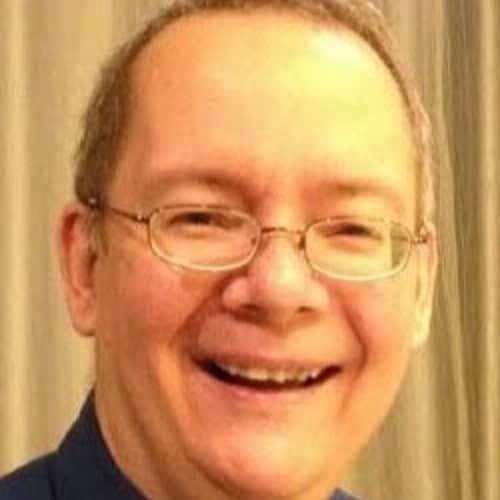
Bryan van Norden, Professor of Philosophy, Vassar College
Related Blogs
-
December 10, 2015
Related Resources
Books:
- Bryan Van Norden, Introduktion to Classical Chinese Philosophy
- Bryan Van Norden, Readings in Classical Chinese Philosophy
- Laozi, Tao Te Ching
- Zhuangzi, Zhuangzi
Web Resources:
- Chad Hansen, “Daoism.” The Stanford Encyclopedia of Philosophy
- Fabrizio Pregadio, “Religious Daoism.” The Stanford Encyclopedia of Philosophy
- Chad Hansen, “Zhuangzi.” The Stanford Encyclopedia of Philosophy
- Alan Chan, “Laozi.” The Stanford Encyclopedia of Philosophy
Get Philosophy Talk
