
Hobbes and the Absolute State
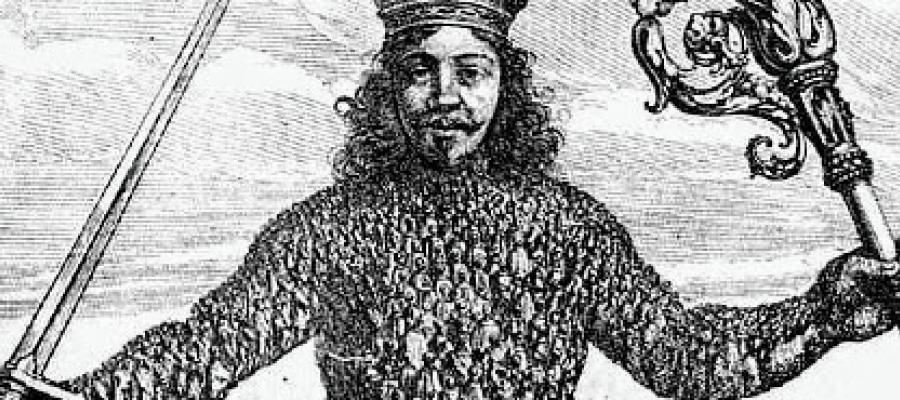
Shouldn’t citizens have a say in how they are governed? Or is that just a recipe for extremism, division, and war? Do we need a ruler with absolute power to maintain peace? This week we’re thinking about Thomas Hobbes and his views about citizenship and the state.
Shouldn’t citizens have a say in how they are governed? Or is that just a recipe for extremism, division, and war? Do we need a ruler with absolute power to maintain peace? This week we’re thinking about Thomas Hobbes and his views about citizenship and the state.
Hobbes famously said that life in the state of nature would be “solitary, poor, nasty, brutish, and short.” By “state of nature,” he meant life without any kind of government. Essentially, he’s saying that we need to be governed if our lives are going to be remotely bearable.
But is he right to think that? Let’s start with the first part of that claim, that life would be “solitary.” This seems obviously wrong. Humans are naturally social creatures and, like other social animals who live in the state of nature, we would probably live in small family or tribal groups without a state. Indeed, before government ever existed, isn’t this exactly how we lived?
Sure, humans like to fight with one another. But is that fact enough to defend Hobbes’ claim that without the state to govern us, life would be “brutish and short”? That sounds like in the state of nature we’d constantly be in danger of being attacked and killed by other humans. But humans are not only social animals, we’re cooperative animals too. We band together to get things done, we work with one another to create stuff we can’t create alone. Can’t we concede that we might fight sometimes, but also insist it’s usually not to the death?
That’s not to say that the state’s coercive power—its ability to arrest and incarcerate wrongdoers for things like theft, assault, and murder—doesn’t deter people from behaving badly. But it doesn’t necessarily follow that without the coercive power of the state to detain and punish, we’d all go around trying to kill one another.
I’m not trying to pay too rosy a picture of human nature here. Of course, I lock my doors at night time precisely because I don’t trust other people to always behave appropriately. But Hobbes’ paints an overly pessimistic picture of human nature, like without the state we’d live short, brutal lives.
Hobbes’ picture of government is similarly extreme. It’s possible to believe that some kind of state is necessary to maintain order and peace, but Hobbes advocates for an absolutist state, one where there’s a single ruler who has all the power. As citizens in this state, our job is just to obey the supreme ruler. It sounds like life in Hobbes’ ideal state is what would be nasty and brutish! Citizens would be nothing more than obedient subjects of a monarch, or other absolute ruler, and we’d have no say in how we are governed.
So why did Hobbes think that a sovereign with absolute power was the only way to maintain peace and stability? And what is the relevance of Hobbes’ thinking for the modern political state? Tune in to this week’s show to find out!