
Beauty and subjectivity
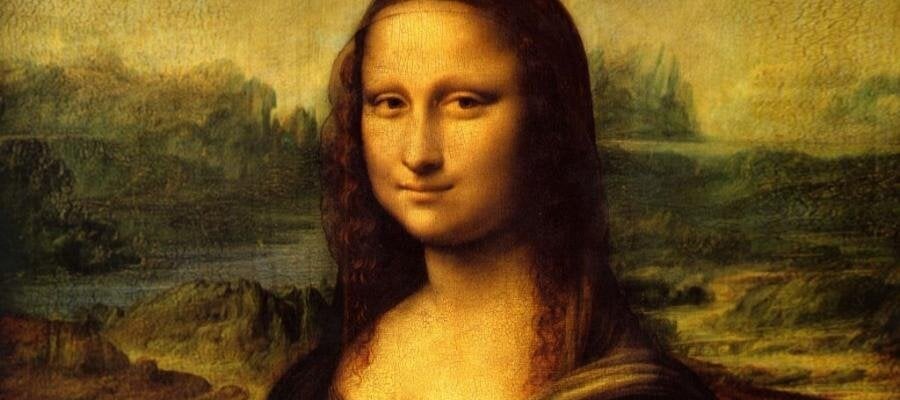
Is beauty like a secondary quality, mind-independent, but intersubjective? That is, if people are in the right conditions, will they agree on what is beautiful and what is not? What would the right conditions be? Not just good lighting, but also, perhaps, a proper upbringing, a well-trained eye, ear, or palate. I have some sympathy with this idea.
Here are two truisms about beauty:
Beauty is only skin deep
Beauty is in the eye of the beholder
With respect to the first I can only say, “Thank God.” The idea is that beauty is a superficial characteristic that does not provide great evidence for character, personality, wit, intelligence and other such virtues. As a one of the beauty-challenged members of our species, I would really resent it if beauty were a good indication of those things. Enough is enough. Let the rich and the beautiful be boring and dimwitted as far as I am concerned.
It’s the second truism I want to discuss a little. What in the world does it mean to say the beauty is in the eye of the beholder? And why would anyone say that?
We might put a literate-sounding gloss on this by saying it means “beauty is subjective”. But, then, what does that mean?
Subjective is now opposed to objective. Oddly enough, “objective” originally meant “in the mind” as the object of one’s desires, hopes, fears and the like is in the mind, even if it is not out their in reality. My Porsche roadster, the object of one of my desires, has objective reality, but not formal reality, given Descartes’ use of these terms. He argued that given the nature of God’s objective reality (i.e., what my idea of God is like), we can infer to his formal reality,(i.e., that there really is something that instantiated all the forms, or properties, required to be God, which is pretty much all of the good ones and none of the bad ones.)
Now “objective” usually connotes having to do with facts about the physical, material world. Subjectivity means “in the mind of a subject”. A “subject” is the thinker of thoughts, the haver of experiences. Objective truths are true apart from what goes on in any subject who is thinking about the truth. Most philosophers agree that truths about that material world, or at least a lot of them, are like that. After all, the material world was around for a long time before there were any minds to think about it. Some believe that truths about numbers are also objective, while others believe they fit better somehow into the next category we will discuss.
These are truths about phenomena that is in some way depends on there being minds, that is, thinking, perceiving, sub jects. Such truths depend on subjectivity, on there being minds around to perceive and think thoughts about the things the truths are about.
Galileo, Descartes, Boyle, and Locke all were impressed with the difference between “primary” and “secondary” qualities. Primary qualities were objective in the sense we now assign to this word. Objects would have shape, size and motion whether or not there were any minds around to perceive them. But, it seemed, at least to these thinkers, that objects would not have secondary qualities, that is, colors, sounds, smells and tastes, if there were not minds to see, hear, smell and taste them. The idea is that secondary qualities have to do with the effects that the objects have on minds. No minds, no secondary qualities. So secondary qualities are subjective. They are in the eye (ear, nose, or tongue) of the beholder.
There is a weaker grade of objectivity that secondary qualities have, however. Although they might not exist without minds, the minds that there are agree about them, at least in favorable conditions. If your vision is normal and my vision is normal and we are both in favorable lighting conditions we should agree on which objects are red, which green, and so forth.
But what about the fact that you like green, while I don’t; I love red; but you hate it? How about the fact that I hate lima beans, while others (I’m told) actually like their taste? How some object strikes us, whether it arouses pleasure or something more like pain when we see, smell, hear or taste it, seems doubly subjective. First of all, our perception will involve secondary qualities, and so depend on the existence of thinking, perceiving subjects. Second, the combination of qualities we perceive will strike individual subjects as pleasant or unpleasant. On this second matter, we don’t expect intersubjective agreement. Tastes differ; to each his own, and the like.
Where does beauty fit in? Is it an objective, mind-independent property of things? I’m sure that some philosophers have thought this, but it doesn’t seem very plausible. Lots of beautiful objects, like mountains and forests and lakes, could exist without minds. But they wouldn’t really be beautiful would they, if there weren’t minds around to gain some enjoyment from observing them?
Is beauty like a secondary quality, mind-independent, but intersubjective? That is, if people are in the right conditions, will they agree on what is beautiful and what is not? What would the right conditions be? Not just good lighting, but also, perhaps, a proper upbringing, a well-trained eye, ear, or palate. I have some sympathy with this idea. It seems to me that there ought to be intersubjective agreement that the pop music of the sixties is better than that of the benighted eighties, for example, and anyone who doesn’t agree has probably had their ears damaged by walkmans that were turned up to high or excessive use of drugs. However, upon sober reflection, it seems likely that this is just my bias, due to having come of age in the fifties and sixties.
So that leaves beauty in the third category, the doubly subjective, not only dependant on minds for its existence, but not even something on which minds can be expected to agree, even in favorable circumstances. The Mona Lisa, Michelangelo’s David, the Chrysler Building—- like the taste of lima beans, or the BeeGees, some people like ‘em, some people don’t.
Can we really accept that there is no more to beauty than that? What will happen to Art Appreciation classes? To appreciating great literature? And, Egad, to the difference, surely objective, between quality philosophy and dreck? Perhaps we need some more categories, some more analogies, and some more models to think about this. Let’s see what happens when we discuss beauty on Philosophy Talk.