
Latin-American Philosophy
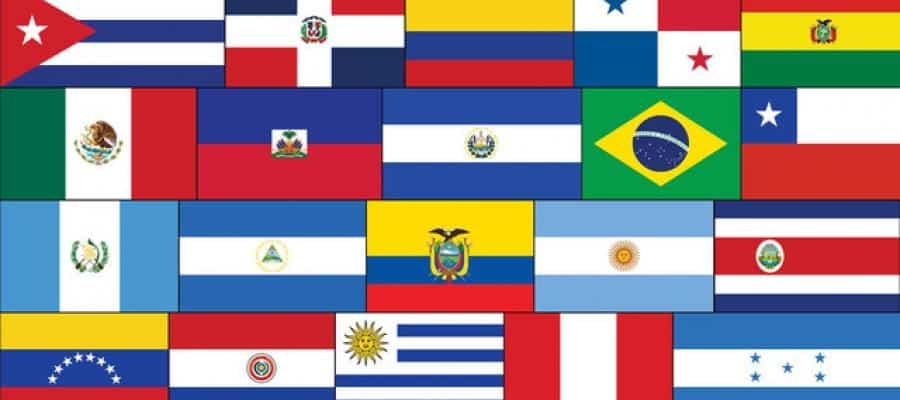
It’s National Hispanic Heritage Month, and this week on the program we’ll be tackling Latin-American Philosophy. By Latin America we mean all the Spanish and Portuguese speaking parts of the Americas, including Mexico. We’ll just say American philosophy when we mean the U.S. and Canada, and apologize in advance for the somewhat arrogant terminology.
All philosophy in the Americas can be divided in two: that connected with the native American cultures that were here before Columbus, and what developed from the 16th century on. There’s a lot of rethinking going on about every aspect of pre-Columbian America: the population of the continent, and the complexity and sophistication of the cultures. But we’ll concentrate mainly on the later, post-Columbian period.
Like American philosophy, Latin American philosophy was, and continues to be, closely linked with European thinking. The various trends in European philosophy — positivism, Marxism, phenomenology, existentialism, analytic philosophy — all have their champions. Of course the Iberian influence is greater than in the US. But when you look at the non-political side of philosophy, there’s not such a great difference between the north and the south. In fact, many Latin American philosophers have moved north and fit comfortably into mainstream American departments.
For example, one of my heroes and friends was Hector-Neri Castañeda, a very influential thinker who spent most of his career at Indiana after being part of the famous Wayne State crowd. I’d describe him as sort of a Fregean of a very original sort. He was the most analytical of philosophers, but his accent and his passion for life and ideas seemed to be rooted in Guatemala.
So, speaking in a broad sweep, on the metaphysics and epistemology side of things, Latin American philosophy is basically the story of philosophers, who happen to be in Latin America. But when you move to social and political philosophy, there’s a very distinctive Latin American Philosophy. Again, speaking broadly, the American political philosopher is likely raised a Protestant, likes to read Locke and Hume and Mill, thinks about social contracts, and rights, maybe applying game theory or writing a monograph on Locke.
The Latin American social and political philosopher is more likely to be raised a Catholic, likes to read Marx and Ortega y Gasset, and to think about — and perhaps be involved with — the long struggle against European tyranny, the struggle for native rights. Latin America is the home of liberation philosophy, as well as liberation theology. In anthologies of Latin American philosophy, the first person mentioned is usually Bartolome de las Cassas, a truly fascinating figure. I used to cover him in my freshman western culture course. Many of the themes of Latin American social and political philosophy begin with him.
De las Cassas settled with his family in Hispaniola — what’s now Haiti and the Dominican Republic — in 1502, just ten years after Columbus’s first voyage. He grew up in the encomienda system — that is, farms and plantations based on enslaving the native Americans. But as he grew up, he saw the injustice of this, became a priest, later a monk, and spent the last part of his life back in Spain trying to convince the Holy Roman Emperor and the Papal representatives to abolish slavery.
Now you may have heard that De las Cassas was the instigator of African slavery. That’s a bum wrap. He did mention African slaves as a human alternative to native American slaves in one of his early writings. But he disavowed that and later apologized. In terms of actual impact, the scholarly consensus is that his remark had no effect whatsoever. The African slave trade was already in operation when he wrote.
But of course we’ve probably exhausted our knowledge of Latin American philosophy, so our guest, Joseph Orosco Professor of Philosophy at OSU in Corvallis, will help us continue the conversation and our education.