
Thinking Fast, Thinking Slow, Thinking Hard
Daniel Kahneman was a Nobel-prize-winning psychologist who, along with Amos Tversky, discovered a whole bunch of cognitive biases—weird quirks of the brain that cause us to make mistakes. One of our favorites is loss aversion.
Suppose I offer you a bet: heads you win $500, tails you get nothing. Would you take the bet? Seems like a can’t-lose. But suppose I change the bet to this: heads you win $500, tails you lose $400. Does the bet suddenly seem too risky to take? How about if we did that same coin toss ten times in a row? Does that make it even worse? That’s loss aversion in action. Kahneman thinks it would be rational to take that bet, because over the long run you’re going to come out ahead. But our brains don’t work that way. We’re more afraid of losing things than we are excited about gaining things.
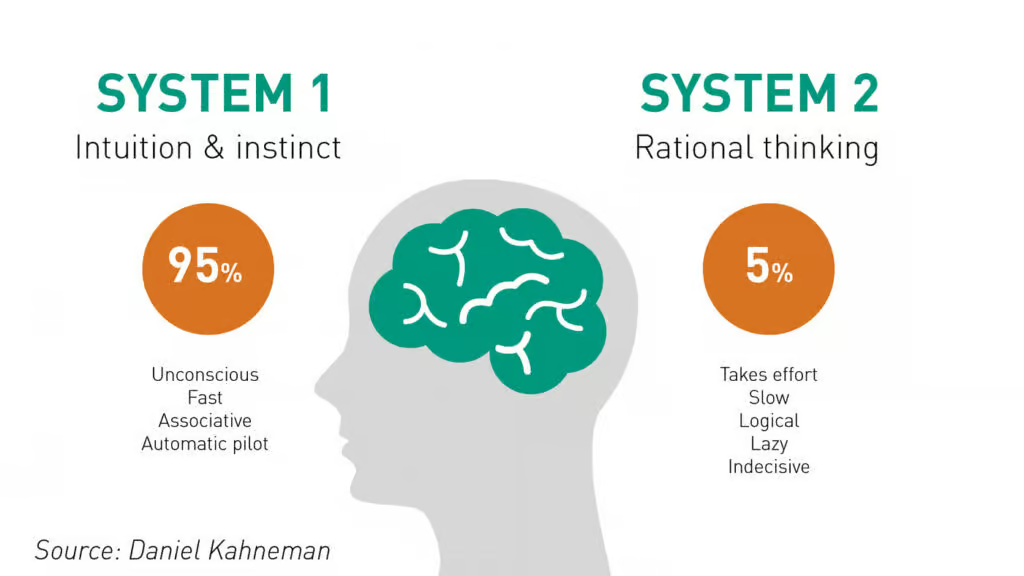
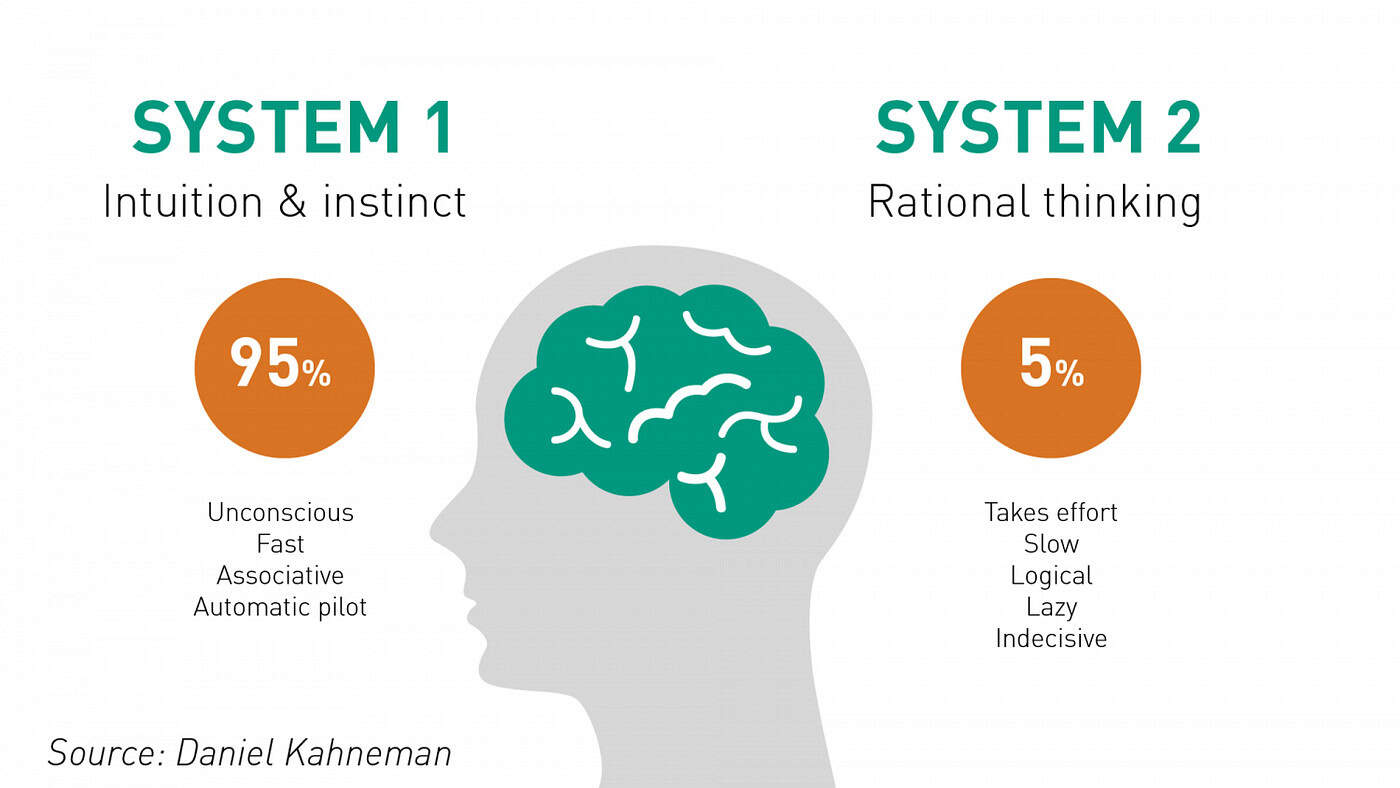
But so what? If you took a moment to think about the bet, surely you’d figure out the right answer. But Kahneman’s point is you’re not going to take a moment to think about it. You’re busy, you’ve got a lot of other stuff to do, and thinking, after all, is hard. Kahneman says the vast majority of the thinking we do is unconscious—not that there’s (usually) anything wrong with that. Unconscious thinking gets us through a lot of our day, and even Kahneman admits that “Most of our judgments and actions are appropriate most of the time.” If they weren’t, we wouldn’t survive long. We’d mistake a rattlesnake for a hosepipe and be dead in minutes. And our garden wouldn’t get watered either.
But our unconscious minds also make zillions of mistakes—and on a regular basis. Moreover, some of those mistakes are really significant, like how much you should save for retirement or what medical treatment to get. If you tell people that a surgery has an 80% survival rate, they’ll go for it. If you say it has a 20% chance of death, they won’t. That’s what Kahneman calls a framing effect, and it influences a lot of our decision-making.
Kahneman does say that we can protect ourselves against these biases by getting more vigilant. You can start by learning about all these biases (maybe by reading his book) and then, when you see one coming, you can make sure to slow down and think hard. Of course you have to be selective about how you spend your time pondering. When you’re, say, buying toothpaste, you can let your unconscious mind take the wheel. But when you’re buying a house, not so much. It’s like an airplane: you can leave it on autopilot for thousands of miles, but when you’re coming in for that landing, it’s important to be alert.
Of course unlike major airports, cognitively dangerous situations don’t come with giant signs on them. You just blunder into them and don’t even realize you’ve made a mistake. As Kahneman says, “We can be blind to the obvious and we’re also blind to our own blindness.” If your conscious mind notices that you’re about to buy a giant ice cream, it’s less likely to stop you than it is to explain just how important that ice cream is for your health and why you deserve it after your hard work all day. It may well even pull up a study showing that people who eat a lot of ice cream live long and happy lives.
And yet there are things we can do to detect cognitive traps and increase our chances of success, as we’ll hear from our guest, Tamar Gendler, professor of philosophy and psychology at Yale University.