Show

What Might Have Been

Week of: 
June 10, 2012
What is it: 

When we make claims about things that could have been—what philosophers call counterfactual statements—we are, in some sense, sliding between different worlds. We all use counterfactual statements frequently. But what would make our speculations about what might have been in a different scenario true or false? When I say things could have gone differently than they did, I am speaking of a possible world in which things did, in fact, go differently. But how do we make sense of this talk of possible worlds? How can there be facts other than facts about the actual world? John and Ken consider the possibilities with Laurie Paul from the University of North Carolina Chapel Hill, co-author of Causation: A User's Guide.

Listening Notes: 

Many things that did not happen, might have happened. Many things that did happen, might not have happened. Some things are bound to happen. And some can never happen. Today, Ken and John explore the intricacies of these so-called modal distinctions. While Ken believes that in addition to real, objective facts about what is, there are also real, objective facts about what might be, John is not so sure. He is skeptical as to what these alleged facts would consist in, and moreover, how we could ever come to know them, given that the world is not a “stream of possibilities”, but a “stream of actualities”. Ken likens John to “that grouch Quine”, who famously exhorted philosophers to “ask not what a thing may or may not be, ask only what it is.” Ken rejects such a defeatist attitude by pointing out the intuitive plausibility of claims like, “Ken could have been a lawyer, and had he been a lawyer would  have been richer, though not as happy as he is as a philosopher today”.

To facilitate an exit strategy from this impasse, Ken and John are joined by philosophy professor Laurie Paul of the University of North Carolina at Chapel Hill, co-author of the forthcoming Causation: A User’s Guide. Laurie starts off by pointing out the importance of counterfactual reasoning, i.e. reasoning involving modal considerations, in personal decision-making, such as determining the kind of person one would like to be become or the kind of thing one would like to have happen in the world. She sides with Ken in arguing that there are objective facts about the possible and presents a two-part approach to thinking about these facts. Laurie suggests that, like in a game of chess, there are rules about the regularities obtaining in a given world (such as ours), and that there are different scenarios or initial conditions that can be plugged into these rules yielding an array of possible outcomes.

In the next segment, Laurie offers the following example as an instance of her theory: One day, Laurie walked into her local coffee shop and met the man who would become her husband. It seems clear to Laurie that, had she not gone into that coffee shop on that day, she would not have met her future husband. But Ken points out that it is not obvious what else would have changed had Laurie not gone into the coffee shop, nor what would have had to be different in the past for Laurie not to have gone into the coffee shop. In short, Ken questions that we know exactly which facts to keep fixed and which to let vary when reasoning about counterfactuals.

Finally, Ken declares just how amazing our capacity for counterfactual reasoning is and that perhaps the most interesting question is not the metaphysical question about the nature of modal facts, but the philosophy of mind question concerning the nature of the specific mental equipment that allows us to think beyond the actual and into the realm of the possible and the necessary. Ken reminds us of Kant’s assertion that we possess an inbuilt notion of causality that enables the very reasoning about how one thing depends on another. Laurie acknowledges the importance of the mental contribution to questions about modality, but, in tension with Kant, argues that there is perfectly legitimate reasoning that employs all sorts of crazy rules and regularities completely foreign to our actual world. This, according to her, is why “metaphysics so fun”!

  • Roving Philosophical Reporter: Caitlin Esch (seek to 6:53) visits Susan Regan, MFT, a marriage and family therapist in Berkeley, who helps children reconstrue the narrative of, and alleviate the blame associated with, traumatic events such as their parents’ divorce, by encouraging them to use their imagination in determining the cause and effect structure of these occurrences.
  • 60-Second Philosopher: Ian Shoales (seek to 46:21) invokes his long-lost imaginary friend ‘Bursem’ (a bastardization of ‘Person’) to muse about the often strange demises of these fictitious companions (such as death by cardboard-box drive-by shooting, or by being sat on by one’s father) and wonders why we adults, arguably most in need of such pliable pals, forsake the pleasure of being friends with a “guy who fits in your pocket”.

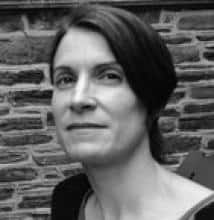
Laurie A. Paul, Professor of Philosophy, UNC Chapel Hill

Researched By: 
Karola Kreitmair
Related Resources: 

Web Resources

De Pierris, Graciela and Friedman, Michael (2008) “Kant and Hume on Causality”, The Stanford Encyclopedia of Philosophy

Vaidya, Anand (2011) “The Epistemology of Modality”, The Stanford Encyclopedia of Philosophy

Book Resources

Collins, John and Hall, Ned and Paul, Laurie (eds) (2004) Causation and Counterfactuals, Bradford Book, ISBN 0-262-53256-5

Get Philosophy Talk

Live

Sunday at 10am, PST, KALW, 91.7 FM, Local Public Radio, San Francisco

Streaming

Broadcast live on your iPhone or Android using the Public Radio Player

Podcast

Individual episodes, multipacks and The Complete Philosophy Talk on sale now through Iamplify.   Individual episodes available through Itunes and CD Baby.

Subscribe

Subscribe to our free weekly download service, and our monthly eNewsletter

John Perry and Ken Taylor

Talk to Us

Sidebar Menu

Upcoming Shows

  • June 30 : Whodunit: The Language of Responsibility
    Who is responsible for the broken vase in the foyer? How harshly should criminals be punished for their crimes? Did Justin Timberlake mean to disrobe...
  • July 21 : Freedom and Free Enterprise
    “Freedom” can mean many things, but it stands most centrally for metaphysical freedom: the human capacity to choose among options, based on one’s own...

Support Philosophy Talk

DONATE TODAY

Philosophy Talk relies on the support of listeners like you to stay on the air and online. Any contribution, large or small, helps us produce intelligent, reflective radio that questions everything, including our most deeply-held beliefs about science, morality, culture, and the human condition. Make your tax-deductible contribution now through Stanford University's secure online donation page. Thank you for your support, and thank you for thinking!