Show

War, Sacrifice, and the Media

Week of: 
September 11, 2011
First Aired: 
October 03, 2009
What is it: 

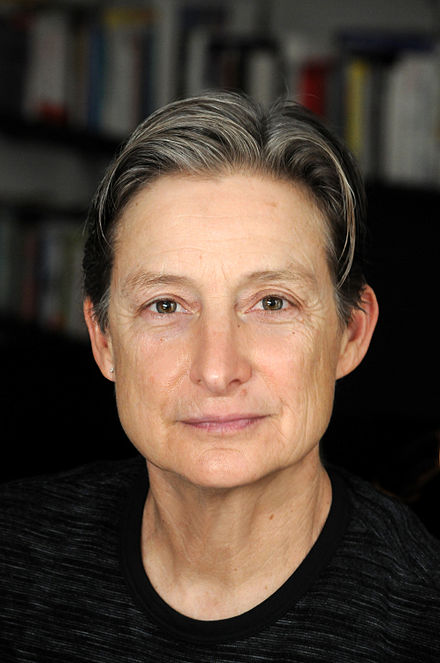
The media often present a sanitized and one sided narrative of war, torture and other forms of violence that blots out the faces and silences the voices of many of the main victims: the refugees, the victims of unjust imprisonment and torture, and the immigrants virtually enslaved by their starvation and legal disenfranchisement.  John and Ken probe the limits of the media representations of war and other forms of violence with renowned UC Berkeley professor Judith Butler, author of Frames of War: When Is Life Grievable?  This program was recorded live at the Marsh Theatre in San Francisco.

Listening Notes: 

How do we see a war that is not occurring right in front of our eyes?  The narration and media representations of war determines public perception, yet the images presented to us offer more than one perspective.  Even with internet access, top-down narration is the dominant mode of public information.  The narratives that reach us are incomplete—we hear detailed accounts of our side’s death toll, yet no recognition of how many “enemy” men, women, and children are killed.  Are we hard-wired to care more for our own, or is sympathy more than just biological?  With different environmental factors, could we care just as much about the “other”?  John and Ken discuss with Judith Butler Live at the Marsh Theater in San Francisco, asking why we care for some strangers but not for others.

Butler explains how she got interested in the topic of which lives are “grievable” and which are not, explaining that it began with the AIDS crisis and the fact that certain taboos had to be broken in order to grieve for the victims.  She goes on to talk about very culturally-specific means of mourning.  She says that we don’t give full credence to the enemy in war, and do not fully grieve the losses on their side—but isn’t that inevitable in war?  She talks with John and Ken about how we define enemy, and whether that definition has become problematized in recent conflicts.  Butler confuses Ken, telling him first that he is too rational, then not enough.

The live audience chimes in, offering that sympathizing with the enemy requires honesty on the part of the government and a belief in the reasons for which a conflict is being fought.  John goes a step farther and says that it’s not just a matter of the government lying, but rather of it deceiving itself. Another audience member asks when an individual is considered at war—after all, as an American one may not ever participate in the fighting, nor does one necessarily believe in the conflict being fought.  Ken agrees and says he himself has never felt at war in the Iraqi conflict, while Butler argues that dissent is itself participation.  After taking several other audience comments, Ken offers a closing question about grievability: with so much grief in the world, is it even possible to acknowledge it all without becoming paralyzed?  Butler thinks so, but qualifies her answer.

  • Roving Philosophical Reporter (seek to 7:20): Reporter Rena Paulta speaks with a refugee of the Iraq conflict who is currently living in Oakland.  She gets his story and the changes that the US invasion brought to his life.
  • 60 Second Philosopher (seek to 50:00): Ian Shoales gives deep consideration to the buying frenzy post-9/11, and how he did his part for America.  

Judith Butler; Maxine Elliot Professor in the Departments of Rhetoric and Comparative Literature; University of California, Berkeley

Related Resources: 

Books

Web Resources

  • Smith, Terrence. "War Images." PBS Online Newshour (Apr. 2003)

Get Philosophy Talk

Live

Sunday at 10am, PST, KALW, 91.7 FM, Local Public Radio, San Francisco

Streaming

Broadcast live on your iPhone or Android using the Public Radio Player

Podcast

Individual episodes, multipacks and The Complete Philosophy Talk on sale now through Iamplify.   Individual episodes available through Itunes and CD Baby.

Subscribe

Subscribe to our free weekly download service, and our monthly eNewsletter

John Perry and Ken Taylor

Talk to Us

Sidebar Menu

Upcoming Shows

  • May 26 : Summer Reading List 2013
    Summer is the perfect time to dig in to deep reading. Heidegger's Being and Time may be a bit much to take on vacation, but there are lots of...
  • June 02 : Gay Pride & Prejudice
    The question of gay rights has become a hot button issue, with opposition taking on the air of a moral panic and support taking on the air of a...
  • June 09 : Physics, Philosophy, and Theology
    The world disclosed by the physical sciences can seem depressing. Modern physics, for example, has undermined the religious idea that the universe...
  • June 16 : Educaton and the Culture Wars
    In contemporary democracies, the state is responsible  for providing children with an education. But parents surely have both the right and...
  • June 23 : Nations and Borders
    One’s country of birth has a profound effect on life prospects. It's often best to go elsewhere. But moving is not always so easy. Borders and...

Support Philosophy Talk

DONATE TODAY

Philosophy Talk relies on the support of listeners like you to stay on the air and online. Any contribution, large or small, helps us produce intelligent, reflective radio that questions everything, including our most deeply-held beliefs about science, morality, culture, and the human condition. Make your tax-deductible contribution now through Stanford University's secure online donation page. Thank you for your support, and thank you for thinking!