
Show

Global Poverty and International Aid

Week of: 
June 21, 2005
What is it: 

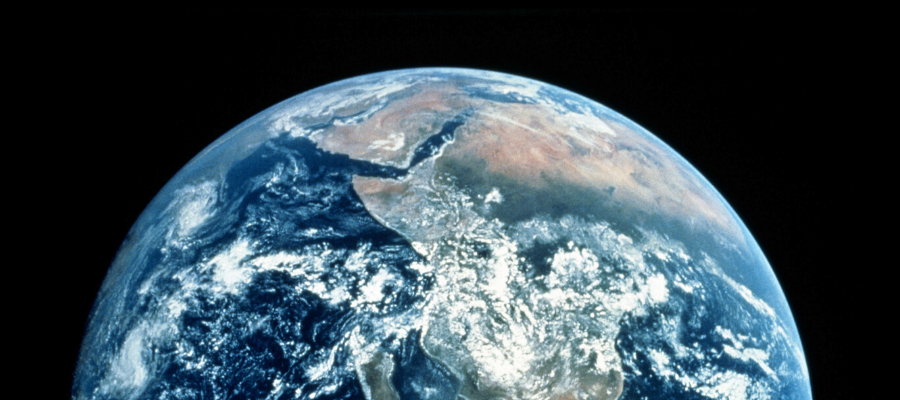
Does a hungry child in a far away land have any less of a demand on your good will and aid than a hungry child from your own family or neighborhood?  Does each individual have the duty to give to the worldwide alleviation of poverty up to the point at which further giving would cause his or her own family more harm than it would do good for others?  Or is responsibility for others a mostly local affair: take care of your family, look out for those in your community, and the rest of the world will take care of itself?  John and Ken welcome Peter Singer to discuss Global Poverty and International Aid.

Listening Notes: 

Do we have a duty to give till it hurts? Ken doubts that we are obligated to give that much. Why do some people matter more to us, say, our children, than perfect strangers? Should some people matter more? Ken introduces Peter Singer, professor at Princeton. Singer begins by giving a few reasons why we should give more to the poor. Ken and John ask Singer to give more details about life style quality across the globe. 

Why should we give to poverty stricken countries? Singer tries to convince Ken to give more. Why should we forgo luxuries in our lives to give money to the poor? Singer replies that we shouldn't be indifferent to suffering just because we can't see it. How much cost to those near and dear should one bear to help strangers on the other side of the world? Why should those distant people matter as much as one's family? Singer replies that, if we abstract from our individual position and universalize the viewpoint, then we'll feel motivated to help. 

Overcrowding is a problem. Wouldn't it get worse if people in the third world lived longer? Singer answers that as people become more educated and more affluent, they reproduce less, so it would not be as much of a problem as you would think. The discussion has been framed in terms of individual responsibilities. Should governments be required to give aid to poor countries? Governments exist for the people that created them, so why should a government do anything to aid people that are not its citizens? A lot of countries are messed up because their own governments messed them up. Singer replies that a lot of those people didn't elect the leaders that messed up their countries. 

  • Amy Standen the Roving Philosophical Reporter (Seek to 04:14): Amy Standen interviews an economist about economic equality and mobility. 
  • Ian Shoales the Sixty Second Reporter (Seek to 49:38): Ian Shoales gives a brief history of poverty, from hunter-gatherers to Marx to contemporary economics and sociology.

Get Philosophy Talk

Live

Sunday at 10am, PST, KALW, 91.7 FM, Local Public Radio, San Francisco

Streaming

Broadcast live on your iPhone or Android using the Public Radio Player

Podcast

Individual episodes, multipacks and The Complete Philosophy Talk on sale now through Iamplify.   Individual episodes available through Itunes and CD Baby.

Subscribe

Subscribe to our free weekly download service, and our monthly eNewsletter

John Perry and Ken Taylor

Talk to Us

Sidebar Menu

Upcoming Shows

  • May 26 : Summer Reading List 2013
    Summer is the perfect time to dig in to deep reading. Heidegger's Being and Time may be a bit much to take on vacation, but there are lots of...
  • June 02 : Gay Pride & Prejudice
    The question of gay rights has become a hot button issue, with opposition taking on the air of a moral panic and support taking on the air of a...
  • June 09 : Physics, Philosophy, and Theology
    The world disclosed by the physical sciences can seem depressing. Modern physics, for example, has undermined the religious idea that the universe...
  • June 16 : Educaton and the Culture Wars
    In contemporary democracies, the state is responsible  for providing children with an education. But parents surely have both the right and...
  • June 23 : Nations and Borders
    One’s country of birth has a profound effect on life prospects. It's often best to go elsewhere. But moving is not always so easy. Borders and...

Support Philosophy Talk

DONATE TODAY

Philosophy Talk relies on the support of listeners like you to stay on the air and online. Any contribution, large or small, helps us produce intelligent, reflective radio that questions everything, including our most deeply-held beliefs about science, morality, culture, and the human condition. Make your tax-deductible contribution now through Stanford University's secure online donation page. Thank you for your support, and thank you for thinking!