Show

Faces, Feelings, and Lies

Week of: 
April 18, 2010
What is it: 

According to Proverbs, lying lips are an abomination to the Lord.  But lies on human lips are as common as fleas on a dog.  What is a lie?  Are all untruths lies?  Is lying always immoral?  Do our faces inevitably betray our lies?  Join the hosts as they uncover the concept, practice, and detection of lies with pioneering psychologist Paul Ekman, author of Telling Lies: Clues to Deceit in the Marketplace, Politics, and Marriage and scientific consultant to the Fox television series Lie To Me.  This program was recorded in front of a live audience at the Marsh Theatre in San Francisco.

Listening Notes: 

John and Ken start off the show, as they so often do, by defining terms. They use Hume’s theories to tease apart the concept of a feeling versus that of an emotion. John illustrates how an emotion can be viewed as a complex composite of its cause, its target, and the accompanying feeling, such that one feeling can correspond to many different emotions. 

After a glowing introduction from Ken, Paul begins by describing his key discovery of micro-expressions. These, he explains, are fleeting expressions of concealed emotion that individuals like law enforcement and medical students can be trained to detect. John wonders whether such training would qualify him to be as good as a lie detector. Paul answers that lie detectors don’t detect lies, they detect emotion. A whole sleuth of tools to analyze demeanor should be used to reveal whether someone is concealing a feeling. However, what if someone is lying about something they did, rather than about how they feel? Paul mentions that this is an important distinction to be careful about.  

Following a short break, Paul points out the universality of human emotional expression. He then mentions that most people are terrible liars and lie catchers. Ken, John, and Paul explore this fact from an evolutionary perspective; humans evolved in small communities, where it was difficult to get away with anything. Now, even in a society with such little face-to-face interaction, Paul doesn’t think lying has become any easier. Next, Ken posits that the ability to read the face might be connected to a broader ability to understand people’s beliefs, but Paul insists that thoughts, unlike feelings, are private and have no signal. He humorously adds that you can shut your mouth but not your face. 

In response to a wealth of audience questions, Paul comments on everything from Tourrete syndrome to Mona Lisa’s famous expression to the Jonathan Edwards scandal. He concludes by responding to a question about whether it is possible to infer information about someone’s character from their face. Although there might be accurate information towards this end, Paul states, it is yet to be documented.

  • Roving Philosophical Reporter (Seek to 5:50) : Philosophy Talk’s Roving Philosophical Reporter interviews researcher David Wilkins and actor Kay Kostopoulos, co-instructors of the Stanford class “Learning Facial Emotions: Art and Psychology.” 
  • 60-Second Philosopher (Seek to 47:59) : Ian Shoales comments on Future Attribute Screening Technology (FAST), a program for facial recognition that is being tested by the Department of Homeland Security. He humorously suggests that making use of Facebook’s “TMI” culture could be a viable alternative to expensive surveillance equipment.

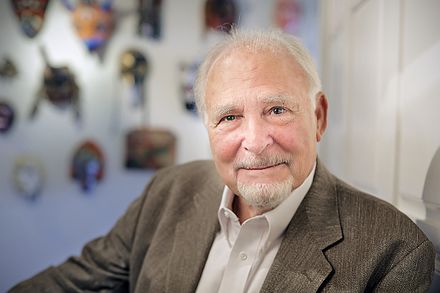
Paul Ekman, psychologist and expert in the study of emotions and facial expression

Related Resources: 


Web Resources

de Sousa, Ronald (2010). “Emotion.” The Stanford Encyclopedia of Philosophy.

DiDomenica, Peter (2011). “The TSA SPOT Program: A Law Enforcement Perspective.” Statement Before U.S. House of Representatives, Committee on Science, Space, and Technology, Subcommittee on Investigations and Oversight. 

Ekman, Paul (2004). “FACE TO FACE: The Science of Reading Faces.” Conversations with History.

Ekman, Paul (2006). “How to Spot a Terrorist on the Fly.” The Washington Post. 

Nauert, Rick (2010). “Are Emotions Universal?Psych Central News.

Navarro, Joe (2011). “Body Language vs Micro-Expressions.” Psychology Today. 

Thomson, David (2009). “The Death of Method Acting.” The Wall Street Journal. 

Books

Darwin, Charles (2012). The Expressions of the Emotions in Man and Animals. ISBN: 1470188880.

Ekman, Paul (2007). Emotions Revealed, Second Edition: Recognizing Faces and Feelings to Improve Communication and Emotional Life. ISBN: 0805083391. 

Ekman, Paul (2009). Telling Lies: Clues to Deceit in the Marketplace, Politics, and Marriage, Third Edition. ISBN: 0393337456. 

Meyer, Pamela (2011). Liespotting: Proven Techniques to Detect Deception. ISBN: 0312611730. 

Navarro, Joe, and Marvin Karlins (2008). What Every BODY is Saying: An Ex-FBI Agent’s Guide to Speed-Reading People. ISBN: 0061438294.  

Pease, Barbara (2006). The Definitive Book of Body Language. ISBN: 0553804723.

Get Philosophy Talk

Live

Sunday at 10am, PST, KALW, 91.7 FM, Local Public Radio, San Francisco

Streaming

Broadcast live on your iPhone or Android using the Public Radio Player

Podcast

Individual episodes, multipacks and The Complete Philosophy Talk on sale now through Iamplify.   Individual episodes available through Itunes and CD Baby.

Subscribe

Subscribe to our free weekly download service, and our monthly eNewsletter

John Perry and Ken Taylor

Talk to Us

Sidebar Menu

Upcoming Shows

  • May 26 : Summer Reading List 2013
    Summer is the perfect time to dig in to deep reading. Heidegger's Being and Time may be a bit much to take on vacation, but there are lots of...
  • June 02 : Gay Pride & Prejudice
    The question of gay rights has become a hot button issue, with opposition taking on the air of a moral panic and support taking on the air of a...
  • June 09 : Physics, Philosophy, and Theology
    The world disclosed by the physical sciences can seem depressing. Modern physics, for example, has undermined the religious idea that the universe...
  • June 16 : Educaton and the Culture Wars
    In contemporary democracies, the state is responsible  for providing children with an education. But parents surely have both the right and...
  • June 23 : Nations and Borders
    One’s country of birth has a profound effect on life prospects. It's often best to go elsewhere. But moving is not always so easy. Borders and...

Support Philosophy Talk

DONATE TODAY

Philosophy Talk relies on the support of listeners like you to stay on the air and online. Any contribution, large or small, helps us produce intelligent, reflective radio that questions everything, including our most deeply-held beliefs about science, morality, culture, and the human condition. Make your tax-deductible contribution now through Stanford University's secure online donation page. Thank you for your support, and thank you for thinking!