Neuroscience and the Law
Aug 12, 2012Recent advances in neuroscience have revealed that certain neurological disorders, like a brain tumor, can cause an otherwise normal person to behave in criminally deviant ways.
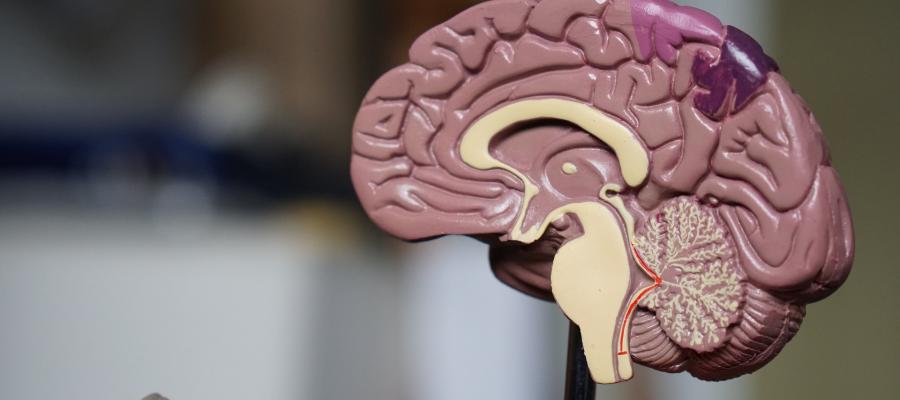
This week, our topic is neuroscience and the law. Neuroscience is revolutionizing our understanding of how the brain works. In the process it is challenging ago-old ways of thinking about crime and punishment. Some neuroscientists even say that it’s time to completely rethink our judicial system in light of their discoveries. That’s because our current legal system presupposes a certain picture of how the mind works that many neuroscientist now believe is almost entirely wrong. Common sense counts a person morally responsible for a wrongful action only if the action results from their free, conscious, deliberate choice. Pretty much the same idea is expressed in the law via the concept of a guilty mind or mens rea. Under the law, an act can’t make you guilty unless your mind is guilty too.
There are, of course, exceptions to this last claim, since, to be precise, the law distinguishes several different modes of culpability -- strict liability, negligence, recklessness… A wrong doer doesn’t have to make a free, conscious, deliberate choice to be culpable in these lesser ways. But the main point still stands. The law sharply differentiates between actions we freely, consciously, and deliberately choose and actions that we don’t so choose. It holds us most responsible and punishes us most severely for actions of the former sort.
Modern neuroscience purports to throw cold water on the idea that we freely choose our actions. And neuroscience teaches us that most of what the brain does to cause behavior happens without the benefit of conscious deliberation at all. Conscious deliberation is at best the small tip of a really huge iceberg. And the stories we tell ourselves about the causes of our behavior, according to some neuroscientists, are just after the fact confabulations, with no real basis in the neural facts of the matter.
I have to admit, though, that I’m not quite sure the story is as simple as I’ve just suggested or that there is really such a direct conflict between common sense and the law, on the one hand, and the deliverances of neuroscience, on the other. That’s because all that the law really needs is the distinction between doing something on purpose, in full awareness of the consequences of the action, on the one hand, or doing something out non-culpable ignorance or doing something because your neuronal circuitry is misfiring, on the other. As long as we can make such distinctions, the law has all it needs in the way of freedom, consciousness and criminal culpability. Think of the difference between me – a relatively normal person with a relatively intact brain – and, say, a paranoid schizophrenic. Surely, neuroscience doesn’t show that, as far as the law is concerned, we all might as well be paranoid schizophrenics.
The problem with this approach, though, is that neuroscience simply refuses to draw sharp lines. As far as neuroscience is concerned, it’s all on a continuum. Take a supposedly normal, law abiding citizen, upset their dopamine or serotonin balance just a teeny-tiny bit, or make a tiny little lesion in just the right place in their neural circuitry and presto-chango you’ve turned your upstanding law-abiding citizen into a viscous criminal.
This is not to suggest that all criminal behavior is the result of bad neural chemistry and circuitry and is, therefore, excusable. To be sure, all human behavior –- every bit of it -- is the result of our neural chemistry and circuitry. The point is that relatively small differences in our brains can make huge differences in our behavior. And since we don’t have much direct, conscious control over our neural chemistry and circuitry, we have less much direct conscious control over our behavior than the law imagines.
Even so, it doesn’t directly follow that we should necessarily excuse criminal behavior. Think of we do we with other sorts of bad outcomes that are caused by chemical imbalances or bad wiring? We treat them with medication or therapy or surgery. One day soon we’ll be able to do the same when bad brain chemistry leads someone to perform criminal acts. And punishment need not be ruled out altogether either – though it probably needs a new basis. Typically with think of punishment is retribution. But if there is no such thing is freedom, if conscious, purposeful deliberation is just an epiphenomenon and not where our behavior is really and truly generated, then perhaps nobody really intrinsically deserves to be punishment.
But there is another possible basis for punishment – one that may be of more neurologically sound. Punishment provides negative feedback. And the brain sometimes changes itself in respond to negative feedback. Perhaps neuroscience can help us learn which forms of punishment provide effective feedback and which don’t.
Lest you think I’ve simply swallowed the neuroscience Kool-aid, I should say that there are still lots of questions we need to address before I’m willing to drink it down gladly. For example, I worry that everything I’ve been saying so far presupposes a philosophically problematic – I won’t say naïve -- concept of freedom – what philosophers sometimes call contra-causal freedom. That’s a kind of absolute and total freedom that leaves our actions entirely and exclusively up to the will. I admit we don’t freedom in that sense. And maybe neuroscience can help us to see that. But I strongly doubt that either common sense or our legal system presupposes that we have freedom in that sense. And if we don’t there is no real conflict between our criminal justice system and what neuroscience is telling us about how the brain causes behavior. Is there?
Photo by Robina Weermeijer on Unsplash
Comments (60)
Guest
Saturday, August 11, 2012 -- 5:00 PM
I think you overlooking theI think you overlooking the elephant in the room. Prison is a highly profitable business that relies
on draconian sentences and unfair laws. Nonviolent drug offenders, for instance,
shouldnt be imprisoned as has been proven in more morally
responsible states such as Denmark. Rehabilitation simply isnt profitable. It
naive at best to think that our justice system will listen to the truth of science or change
without considerable revolution.
Guest
Saturday, August 11, 2012 -- 5:00 PM
I don't think "free will"I don't think "free will" exists outside of brain chemistry. People don't want to give up the idea for religious or philosophical reasons, because they want to believe that they are "in control" of their lives.
Watch your behavior for a day. Identify those moments when you make, really make, a decision. Why did you make that particular decision vs. another? What guided your choice? You bought the cheap product rather than the expensive one. You can afford both. What in your life caused you to take the former path rather than the latter. What makes you prefer an iPad to a Nexus? Don't just list features. What makes one feature more attractive to you than another?
You are writing a paper on your computer. A second later you are looking at a web page totally disconnected from what you are doing. Why? When did you decide? One moment you are seated at your desk, the next moment you are straightening up books on the overcrowded sofa. Why? When did you decide?
You are attracted to redheads or blondes or tall men or voices. Why? When did you decide? Did you really choose to hate carrots but love tomatoes?
You love going to parties and bars. I don't. Why? You simply decided to be outgoing? I simply decided not to be?
I simply do not understand people who know that, as in the example on your program, a criminal has a brain tumor but continue to assert that the person has free will and full control of his behavior. (I recall a very annoying Oprah interview with a woman suffering from bipolar disorder with Oprah asserting, of course, that the woman was completely responsible for what she did during her manic phase. Absurd.)
Dangerous people need to be separated from society, whatever the reason ("evil", neurological disorder) for the destructive behavior. But we need to treat those who are sick. If we lack the technology today to treat certain disorders, like psychopathy, we should still provide humane methods of incarceration. And even if one can prove that some anti-social or criminal behavior is absolutely the result of free will, we still have an obligation as a civilized people to treat others humanely because when we are cruel to others we corrupt ourselves.
It is distressing that even your neurologist guest uses terms such as "don't let people off the hook". He is still assuming that people are, at bottom, "responsible" for their behavior. I simply do not understand the point. What does that term mean when applied to a man with a brain tumor, or that classic case of the railway man who had a spike driven through his head? It's like blaming Jim Brady for crying at the wrong thing after having been shot. Or blaming somebody for being paralyzed after receiving a bullet in the spine. Or imprisoning somebody with Alzheimer's for driving a car and killing somebody.
mirugai
Saturday, August 11, 2012 -- 5:00 PM
PUNISHMENT OF CRAZY MURDERERSPUNISHMENT OF CRAZY MURDERERS
A few weeks ago, I was discussing the crazy murdering of some innocents who were in a movie, with a psychiatrist friend. When I called the killer ?crazy,? my friend said that actually he might not have been ?insane? or crazy, because he might have been acting logically based on some real perception he had, of circumstances or politics, or something. My friend wanted to make taxonomic distinctions because she understood (from her training and practice) that there are various and varying treatment modalities dependent on these distinctions.
I contended that anyone who kills and wounds a whole bunch of people in a movie theater, no matter what his motivation, is ?crazy? as that word is normally used. And that the issue is not what brand of ?crazy? the guy has ?
The only issue is what has your society decided to do with a person who murders a bunch of innocents, like this. The range of possible punishments is as broad as our imagination. From: putting needles in his eyeballs, slowly rolling a steamroller over his body from his feet to his face, tearing down the house he lived in, and confiscating all the assets of his family and friends; To: trying to understand his motivations, correcting them where they are wrong, fixing up his mental state, declaring him cured, and releasing him.
The only issue is what choice, in this spectrum, has whoever is in charge of a society?s rules decided upon. And the most interesting question about the choice, is: what do we learn about the society from the choice made.
The judicial system (judges, juries, prosecutors, at least) do a dance around ?diminished capacity? in order to get the punishment result they want to impose, without any real regard to laws.
Punishments have nothing to do with neural science, and everything to do with social science ? whoever has the power to impose punishment does it, trying to match punishment to their own social outrage. Prison sentences are ALL ridiculously long and inappropriate, and the longest are collective social insanity.
Philosophers should not waste their valuable time on neuroscience ? we have more than enough on our plate just thinking rationally about consciousness. All that happens when the scientists find ?neural centers of consciousness (NCC?s)? is that consciousness itself remains the same mystery it was before its ?origins? were ?discovered.? For example, the ?cost/benefit? analysis of criminal behavior has nothing to do with neural science, and neural science cannot help in understanding it.
The bridge between scientific cause and effect is drama.
The guest said ?? parts of our brain that we have no access to?? This is scientific dual-brain b.s.; the First Question (unanswerable) of philosophy is ?what or who is ?we???
Guest
Saturday, August 11, 2012 -- 5:00 PM
I recently was dressed downI recently was dressed down for remarks made on another blog. It appears that the likes of such as Jared Loughner, James Holmes, et. al. have ignited much controversy. Rightly so. Anyway, I was soundly thrashed because of my frustration with and intolerance toward the criminal justice system and its treatment of the "insanity defense." I said that the ID should not be given any consideration at all, suggesting that it is a bogus cop-out---leading to seeming interminable "proceedings, analyses and evaluations" costing millions of dollars, while accused perpetrators are fed and housed at taxpayers' expense. I am NOT SORRY. And although I have dropped my participation on the blog mentioned, I'll just say this about murderers: KTAALGSTO. (or: kill them all and let god sort them out.) It is just another sort of war on terrorism---because these goons ARE terrorists.
Now, I understand that this approach might cut into the profits of certain neuroscientists. Well. It is not much of a science anyway, IMHO. Never thought much of its mother, psychology, either.
A reforming liberal,
TAP.
Guest
Sunday, August 12, 2012 -- 5:00 PM
Wrong is wrong no matter theWrong is wrong no matter the cause,
And right is simply right.
Be right,
Or just be,
=
mirugai
Tuesday, August 14, 2012 -- 5:00 PM
xiba t: Thank you for takingxiba t: Thank you for taking a position on these issues, well considered. In my opinion, "endless speculation" is exactly what philosophy should be about. The only worthwhile concluding position in philosophical dialog, other than "I agree with you," is "Then we agree to disagree," a position I often reach with some of the best philosophical minds I know (Scott the gardener, for instance). Your Buddha quote -- wonderful -- illustrates just what my comment says about the uses of neuro-science, I'm afraid: nothing about neuroscience will give any insight into the truth of the quote; only philosophy, and its endless speculation, and poetry, can connect a man's mind and evil.
Guest
Wednesday, August 15, 2012 -- 5:00 PM
"It is a man's own mind, not"It is a man's own mind, not his enemy or foe, that lures him to evil ways"
With due respect, All is truly One.
Be One too,
=
Guest
Wednesday, August 15, 2012 -- 5:00 PM
A former acquaintance, whoA former acquaintance, who might have been a friend, once said that many problems of man could be resolved by talking them through. He has written several books, and is a respected neuroscientist in his own right. Thing is, we have been talking for several millenia. And, the more we talk, the less we agree upon. Others have written books about this, trying to explain on some level why it is we just cannot get along with one another. I have put my own label on it which will not appear here. With respect to MJH, oneness is relative---attainable, perhaps, but dependent upon will: with which we are in woefully short supply...
Go ahead, Michael, say a few "remover of difficulties" prayers, or Hare Krishnas, if those suit you. It is not working yet---near as I can tell. But, I could be missing something. Certainly. No doubt.
Guest
Thursday, August 16, 2012 -- 5:00 PM
For no particular reason, aFor no particular reason, a poem I ran across several decades ago, now comes to mind. To the best of my recollection:
The first man, having split a hair,
wrote a thesis, then and there.
A second joined it up again,
and said he'd had an addl'd brain.
A third then wrote a book to say,
It was the wrong hair anyway.
Guest
Thursday, August 16, 2012 -- 5:00 PM
Actions speak louder thanActions speak louder than prayers Paul.
Rather than a prayer head down to the river and study nature, the solution of absolute certainty abounds there.
And try this experiment:
Throw a stick into the current numerous times in multiple places and tell me what you find, which way does the stick as does the river flow?
Is the rivers' direction measurable? Is nature measurable? Are you, are we?
I found nature as is myself infinite there.
What will you find?
Your own Way,
The Way,
Freedom,
Equality,
Oneness,
or with any luck,
Just is
=
Guest
Wednesday, September 5, 2012 -- 5:00 PM
Neuroscience and the law--Neuroscience and the law---neuroscience and the law---neuroscience and the law.....I just keep rolling that over in my mind, and I wonder about the failed "science" of eugenics. I have read enough about eugenics to know that it is false---from Goddard, to Hitler, and way beyond. But, IMHO, there are boundaries---somewhere---that say, summarily: enough is enough. I'm pretty sick and tired of the attempted marriage of science and law; just as I'm tired of the supposed war between religion and science. What did Gould say? NOMA? Non-overlapping magisteria? Hasn't anyone gotten this yet?
Punish killers, or suffer the continuance of killing. If a murderer thinks he may get twenty to life, he will take the roll of the dice---maybe get out, and live to kill again. That is total nonsense. Does anyone get THIS yet?
Guest
Saturday, October 6, 2012 -- 5:00 PM
This is an old post. Most ofThis is an old post. Most of what needed to be said has been said. In one way, or another. But, it seems to me that, as has been stated or inferred, we are now favoring understanding and forgiveness over punishment; rehabilitation over retribution. We want to identify the weakness(es) that lead people to criminal acts, so that we can what?, excuse those criminal acts? If I were to murder anyone for any reason other than self-defense or the defense of a friend or loved one, I would expect to be punished "to the full extent of the law", whatever that might be. No lame excuses about heat of passion; unhappy childhood or other abusive circumstances. Here's how it is: the more we try to understand and excuse, the deeper we are mired in confusion. Civilization, as we have known it, is rotting---largely because of our futile efforts to manipulate it and "make nice" with everyone. Well. That is not working out very well. Elementary, Doctor Watson.
mwsimon
Tuesday, October 14, 2014 -- 5:00 PM
Another frightening wayAnother frightening way neuroscience plays into the criminal justice system is with the idea of preventing crime before it happens. A friend and I were throwing around sci-fi what ifs recently, and we came upon the possibility of looking at people's brains, or genetic sequences, to determine who is inclined to kill. If the government was able to do this with accuracy, they might see it as in everyone's best interest if these people were locked up. Perhaps this would prevent a lot of murders. Worth it? Most of us will say no. Having the brain chemistry, without the guilt, doesnt incline us to put someone in jail
Guest
Sunday, February 1, 2015 -- 4:00 PM
This is a fantastic websiteThis is a fantastic website and I can not recommend you guys enough. I really appreciate your post. It is very helpful for all the people on the web. gaver til hende
Guest
Tuesday, February 3, 2015 -- 4:00 PM
This is a fantastic websiteThis is a fantastic website and I can not recommend you guys enough. I really appreciate your post. It is very helpful for all the people on the web. gaver til ham
Guest
Thursday, February 19, 2015 -- 4:00 PM
This is a wonderful article,This is a wonderful article, Given so much info in it, These type of articles keeps the users interest in the website, and keep on sharing more ... good luck islam quotes about life
Guest
Tuesday, April 7, 2015 -- 5:00 PM
I?m happy I located this blogI?m happy I located this blog! From time to time, students want to cognitive the keys of productive literary essays composing. Your first-class knowledge about this good post can become a proper basis for such people. best treadmill for running
Guest
Saturday, May 2, 2015 -- 5:00 PM
This is the best revenueThis is the best revenue sharing program out today but it?s important that you join the right team if you want to see the kind of success that you deserve.
The reason why you are searching for Digital Ads Pay online is because this program is literally BLOWING UP!!!!!!! and maybe someone told you to check it out.
By linking up with the right team and sponsor, you can see results that you never thought were possible.
I have been working online for the past 5 months now and know exactly what it takes to be successful in this type of company.
By joining my team I will reveal to you the exact strategies I use to make consistent money online and how DAPS could really supplement your current income.
How would an extra $100, $300, $500, $1,000 a month help you and your family out?????????'
It?s my mission to help as many people succeed with DAPS as I possibly can.Revenue Sharing
But I am looking for people who are willing to learn, take massive action and never give up.
But it?s important that you act quick as this offer will not be available for long?
I highly recommend signing up right now.
Digital Ads Pays is a company that is here to stay and will help change the lives of so many people.By being a part of my team, you will see exactly how we will take DAPS to the very top!
Soiltest
Tuesday, May 19, 2015 -- 5:00 PM
I feel very glad to read onI feel very glad to read on this topic which carries lots of useful information wich i needed, Good to become visiting your weblog again, it has been months for me. Nicely this article that I?ve been waited for so long. Agriculture Soil Testing | Soil Fertilizer Test
Guest
Monday, May 25, 2015 -- 5:00 PM
we are truly pleased to readwe are truly pleased to read this Great post! I truly enjoyed reading your post. we will bookmark your blog for future refernece.Best Whatsapp Status in English | Short Status for Whatsapp
Guest
Saturday, June 27, 2015 -- 5:00 PM
I?m happy I located this blogI?m happy I located this blog! From time to time, students want to cognitive the keys of productive literary essays composing. learn more
Guest
Thursday, July 2, 2015 -- 5:00 PM
Wonderful site and I wantedWonderful site and I wanted to post a note to let you know, ""Good job""! I?m glad I found this blog. Brilliant and wonderful job ! Your blog site has presented me most of the strategies which I like. Thanks for sharing this.
Buy Percocet Online
Guest
Thursday, July 2, 2015 -- 5:00 PM
I just got to this amazingI just got to this amazing site not long ago. I was actually captured with the piece of resources you have got here. Big thumbs up for making such wonderful blog page!
Buy Hydrocodone Online
Guest
Tuesday, July 7, 2015 -- 5:00 PM
Incredible posting this isIncredible posting this is from you. I am really and truly thrilled to read this marvelous post. You've really impressed me today. I hope you'll continue to do so! list academy
Guest
Sunday, July 12, 2015 -- 5:00 PM
I ?d mention that most of usI ?d mention that most of us visitors are really endowed to exist in a fabulous place with very many wonderful individuals with very helpful things. Text Tarot Reading
Guest
Sunday, July 19, 2015 -- 5:00 PM
Cheapest FIFA Coins get toCheapest FIFA Coins get to online-game-store.com, we promise 5-10 minute delivery and very safely FIFA 16 XBOX 360 Coins
Guest
Sunday, July 19, 2015 -- 5:00 PM
Many thanks for the excitingMany thanks for the exciting blog posting! Simply put your blog post to my favorite blog list and will look forward for additional updates. Simply wanted to write down a word in order to say thanks to you for those wonderful tips. list academy review
AVIS123
Wednesday, July 29, 2015 -- 5:00 PM
Thanks for providing suchThanks for providing such useful information. I really appreciate your professional approach.
Buy Adderall online
onedam
Wednesday, July 29, 2015 -- 5:00 PM
Outstanding article youOutstanding article you shared. Thanks for sharing this with us.Buy Adderall online
marcbarber467
Wednesday, July 29, 2015 -- 5:00 PM
Thanks for your marvelousThanks for your marvelous posting! I actually enjoyed reading it, you will be a great author.I will ensure that I bookmark your blog and will come back in the foreseeable future. I want to encourage that you continue your great job, have a nice weekend!think you?ve made some truly interesting points.sales strategy sydney
bunny255
Wednesday, July 29, 2015 -- 5:00 PM
I just found this article isI just found this article is useful for me and I know that for everyone else too.cost effective seo
AVIS123
Wednesday, July 29, 2015 -- 5:00 PM
Thanks for the informativeThanks for the informative writing. Would mind updating some good tips about it. I still wait your next place.
buy hydrocodone online
onedam
Wednesday, July 29, 2015 -- 5:00 PM
This is really goodThis is really good information. Must agree that you are one of the coolest blogger I ever saw.buy codeine online
marcbarber467
Wednesday, July 29, 2015 -- 5:00 PM
I just want to thank you forI just want to thank you for sharing your information and your site or blog this is simple but nice Information I?ve ever seen i like it i learn something today. retail consultancy sydney
bunny255
Wednesday, July 29, 2015 -- 5:00 PM
Thank you so much for sharingThank you so much for sharing this great information with us.Cost effective organic seo
onedam
Wednesday, July 29, 2015 -- 5:00 PM
I am also interested in thisI am also interested in this topic. I have spent a lot of time on searching this kind of topic. It is very informative. buy Xanax online
marcbarber467
Wednesday, July 29, 2015 -- 5:00 PM
I have no words to appreciateI have no words to appreciate this post ..... I'm really impressed with this post .... the person who created this post was a big thank you man .. for sharing with us.retail sales training sydney
AVIS123
Wednesday, July 29, 2015 -- 5:00 PM
Thanks for your Information,Thanks for your Information, I like your blog very much, Well done.
buy Ritalin online
bunny255
Wednesday, July 29, 2015 -- 5:00 PM
I must admit that you shareI must admit that you share one of the best information I have read.Cost effective seo company
marcbarber467
Wednesday, July 29, 2015 -- 5:00 PM
This is really goodThis is really good information. Must agree that you are one of the coolest blogger I ever saw. sales development sydney
onedam
Wednesday, July 29, 2015 -- 5:00 PM
This is the one the bestThis is the one the best informative website I know.buy vicodin es online
AVIS123
Wednesday, July 29, 2015 -- 5:00 PM
Thanks, I was looking forThanks, I was looking for information and your blog really helped me.
Buy valium online
marcbarber467
Wednesday, July 29, 2015 -- 5:00 PM
I found this Information veryI found this Information very interesting and informative! Keep sharing! field sales training sydney
bunny255
Wednesday, July 29, 2015 -- 5:00 PM
I want to tell you thatI want to tell you that Please keep on posting because this is awesome post you shared.best organic seo company
onedam
Wednesday, July 29, 2015 -- 5:00 PM
Thank you for for sharing soThank you for for sharing so great thing to us. I definitely enjoying every little bit of it I have you bookmarked to check out new stuff you post nice post, thanks for sharing.buy lortab online
AVIS123
Wednesday, July 29, 2015 -- 5:00 PM
The positive comments and doThe positive comments and do well wishes are very motivational and greatly appreciated.
buy phentermine online
marcbarber467
Wednesday, July 29, 2015 -- 5:00 PM
I'm still learning from you,I'm still learning from you, but I try to reach my goals. Since then enjoy reading all the information that appears on your blog.Keep come. Loved it!sales training sydney
bunny255
Wednesday, July 29, 2015 -- 5:00 PM
Wonderful and awesome websiteWonderful and awesome website I just found through searching and I am glad that I found it.the best seo company
marcbarber467
Wednesday, July 29, 2015 -- 5:00 PM
Thanks for the great post.Thanks for the great post. You have a well written and informative blog especially for us.sales training
marcbarber467
Wednesday, July 29, 2015 -- 5:00 PM
Thanks for providing suchThanks for providing such useful information. I really appreciate your professional approach. sales training
Pages